Before the First Walk: Your Dog's Identification Checklist
A readable tag and an up-to-date microchip record give a lost dog a clearer route home.
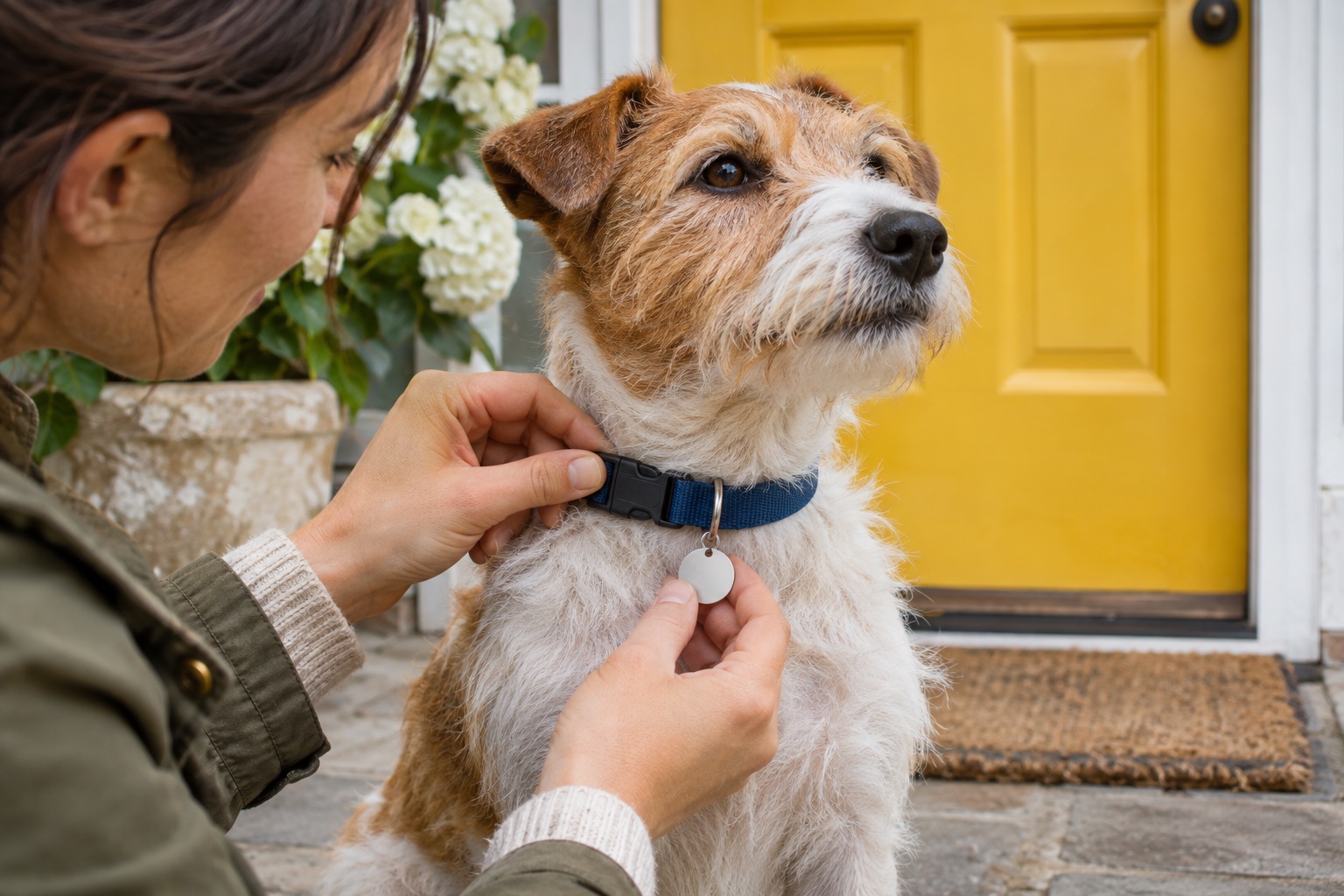
Use a visible tag, registered microchip and secure walking equipment together.
Cover illustration generated with AI. About our images.
An identification tag is a small purchase with an important job: it lets someone who finds your dog contact you quickly. Prepare it before the first outing, especially for a newly adopted dog still learning the sounds, doors and routines of a new home.
Put useful information first
Choose a durable tag with a clearly readable phone number. A second reliable number can help when you are unavailable. Your dog's name is optional; a short medical note may be useful if your dog needs essential medication. Avoid crowding the tag with details that make the contact number hard to read.
Check it in ordinary daylight and after it gets wet. If engraved characters have worn down, replace the tag. An attractive accessory only helps when another person can read it.
Pair the tag with a microchip
A microchip is permanent identification that can be read with a compatible scanner; it is not a GPS tracker. Ask your veterinary team to check the chip and confirm that the associated registry has your current contact details. Update records whenever you move or change your number.
Local licensing or registration may also apply. Keep those records with vaccination documents and a recent, clear photograph of your dog.
Check the equipment as well
Inspect the collar, harness, clips and stitching before going outside. Follow the manufacturer's fitting guidance and ensure your dog cannot back out of the harness. A tag cannot prevent an escape, so door management and a secure leash remain essential.
Make it a regular habit
Read the tag, check the fit and review emergency contacts periodically. For a holiday or stay with a sitter, add a reachable temporary contact when appropriate. A few minutes of preparation can remove a great deal of confusion if your dog ever becomes separated from you.
General educational information. For individual health concerns, consult your veterinarian. Suggest a correction.