A Five-Step Training Plan for First-Time Dog Owners
Build attention, clear communication and everyday reliability through short, rewarding lessons.
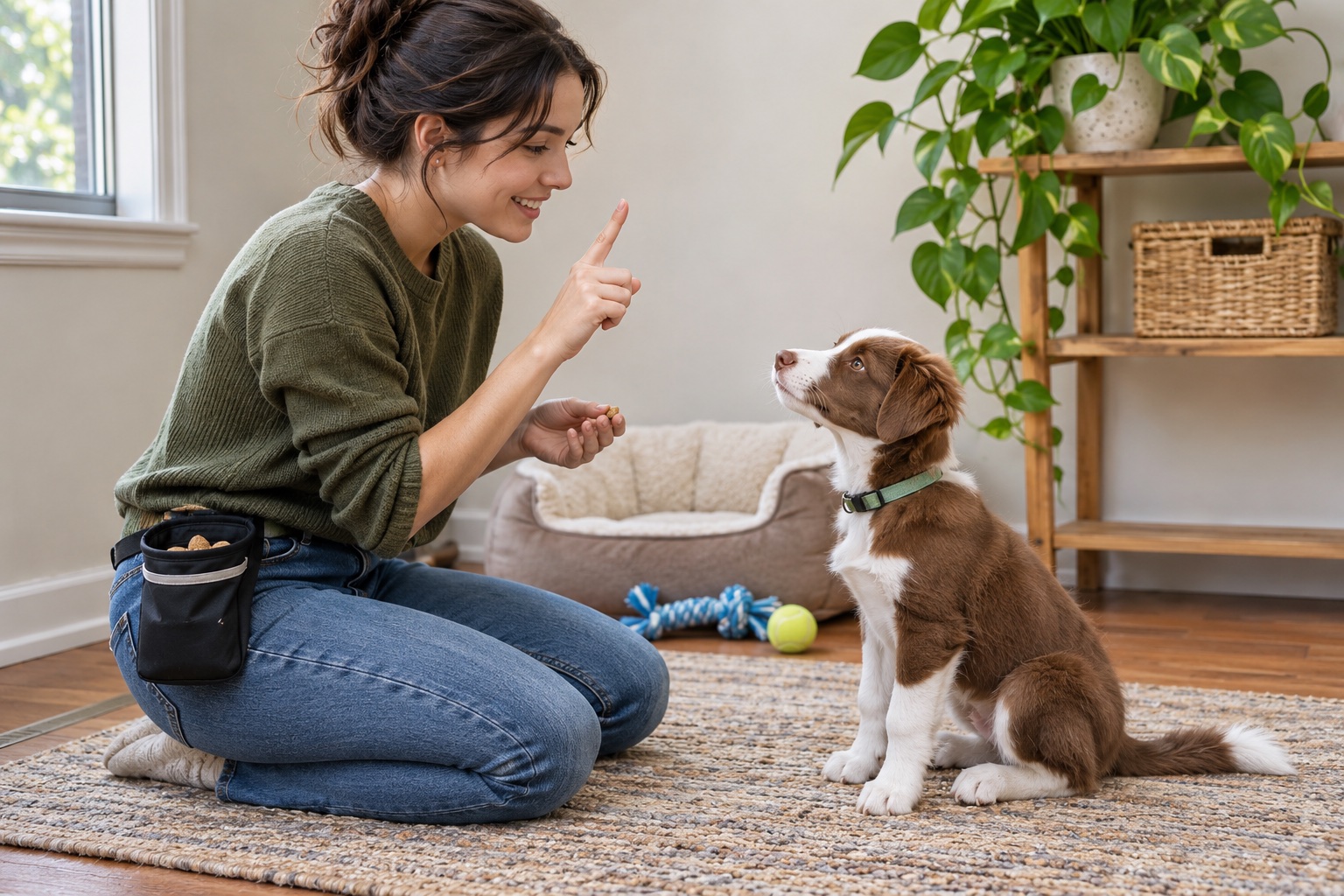
Make one behavior clear, reward it promptly and add difficulty in small steps.
Cover illustration generated with AI. About our images.
Training becomes easier when you break a broad goal such as 'be well behaved' into actions your dog can understand. Begin in a quiet place, use rewards the dog values and keep the session short enough to end comfortably.
1. Create an easy starting point
Choose one behavior and remove unnecessary distractions. Have small rewards ready and make sure your dog has had appropriate rest and toilet opportunities. A worried or overtired animal may need a different moment.
2. Teach attention
Say the dog's name once and reward looking toward you. Practice a few repetitions, then take a break. Attention is an invitation to communicate, not a requirement to stare at you throughout every walk.
3. Mark and reward the action
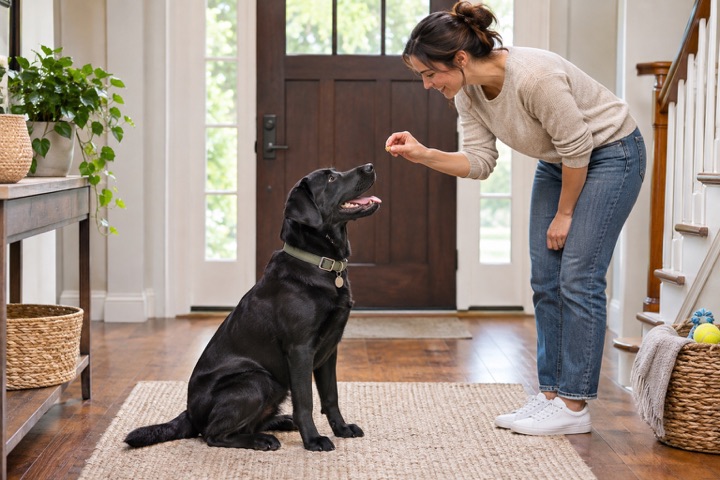
Use a consistent word such as 'yes' at the moment the desired behavior occurs, followed promptly by a reward. Capture a natural sit or guide gently with a lure. Avoid pushing the body into position.
4. Add the cue and vary the setting
Once the behavior is predictable, introduce the verbal cue. Practice in another quiet room before a busy outdoor area. Increase distance, duration and distractions separately.
5. Connect the skill to daily life
Use a brief wait before a door opens, a recall during safe play or a mat cue while you prepare a meal. Reward real successes and keep physical safeguards in place.
If mistakes repeat, simplify the task rather than escalating corrections. Household members should use the same cues and expectations. Progress is not a contest of will; it is a sign that the lesson has become clear enough to repeat.
General educational information. For individual health concerns, consult your veterinarian. Suggest a correction.