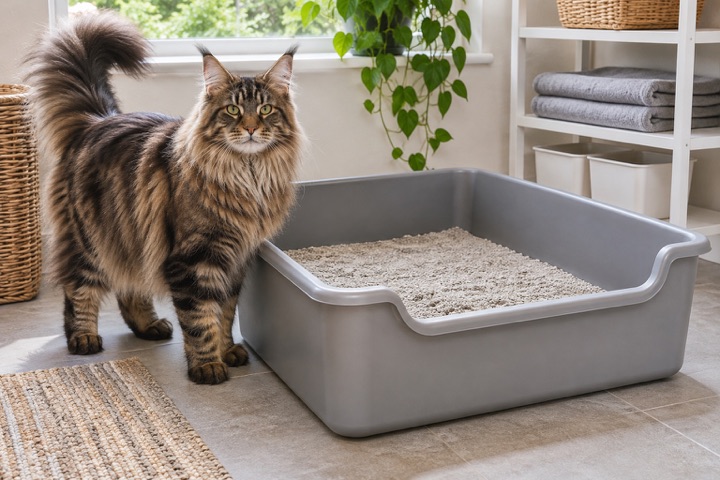
Choosing a Litter Box for Your Cat's Body and Life Stage
Look beyond breed labels to size, mobility, digging habits and an entrance your cat can use easily.
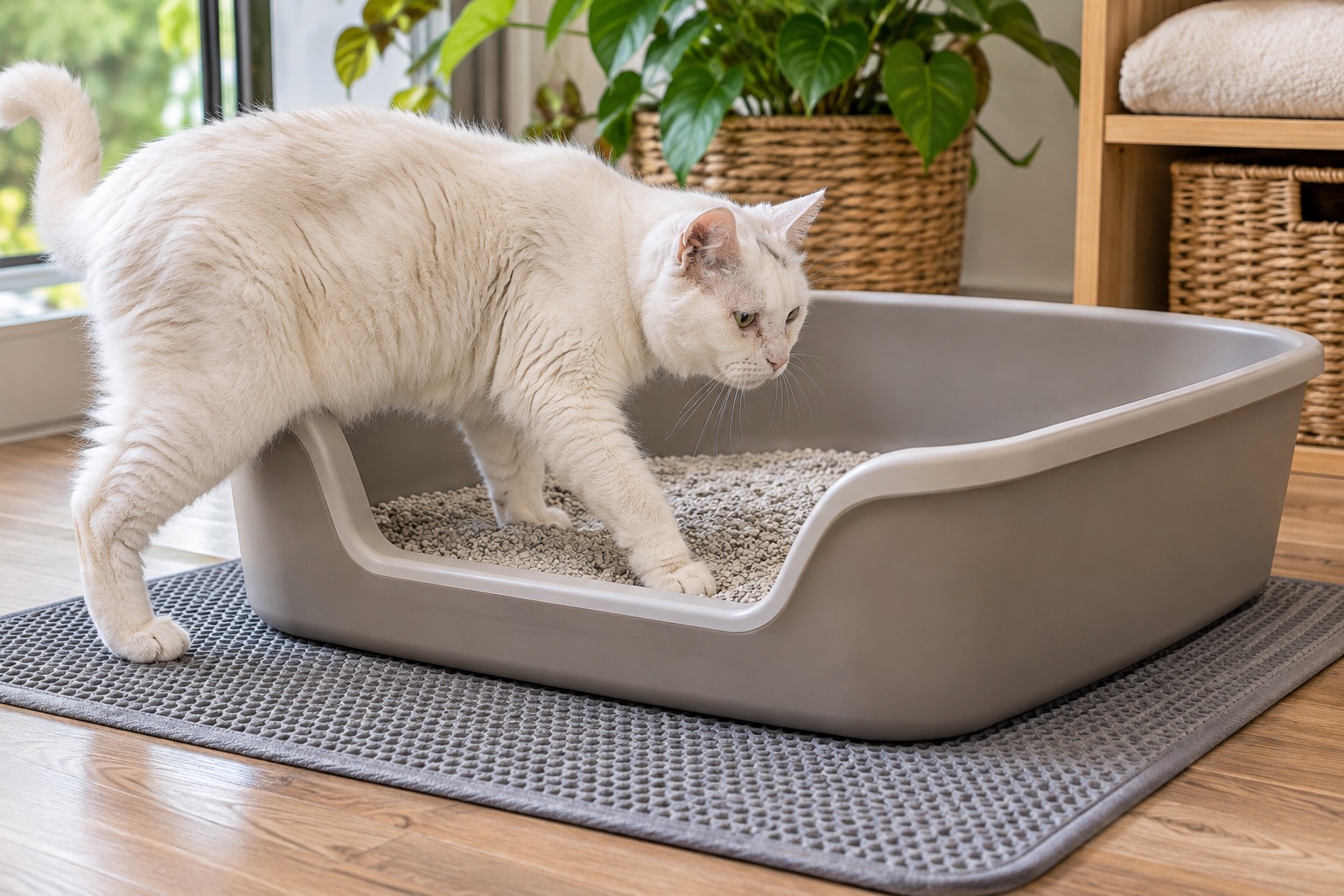
Fit the box to the cat's actual body, mobility and habits rather than a breed stereotype.
Cover illustration generated with AI. About our images.
Breed can hint at adult size, but the individual cat is the best guide to a litter box. A large long-haired cat, a small kitten and a senior with stiff joints need different access and space, even when they live in the same home.
Measure the usable interior
Choose a tray that allows your cat to turn and dig freely. Around one and a half times the cat's nose-to-tail-base length is a useful starting point, with enough width for comfortable movement. Check inside measurements, especially when a hood narrows the space.
Match the entrance to mobility
Kittens and cats with painful joints often need a low step. Higher sides elsewhere may help contain enthusiastic digging or urine directed toward the edge. A low doorway and roomy interior can be combined; you do not have to choose between access and containment.
Consider the coat and habits
Long fur may collect litter, so observe tracking and grooming comfort. Avoid assuming that a strong fragrance or a special coating will solve cleanliness. Smooth, easy-to-wash surfaces and a regular cleaning routine are more dependable.
For cats that dislike enclosure, begin with an open tray. If trying a covered style, offer it as an additional option rather than removing the familiar box immediately.
Check the setting
Place boxes where they remain quiet, reachable and safe from interference by other pets. Provide several separate stations in multi-cat homes.
Sudden accidents, straining or a change in toilet frequency needs veterinary attention. A better box can improve access, but it cannot treat a urinary or digestive problem.
General educational information. For individual health concerns, consult your veterinarian. Suggest a correction.