The Right Litter Box Size: Room to Turn, Dig and Feel Safe
A good litter box fits your cat's body and habits, with easy access and enough space to move comfortably.
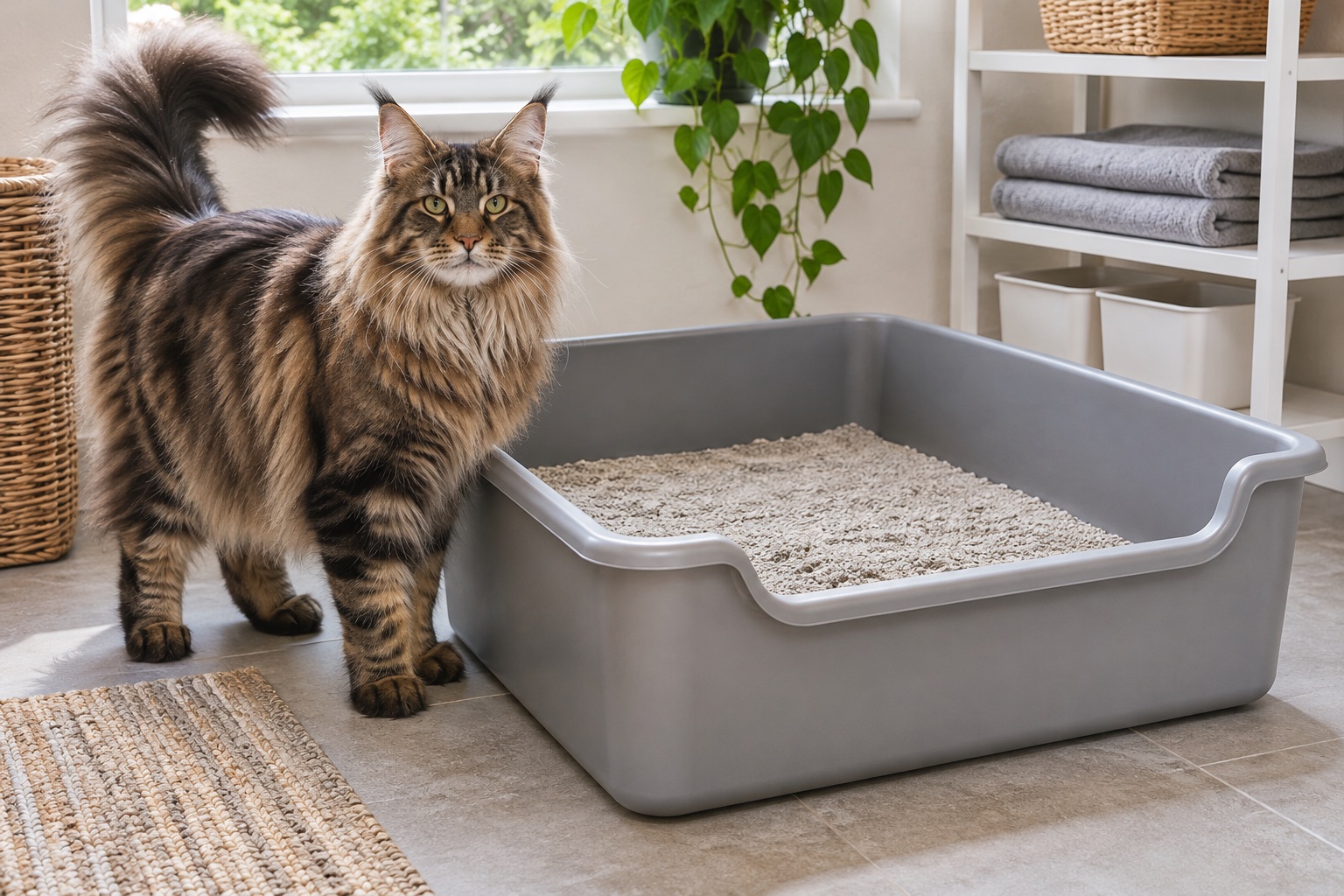
Choose usable space, an easy entrance and a location your cat can reach without conflict.
Cover illustration generated with AI. About our images.
A litter box may fit neatly into a corner yet feel cramped to the cat using it. Instead of choosing by the space left in your home, start with the space your cat needs to enter, turn, dig and finish without squeezing against the walls.
Think in proportions
A useful starting point is a tray roughly one and a half times your cat's length from nose to tail base, with adequate width to turn. Check the usable interior rather than the outside dimensions, especially for covered designs. Watch how your cat actually moves: balancing on the rim or leaving the body outside can suggest an awkward fit.
Make the entrance work
Kittens, older cats and cats with sore joints benefit from a low entrance. High sides elsewhere can help contain litter, provided they do not make entry difficult. A very large tray with a high step may be less useful than a slightly smaller, accessible one.
Open boxes make observation and cleaning easier. Covered options may suit some individuals, but they need enough internal room and good cleaning to prevent trapped odors. Let preference guide the decision.
Location and availability matter too
Choose quiet, accessible places with a clear escape route. Avoid noisy appliances and corners where another pet can block access. In multi-cat homes, offer multiple boxes in separate locations; one box per cat plus one extra is a common starting point.
Judge the result over time
Scoop frequently and monitor whether your cat uses the box comfortably. When changing the setup, offer the new tray alongside the familiar one if possible. Sudden house-soiling or straining deserves medical attention rather than another round of equipment shopping.
General educational information. For individual health concerns, consult your veterinarian. Suggest a correction.