Your First Aquarium: Build Stable Water Before Adding Fish
Choose compatible inhabitants, establish the biological filter and use testing to guide a steady start.
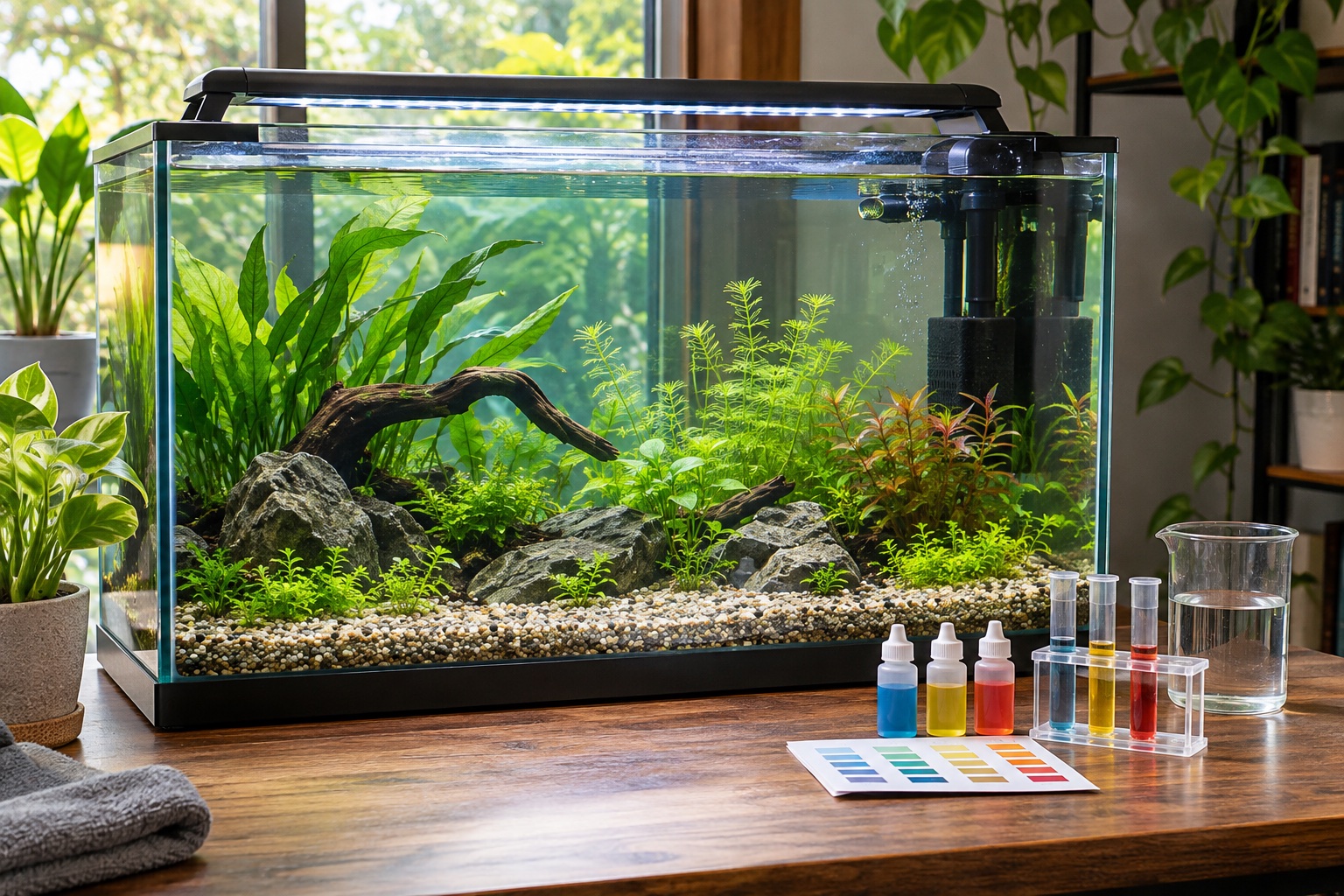
Cycle and test the water before stocking, then make changes gradually.
Cover illustration generated with AI. About our images.
Clear water can still contain substances that harm fish. A successful aquarium begins with the environment: appropriate space, filtration, temperature and a stable routine. Prepare the system before bringing its inhabitants home.
Choose the fish, then the tank
Research adult size, social needs, temperature and compatibility for each species. A simple length-per-liter rule cannot account for all of these differences. Buy a tank and filter that suit the planned inhabitants, with a secure stand and a location away from strong temperature swings.
Establish the nitrogen cycle
Fish waste and uneaten food contribute ammonia. A mature biological filter supports microbes that process ammonia and nitrite into less immediately harmful nitrate. Fishless cycling allows this system to develop without exposing fish to the early spikes.
Use suitable water tests and follow a reliable cycling method. Readiness is determined by the system's measured performance, not by leaving the tank running for a fixed week. Use water conditioner where needed and choose temperature equipment appropriate to the species.
Add inhabitants gradually
Introduce a modest, compatible group only when conditions are suitable. Use a species-appropriate acclimation process and continue testing after additions. Avoid feeding more than the fish can use, and remove leftovers.
Maintain stability
Carry out regular partial water changes based on water quality and stocking. Protect biological filter media from unnecessary replacement or harsh cleaning; follow the filter's instructions. Do not add salt or medication without a specific reason.
Watch appetite, breathing, swimming and social interactions. If fish appear unwell, check water conditions promptly and seek knowledgeable aquatic veterinary advice. Patience and measurement are more useful than a promise of a disaster-free tank.
Further reading
RSPCA: Aquarium environmentGeneral educational information. For individual health concerns, consult your veterinarian. Suggest a correction.