Chew and Puzzle Toys: Choose for the Dog Using Them
Assess size, material and chewing style, then supervise the first sessions and inspect for wear.
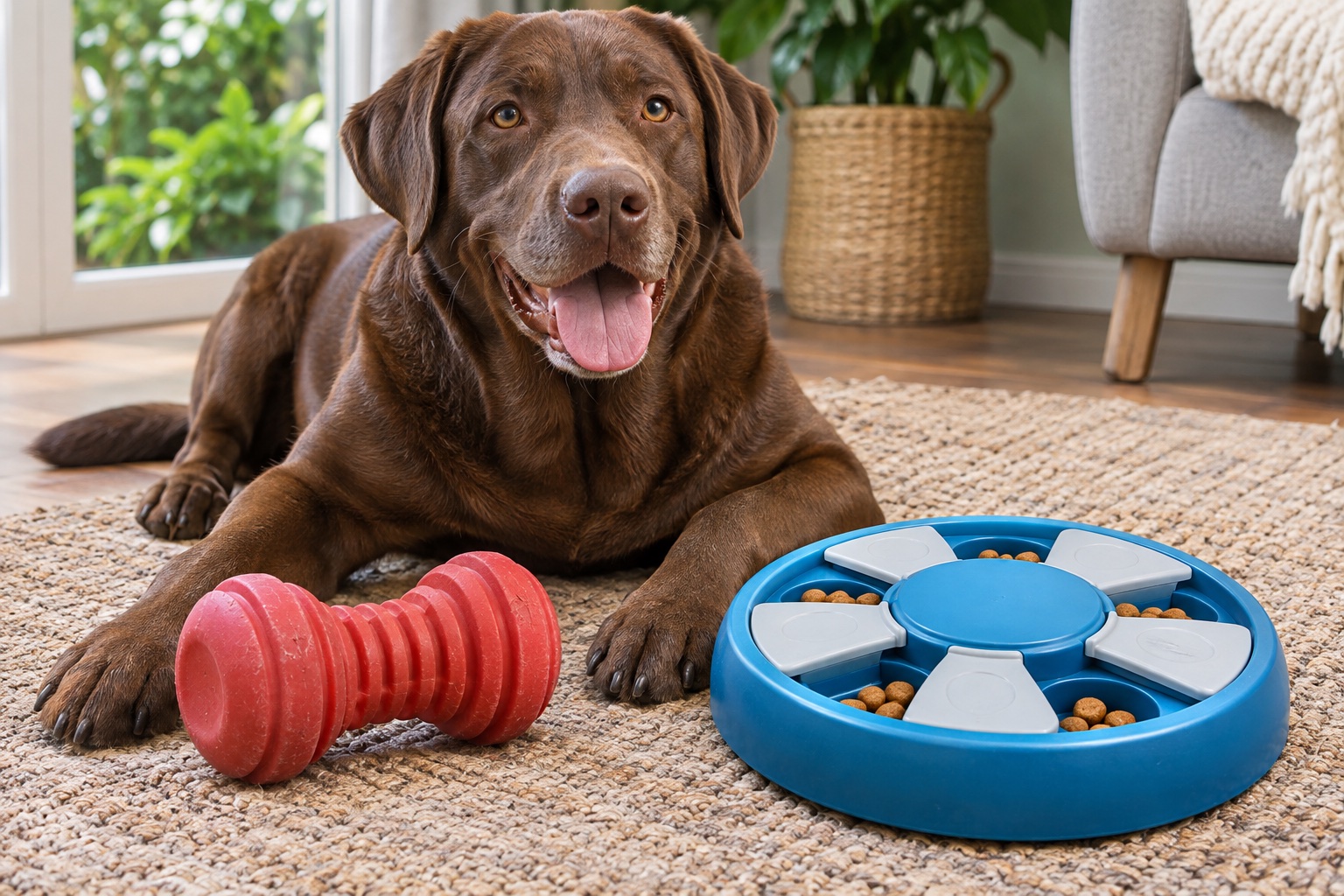
Match the toy to size and chewing style, then keep supervising, inspecting and cleaning it.
Cover illustration generated with AI. About our images.
No toy is indestructible for every dog. A product that suits a gentle chewer may be unsafe for an animal that tears off and swallows pieces. Start with the behavior you have observed and the purpose you want the toy to serve.
Check size and construction
Choose a toy that cannot be swallowed whole and does not trap the jaw or muzzle. Inspect seams, openings and detachable parts. Avoid very hard objects that can damage teeth and follow the manufacturer's size and use guidance.
Introduce food puzzles at an easy level
Use a small portion of the normal ration and make rewards accessible initially. Watch whether the dog engages comfortably or becomes frustrated and starts destroying the toy. A difficult puzzle is not automatically more enriching.
Supervise before trusting
Stay present during the first uses and continue supervision when the product or dog's behavior requires it. Remove damaged items and pieces that could be swallowed. Do not assume a familiar toy will remain safe as it wears.
Keep hygiene practical
Choose designs you can clean and dry thoroughly. Follow the care instructions, including whether parts are dishwasher-safe. Food residue hidden inside a toy can become a problem even when the outside looks clean.
Match the activity to the day
Chewing, searching and interactive play offer different experiences. Rotate a few suitable options instead of leaving a large pile that rarely gets checked.
If your dog swallows part of a toy or develops vomiting, pain or difficulty eating, contact a veterinarian promptly.
General educational information. For individual health concerns, consult your veterinarian. Suggest a correction.