Clean Tools, Comfortable Grooming
Keep brushes, combs and care equipment ready for use with a simple inspection and cleaning routine.
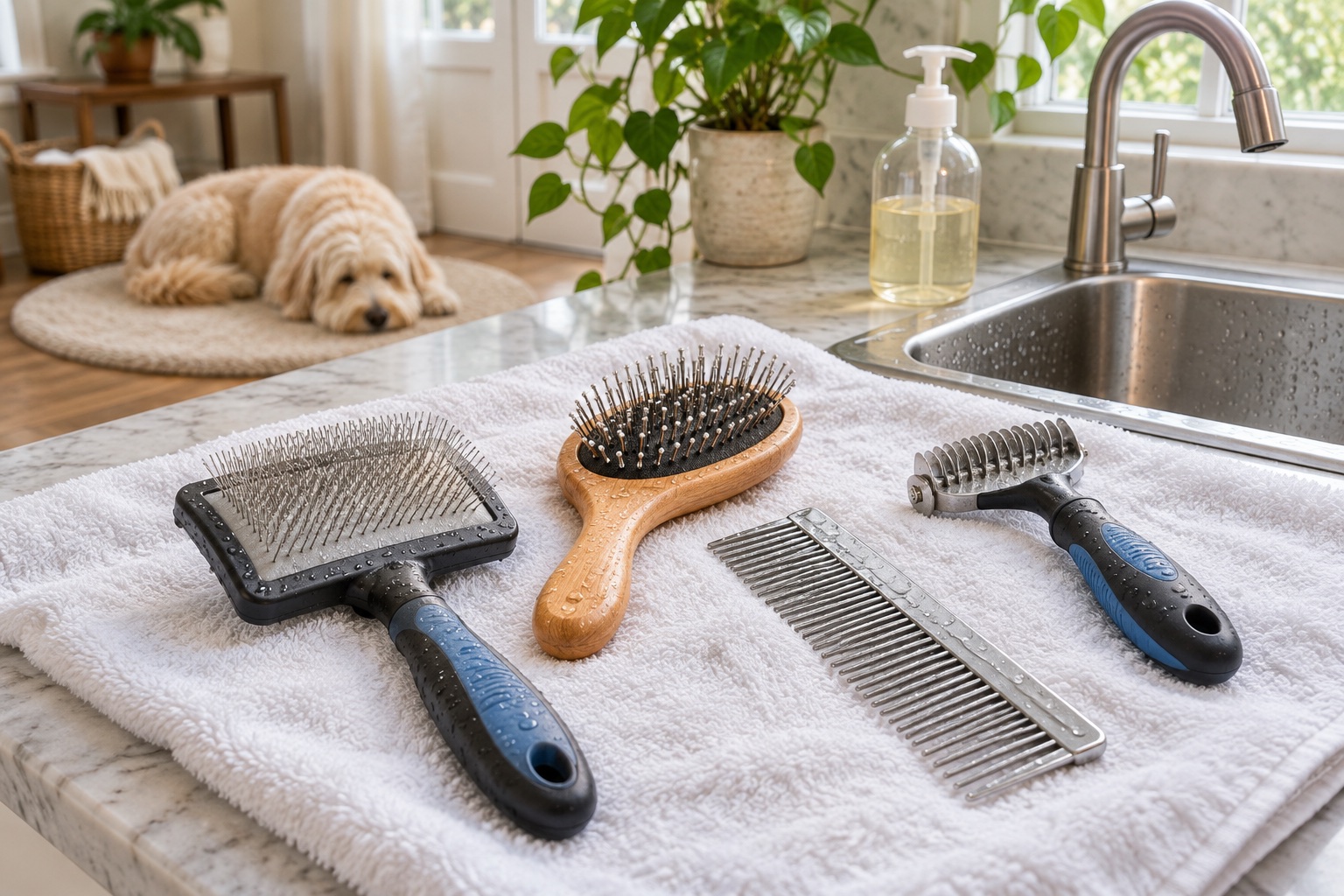
Remove debris, clean according to the material and dry fully before storing grooming tools.
Cover illustration generated with AI. About our images.
A brush can collect more than loose fur. Skin debris, moisture and product residue accumulate with use, so tool care belongs alongside coat care. Clean equipment is also easier to inspect for damage.
Remove debris after use
Lift out trapped hair and check teeth, bristles and moving parts. Bent pins, sharp edges or cracked handles can make the next session uncomfortable. Set damaged tools aside rather than continuing because they still appear usable.
Follow the material's instructions
Wash suitable tools with an appropriate mild cleaning method and rinse thoroughly. Wooden handles, electrical devices and some cushioned brushes may need a different approach. Follow manufacturer guidance rather than soaking everything together.
Dry tools completely before storage, including gaps around the base of bristles. Damp equipment in a closed bag can develop odor and corrosion.
Separate when health requires it
If a pet has a suspected contagious skin problem, ask your veterinarian how tools and bedding should be managed. Avoid sharing equipment between affected and unaffected animals until you have guidance. Household cleaning alone should not be assumed to remove every infectious risk.
Store a small, useful kit
Keep tools in a clean, dry place beyond chewing reach. Check nail-clipper blades and guards, and maintain electrical equipment according to its instructions.
A few minutes after each session keeps the next one easier to begin and helps you notice when a tool needs replacing.
General educational information. For individual health concerns, consult your veterinarian. Suggest a correction.