Harnesses and Leashes: Choose for Fit, Comfort and Control
Match walking equipment to your dog's shape and your surroundings, then check how it performs in motion.
Choose secure, comfortable equipment and pair it with patient loose-leash practice.
Cover illustration generated with AI. About our images.
Well-chosen walking equipment should help you manage safety while allowing comfortable movement. A product label such as 'no-pull' is not a training plan, and the best-looking harness is useful only if it fits the dog wearing it.
Assess the harness on the dog
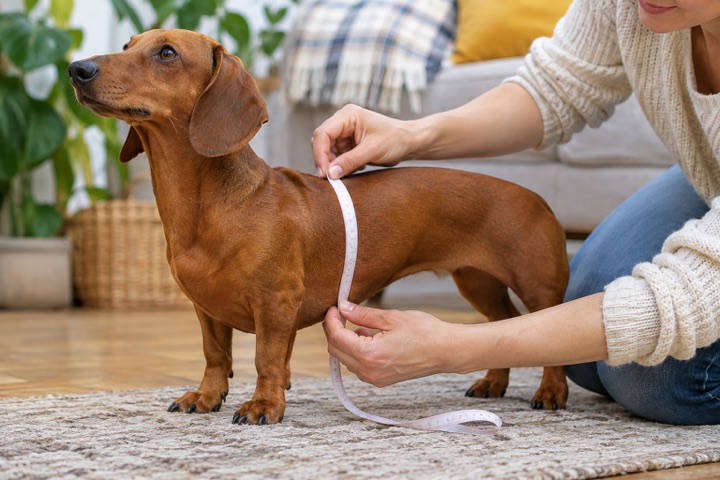
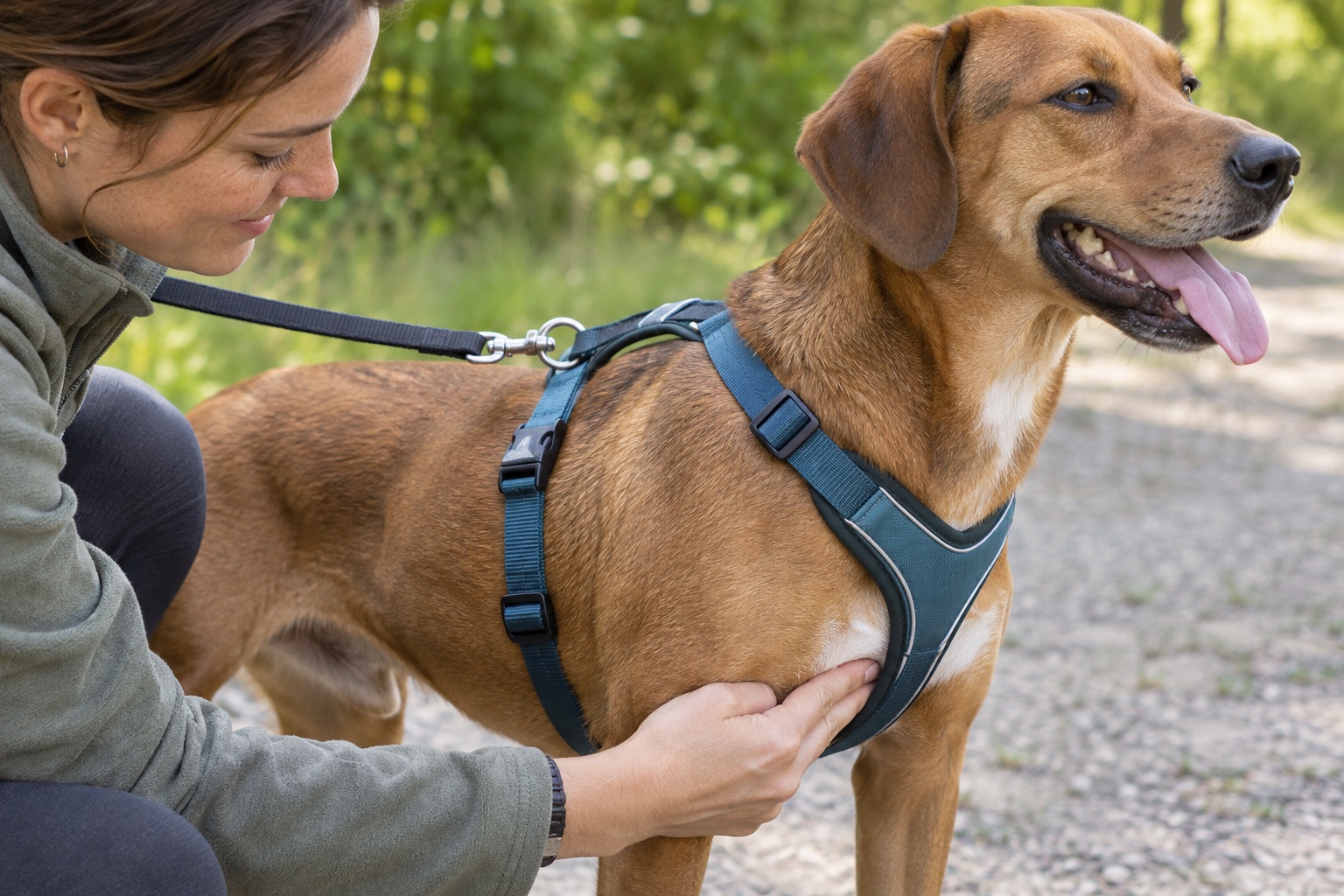
Measure according to the manufacturer's guide. Check that straps do not rub behind the front legs, press on the throat or restrict the shoulders. Watch your dog walk, sit and turn. Fit should be secure without constriction, and the dog should not be able to back out easily.
A front attachment may help with management for some dogs, but monitor twisting and gait. Dogs with medical or mobility needs may benefit from specific veterinary guidance.
Match the lead to the place
A fixed-length leash is practical around traffic and busy paths. A longer line can offer exploration in suitable open areas when you can manage it safely. Keep excess line away from feet, bikes and other animals.
Retractable leads require particular care and are poorly suited to many crowded or unpredictable settings. Whatever the style, inspect the clip, stitching and grip regularly.
Include the small essentials
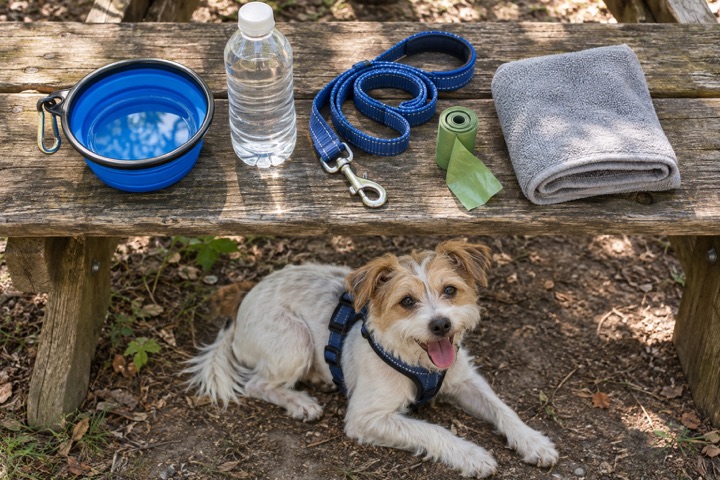
Keep a readable ID tag attached to suitable equipment and bring waste bags and water as needed. A collar can carry identification even when the walking lead attaches to a harness.
Teach the walking skill separately
Reward a loose lead and comfortable check-ins, and give your dog opportunities to sniff. If your dog lunges or panics, create distance from the trigger and seek skilled reward-based support. Stronger hardware cannot make an overwhelming situation feel safe.
General educational information. For individual health concerns, consult your veterinarian. Suggest a correction.