When Being Alone Is Hard: Helping a Distressed Dog
Use observation, manageable absences and professional support to build comfort with separation.
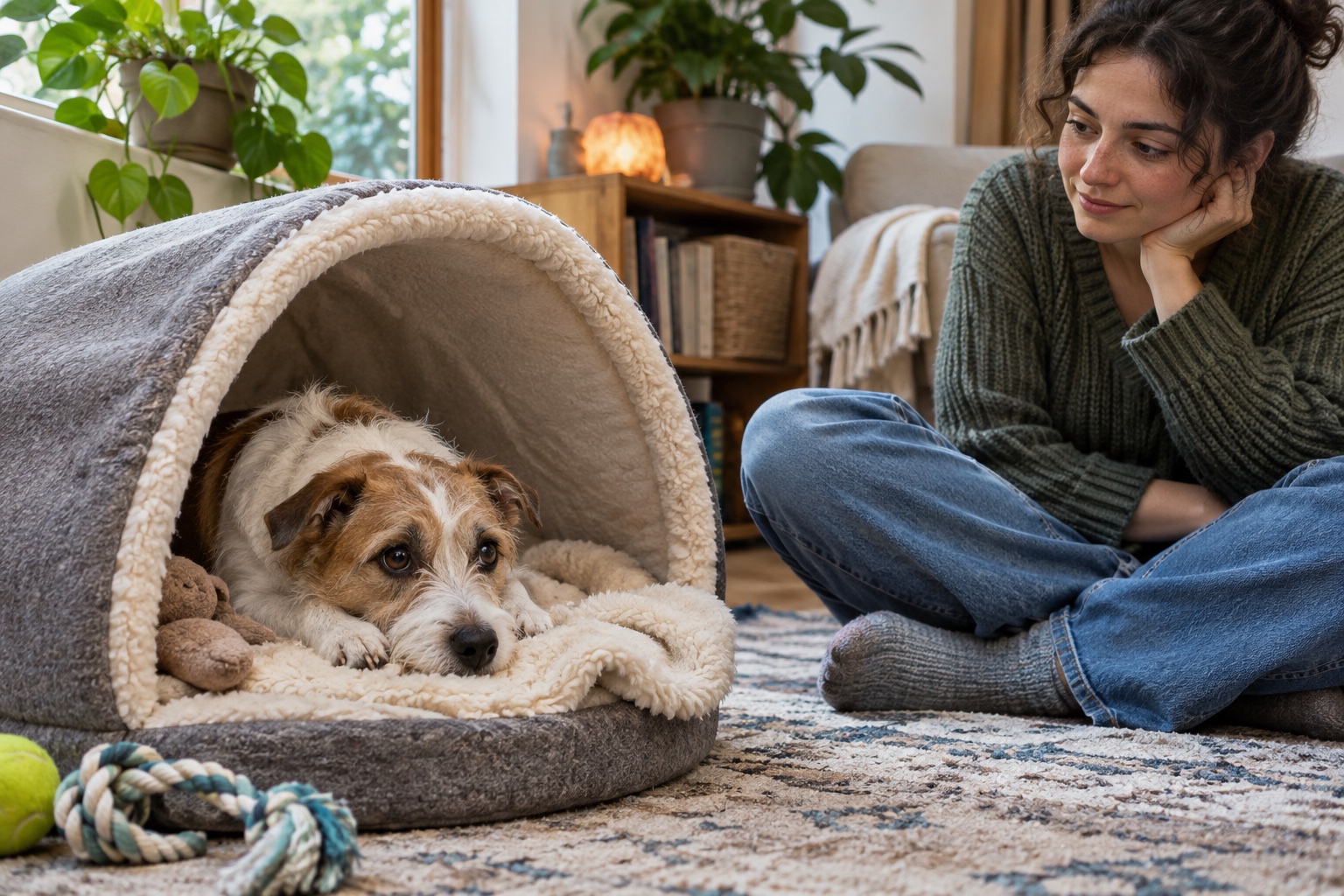
Build from absences the dog can handle, and seek an individual plan for significant distress.
Cover illustration generated with AI. About our images.
Barking, pacing or damage during an absence may reflect separation-related distress, but other causes are possible. A dog is not taking revenge for being left. Understanding what happens while you are away is the first step toward a useful plan.
Observe the pattern
Use a camera when practical to see how soon the behavior starts and whether the dog can settle. Note vocalizing, panting, attempts to escape, toileting and interest in food. Discuss the findings with your veterinarian, especially when the behavior is new or severe.
Keep practice within comfort
Begin with separations short enough that the dog remains relaxed. For some dogs that means seconds or simply moving behind a barrier. Return before distress develops and increase only as the dog succeeds. A fixed schedule of several days per stage is not suitable for every case.
Avoid repeatedly exposing the dog to panic in the hope it will get used to it. Arrange help with necessary longer absences where possible.
Make the environment supportive
Provide a comfortable resting area and meet needs for exercise, toileting and rest. A food toy may help a dog that can eat calmly, but refusal to use it can be a clue that the situation is too difficult. Confinement is not automatically soothing and may worsen escape attempts.
Get appropriate support
A qualified reward-based professional and your veterinary team can develop an individualized plan. Medication may be appropriate for some dogs and is a veterinary decision.
Do not punish damage or noise after returning. Track comfortable absences and recovery, and judge progress by reduced distress rather than silence alone.
General educational information. For individual health concerns, consult your veterinarian. Suggest a correction.