Why Your Dog Hears Its Name but Does Not Turn Around
Separate attention from recall and rebuild a response that works beyond the quiet living room.
Teach the name as an attention cue, practice in easy settings and investigate new changes in responsiveness.
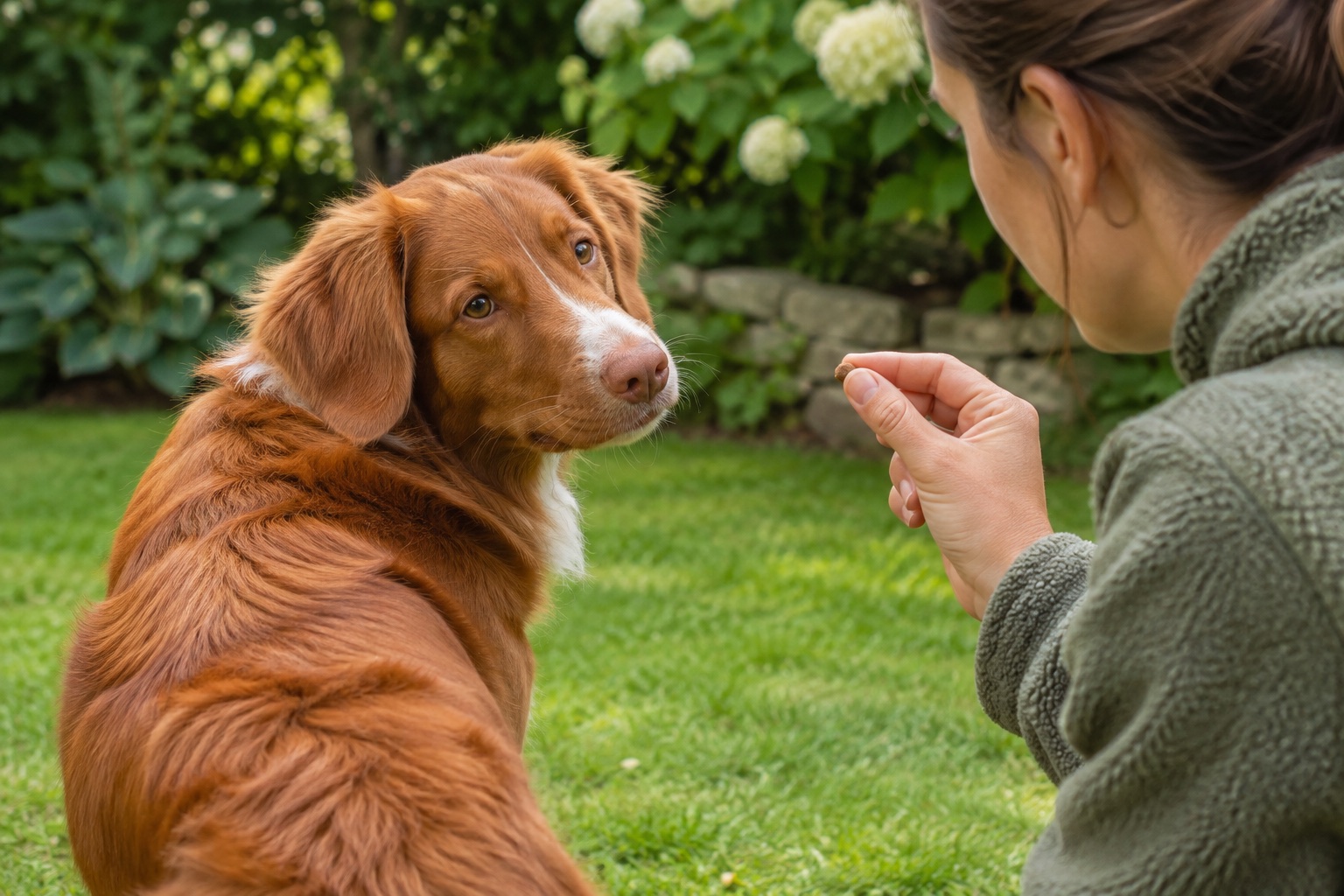
Cover illustration generated with AI. About our images.
An ear flick without a full turn can mean your dog noticed the sound but remained focused elsewhere. It does not prove deliberate disobedience. A name is most useful as an attention cue, while coming to you is a separate behavior that needs its own practice.
Give the name a clear job
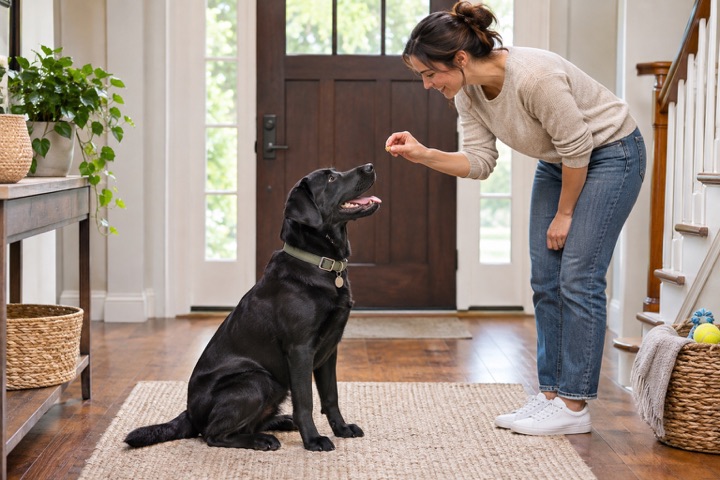
In a quiet space, say the name once. Mark and reward a glance toward you. Repeat only a few times, then stop. Avoid using the name mainly before scolding or repeating it continuously while the dog ignores you.
Once attention is reliable, follow it with a familiar cue if needed. This makes the sequence easier to understand than using the same word to mean 'look,' 'come' and 'stop.'
Adjust for the setting
Outside, smells, wildlife and other dogs can be much more compelling than they are at home. Begin in a quiet area and close the distance. Reward generously, then allow a return to appropriate exploration. Increase distractions gradually.
Keep a leash or long line managing safety. A dog that responds at home has not automatically learned the same skill beside traffic or active play.
Notice a broader change
If your dog stops responding to familiar sounds across several settings, or appears startled by touch, discuss hearing and health with your veterinarian. Pain, fatigue and age-related changes can also affect engagement.
The useful question is not whether your dog respects you enough. It is whether the cue has a clear meaning, a worthwhile outcome and a difficulty level the dog can manage today.
General educational information. For individual health concerns, consult your veterinarian. Suggest a correction.