Three Steps Toward Calmer Walks with a Pulling Dog
Improve the setup, reward a loose lead and create space from triggers before frustration builds.
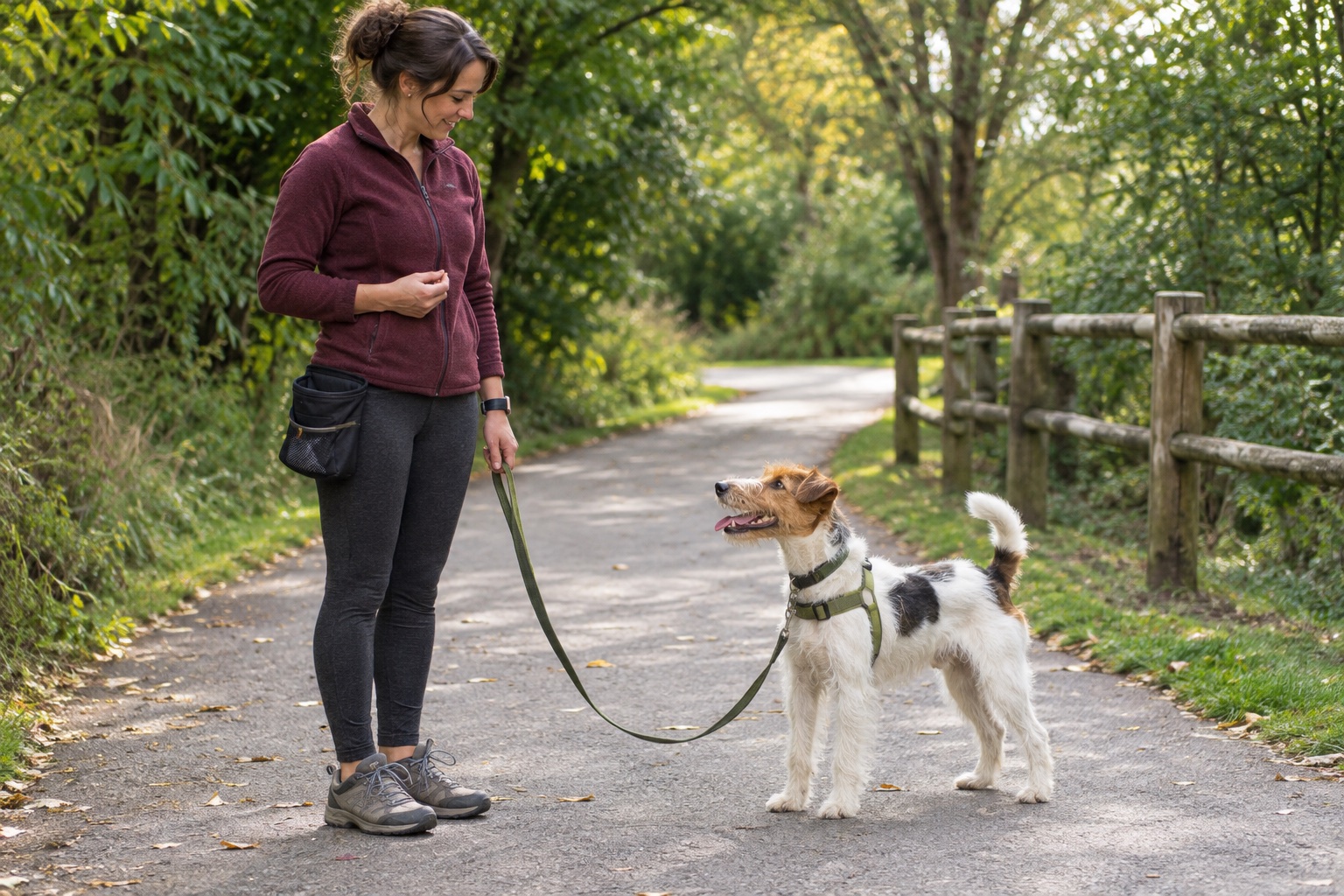
Reduce the challenge, reward a loose lead and create distance before a trigger becomes overwhelming.
Cover illustration generated with AI. About our images.
A dog walking ahead is not trying to take control of a social hierarchy. Pulling can reflect excitement, a learned route to interesting places or discomfort around a trigger. Begin by making the outing easier to manage rather than correcting the dog more forcefully.
1. Adjust the environment and equipment
Choose a quieter route and check harness fit. Give your dog a moment to settle before moving into a busy area. If other dogs, bicycles or traffic trigger lunging, start at a distance where your dog can still notice you and take a reward.
Equipment helps manage safety, but it cannot make a frightening situation comfortable by itself. Avoid leash jerks and tools designed to cause pain.
2. Reward the slack
Practice a few steps with a loose line, marking and rewarding near your side. When tension develops, stop smoothly and invite a return to an easier position. Continue once the lead relaxes. Use both food and access to appropriate sniffing as rewards.
Keep the pace flexible. If every step is a struggle, shorten the practice and move to a simpler setting.
3. Build useful alternatives
Teach a gentle turn-away cue, a check-in and a short pause in quiet conditions. Use them before the dog becomes overwhelmed, not only after lunging starts. Plan escape routes and give space rather than forcing close greetings.
Seek qualified reward-based support for strong reactivity, fear or handling risks, and consider a veterinary assessment when the pattern changes suddenly. The goal is a walk both of you can manage comfortably, not instant obedience in every setting.
General educational information. For individual health concerns, consult your veterinarian. Suggest a correction.