Four Ways to Redirect Destructive Chewing
Protect the home while giving your dog safe outlets for exploration, chewing and rest.
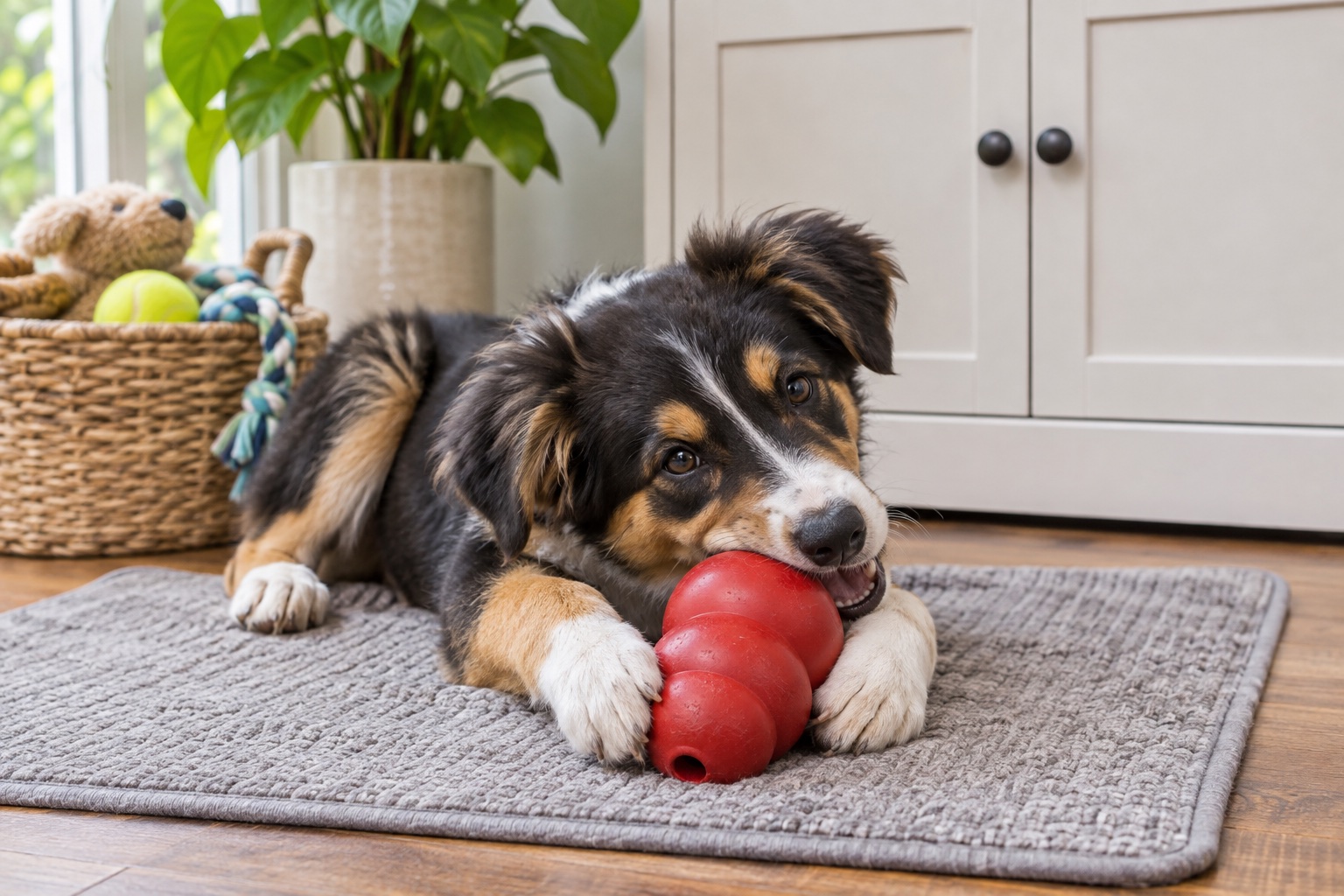
Provide suitable chews, teach trades and manage the environment while you address the cause.
Cover illustration generated with AI. About our images.
Chewing is normal canine behavior, but the object matters. A puppy exploring with its mouth, an under-stimulated adult and a dog distressed when alone may all damage household items for different reasons. A useful plan combines prevention with an appropriate alternative.
1. Offer a safe chewing choice
Select items for your dog's size, teeth and chewing style. Supervise new products and remove damaged pieces. Very hard objects can fracture teeth, and anything small enough to swallow can create a hazard. Reward choosing the appropriate item.
2. Trade instead of chasing
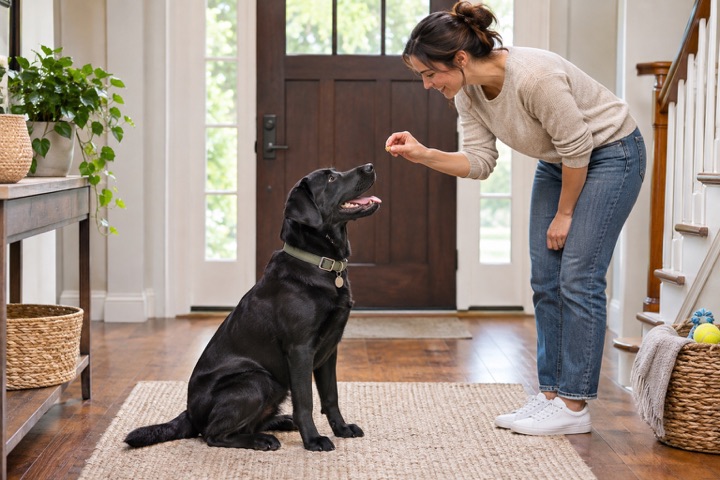
If your dog takes a safe but unwanted object, offer a better reward and calmly exchange it. Teach 'drop' during easy practice with toys. Chasing or repeatedly prying items away can turn possession into a game or conflict.
3. Balance activity and sleep
Provide suitable walks, sniffing, play and short training sessions. Adjust them to age and health rather than using a fixed exercise quota. Overtired dogs may also struggle to settle, so protect quiet rest.
4. Manage access
Put shoes, medicines and electrical cords beyond reach. Use a safe room or barrier when you cannot supervise, after introducing the space positively. Confinement should not leave the dog panicking or without needed breaks.
Damage concentrated around exits during absences may signal separation-related distress. A camera and professional assessment can help distinguish that pattern from ordinary exploration.
If an object may have been swallowed, contact a veterinarian promptly. Training can prevent the next incident, but it is not treatment for a possible obstruction.
General educational information. For individual health concerns, consult your veterinarian. Suggest a correction.