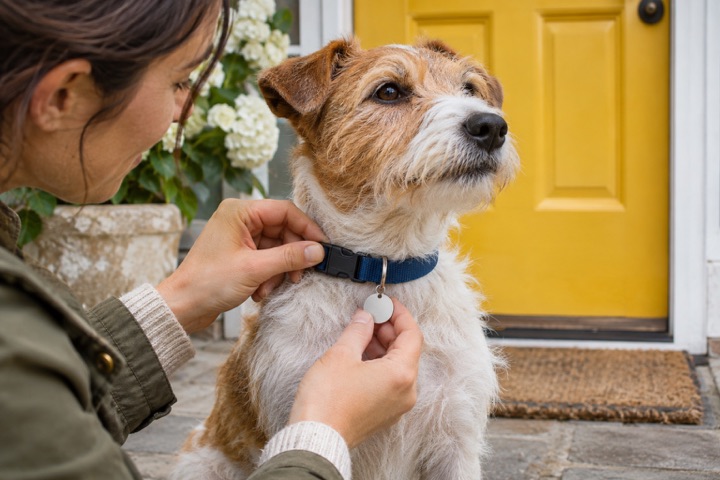
Reading Your Dog's Body Language in Context
Look at posture, movement and the situation together instead of relying on a wagging tail alone.
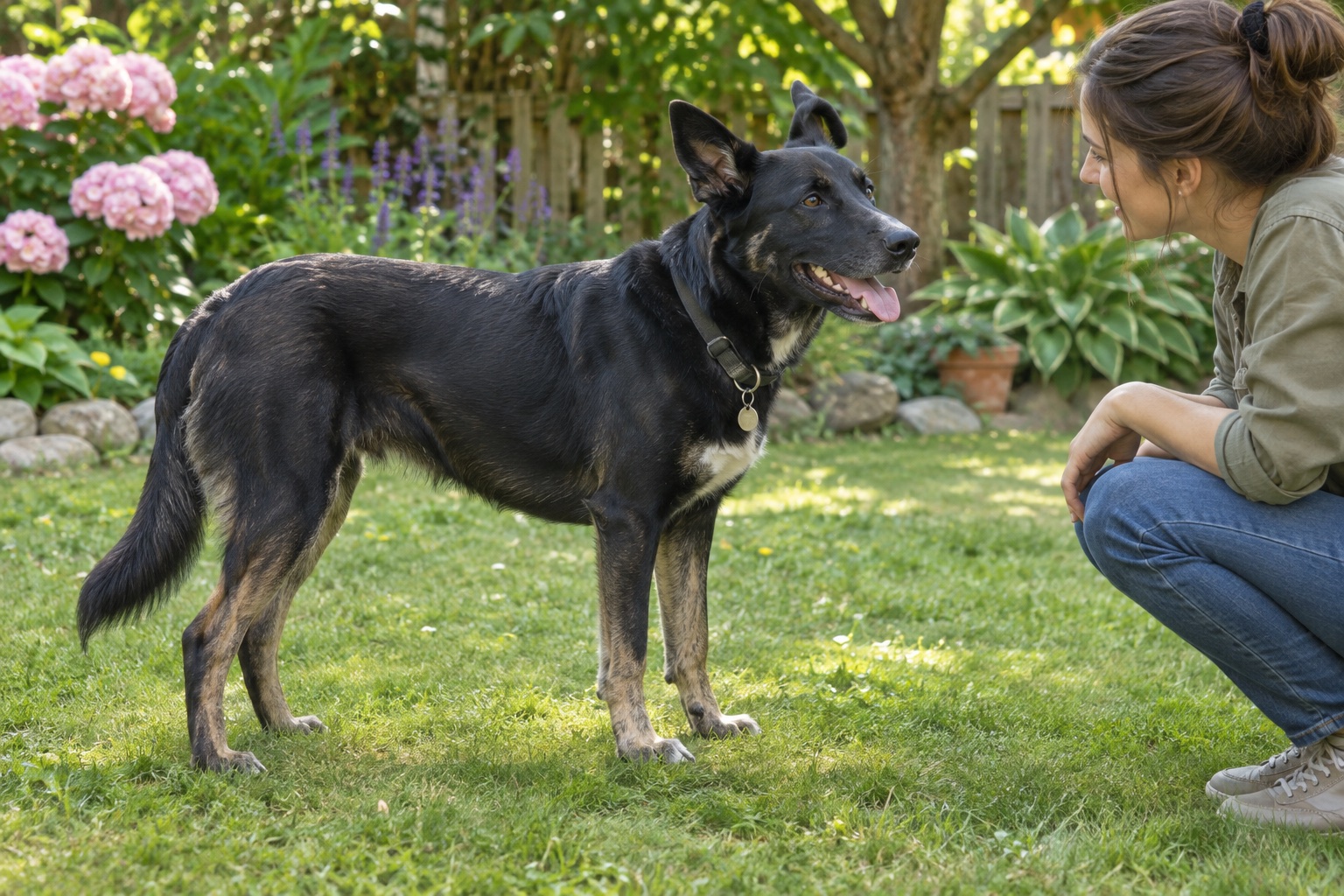
Read the whole dog, compare with its normal behavior and give space when signals suggest tension.
Cover illustration generated with AI. About our images.
A wagging tail can accompany excitement, uncertainty or tension as well as friendly interest. Understanding a dog means reading the whole body and noticing what happens before and after a signal. No single movement is a complete translation.
Start with overall tension
A comfortable dog often moves loosely, shifts weight easily and can turn away from the situation. A stiff body, fixed stare or sudden stillness deserves space. Forward movement is not always friendly, and a dog that freezes may be asking for distance without making noise.
Add ears, eyes and mouth
Compare ear position with the dog's usual relaxed posture, allowing for differences in breed and anatomy. Watch for a tight mouth, repeated lip licking, head turning or visible eye whites in context. Yawning can reflect tiredness, but it can also appear during an uncomfortable interaction.
Read the tail with the body
Consider height, speed, stiffness and movement through the hips. A tightly held, rapidly moving tail on a rigid dog is different from a broad wag with a loose body. Naturally curled or shortened tails require extra attention to other signals.
Respond before pressure builds
Pause touching, increase distance or provide an exit when your dog appears uncomfortable. Do not punish a growl; it is information that the situation needs to change. Keep children and unfamiliar dogs at a safe distance while you assess what is happening.
Learn your dog's baseline during quiet, pleasant moments. A new pattern of avoidance, sensitivity or irritability may indicate pain and should be discussed with a veterinarian.
General educational information. For individual health concerns, consult your veterinarian. Suggest a correction.