Dog Kisses and Everyday Hygiene: Finding a Sensible Balance
Enjoy affectionate contact while keeping saliva away from wounds, faces and vulnerable people.

Keep saliva away from wounds and mucous membranes, and teach a greeting everyone enjoys.
Cover illustration generated with AI. About our images.
A dog's lick can be part of greeting, investigation or learned attention-seeking. It is not a reliable measure of affection, and a dog's mouth is neither sterile nor magically cleaner than a person's. You can enjoy companionship without turning licking into a health test.
Keep boundaries straightforward
Avoid allowing saliva into the mouth, eyes or nose, and do not let a dog lick broken skin, surgical wounds or medical devices. Wash exposed skin with soap and water. Saliva should never be used to clean or treat a wound.
Extra care is sensible around infants and people whose medical conditions increase infection risk. Their healthcare team can advise on individual precautions. Supervise interactions so nobody needs to push a dog's face away suddenly.
Offer another greeting
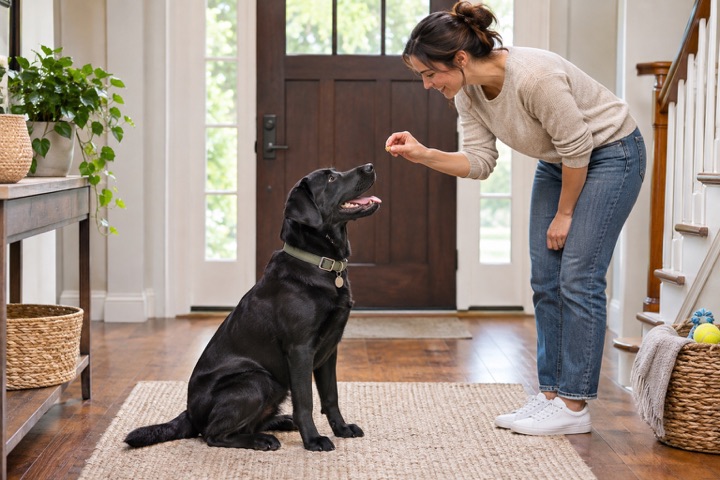
If you prefer fewer licks, turn slightly away and reward a sit, four paws on the floor or a nose touch to your hand. Keep the response calm and consistent. Punishing a friendly approach can make greetings confusing without teaching a useful alternative.
Some dogs lick because it has reliably earned attention. Others may lick more when excited or unsettled. Notice the whole situation instead of assuming every lick means the same thing.
Watch changes in the dog as well
A sudden increase in lip licking, drooling or repetitive licking of surfaces can reflect discomfort and deserves attention. Good dental care and veterinary checks support your dog's health, but they do not make saliva risk-free.
Affection can be a quiet walk, a gentle scratch your dog enjoys or simply resting together. There is no need to accept face licking to maintain a close bond.
General educational information. For individual health concerns, consult your veterinarian. Suggest a correction.