A New Dog at Home: Build Good Habits Without the Power Struggle
Use clear routines, thoughtful management and timely rewards to make the first weeks easier.
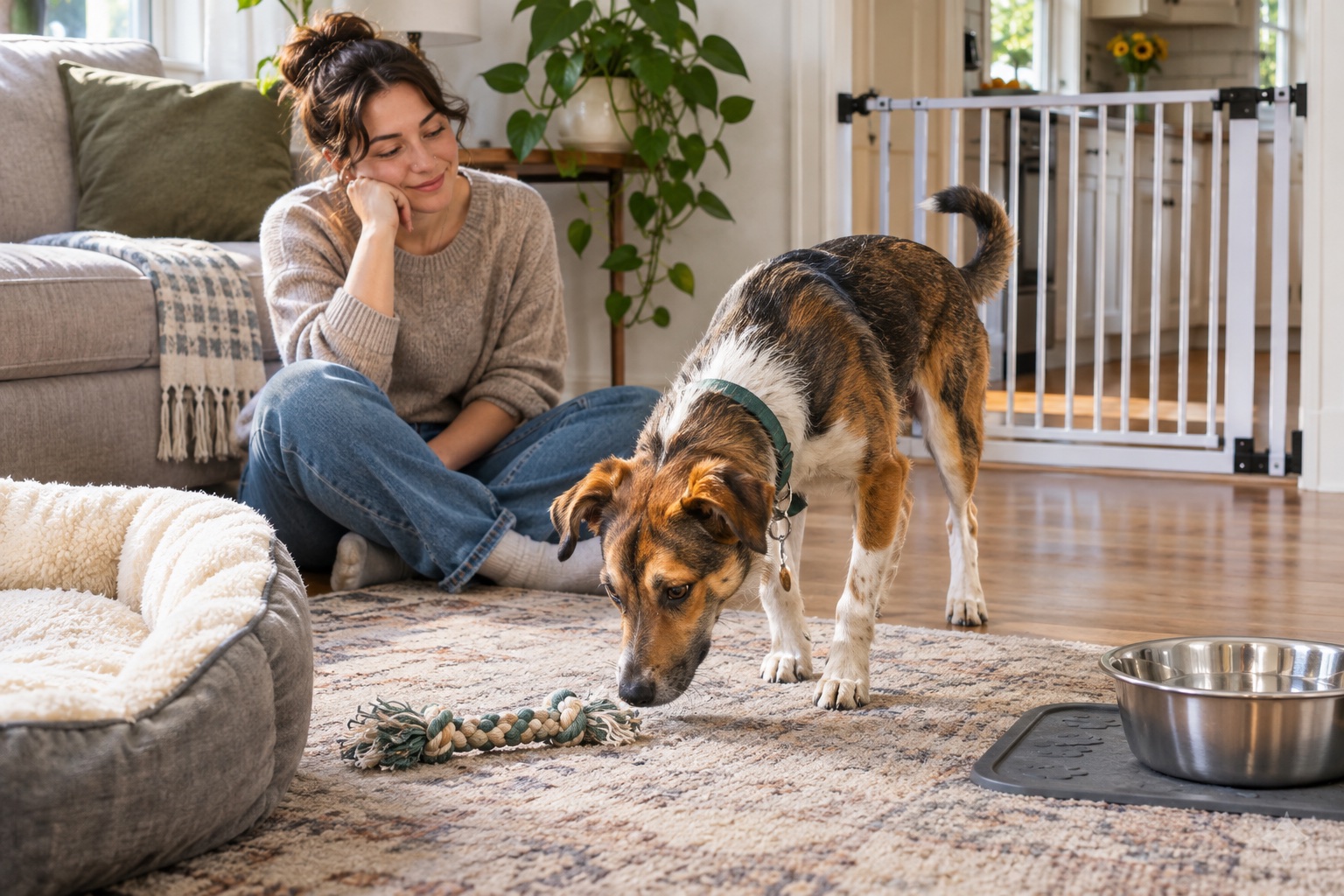
Make the routine clear, prevent avoidable mistakes and reward useful alternatives.
Cover illustration generated with AI. About our images.
A newly arrived dog does not yet know your household rules. Accidents, chewing and restless nights can reflect unfamiliar surroundings, unmet needs or a lack of practice. Start by making daily life understandable rather than treating every mistake as defiance.
Agree on a small set of routines
Decide where the dog rests, when meals happen and how toilet trips are arranged. Use the same cues and expectations across the household. Allow plenty of sleep and avoid an exhausting schedule of visitors and outings.
Reward the behavior you want
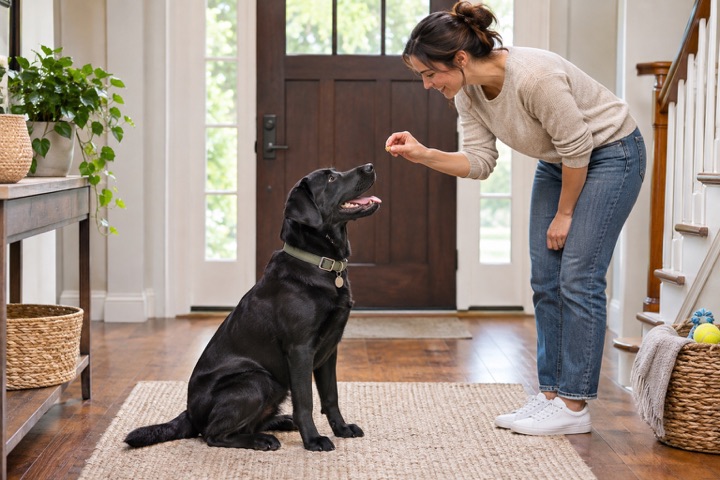
Notice calm greetings, appropriate chewing and toileting in the right place. Deliver a reward promptly so the connection is clear. Teach a simple alternative—such as standing with four paws down—instead of relying only on 'no.'
Do not punish a discovered mess after the event. It does not explain the desired routine and may make the dog worried about your approach.
Manage tempting situations
Put shoes, food and dangerous objects out of reach. Use gates or a comfortable supervised area when necessary, and provide suitable chew items. Gradually teach time alone at a level the dog can handle.
Sharing a sofa or offering affection does not create a dominance problem. Boundaries are about practical safety and consistency, not proving social rank.
Investigate difficult patterns
Persistent house-soiling, sudden behavior changes, guarding or distress when alone may need veterinary and qualified behavioral support. Pain and fear can interfere with learning.
A good start is built through many small, predictable experiences. Progress becomes easier when the dog knows how to succeed and feels safe trying.
General educational information. For individual health concerns, consult your veterinarian. Suggest a correction.