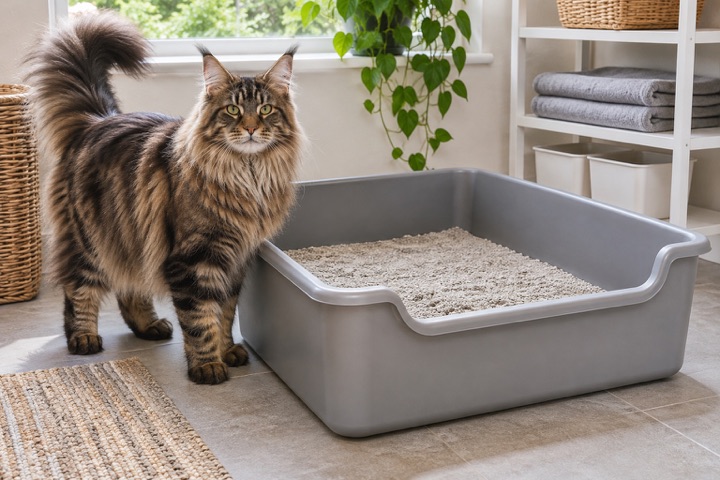
Open or Covered? Three Questions for Choosing a Litter Box
Compare usable space, odor and your cat's sense of safety before deciding on a design.
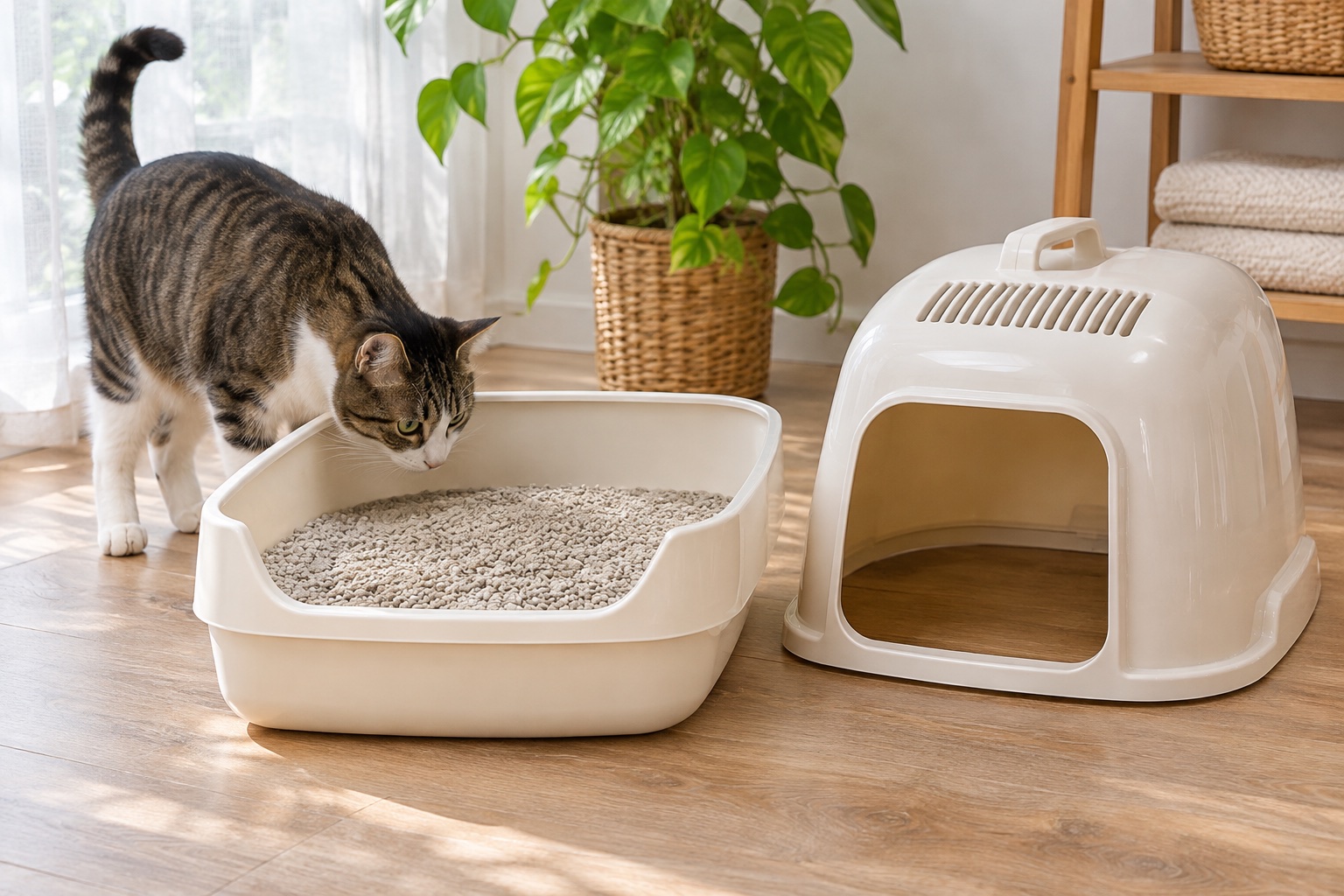
Compare interior room, cleanliness and escape routes, then let your cat show its preference.
Cover illustration generated with AI. About our images.
A litter box should work for the cat before it works for the decor. Open and covered designs can both be used successfully, but the label alone says little about comfort. Three questions make the choice clearer.
Is there enough usable room?
Measure the interior, including the space lost to a sloping hood. Your cat should turn and dig without crouching awkwardly. Check the entrance height for kittens, older cats or animals with painful joints. A flap or top entry may add an obstacle some cats would rather avoid.
Where does the odor go?
A lid may hide smells from people while concentrating them inside. Scoop regularly and wash the tray as needed, using a mild approach that leaves no strong fragrance. Good cleaning matters more than a promise of odor control on the packaging.
A litter-catching mat can help around an open tray, provided the surface does not discourage your cat from approaching.
Can the cat enter and leave comfortably?
Some cats enjoy enclosure; others prefer visibility and more than one escape direction. In multi-cat homes, watch for blocking or ambushing. A quiet location should still be accessible and should not trap the cat in a dead end.
Offer a choice at home
If possible, keep the familiar setup while introducing an alternative with the same litter. Observe preference over several days without forcing the cat inside. Separate boxes in different locations are more useful than several trays crowded together.
A new toileting problem calls for a health check as well as a review of the equipment. Buying a different box should not delay that assessment.
General educational information. For individual health concerns, consult your veterinarian. Suggest a correction.