Pet-Proof Your Home, One Room at a Time
Use a simple room-by-room sweep to reduce common hazards before curiosity finds them.
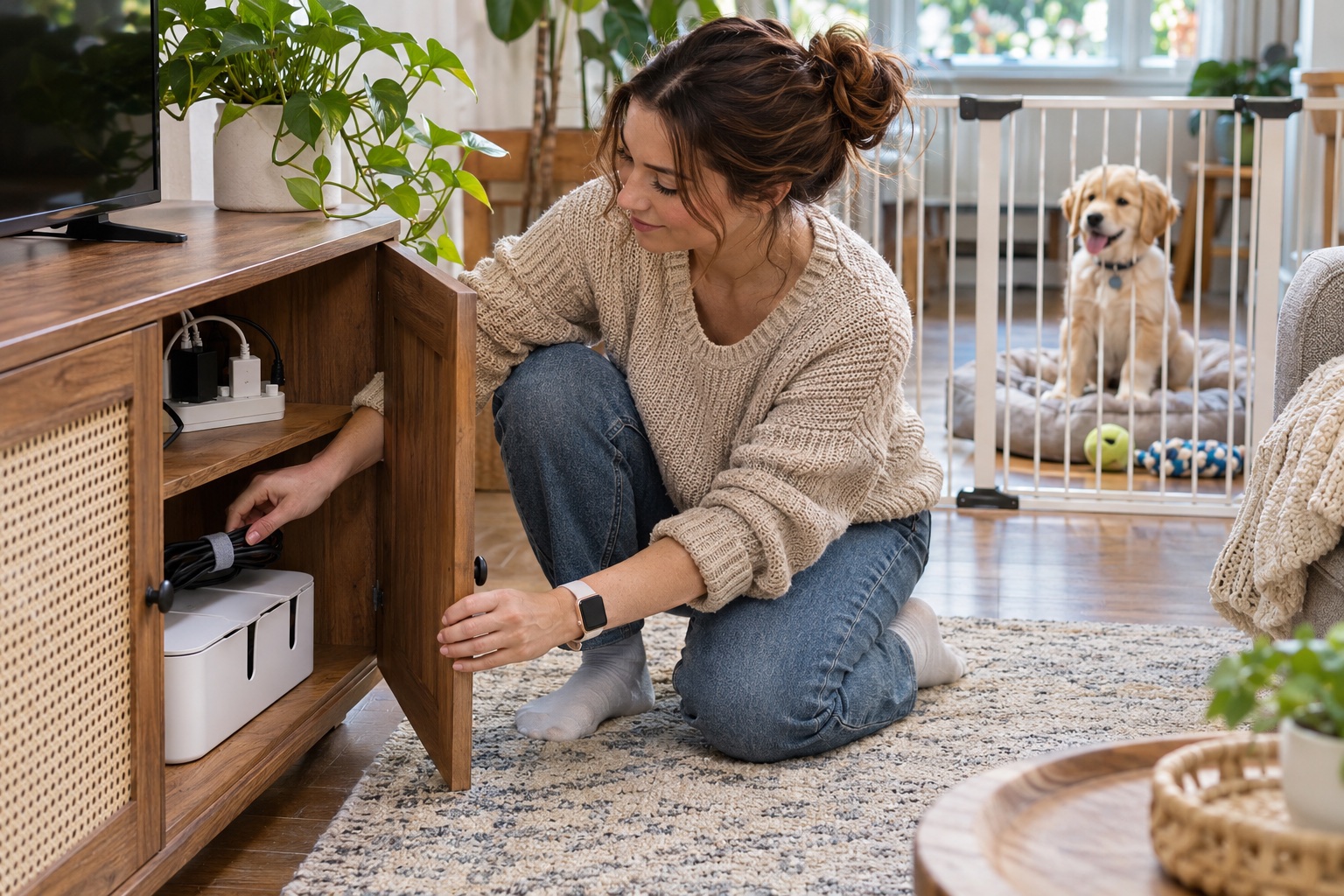
Secure hazards physically and repeat the check whenever the household setup changes.
Cover illustration generated with AI. About our images.
Pet-proofing is an ongoing habit rather than a one-time shopping list. Look at each room from the animal's height and consider what can be reached, chewed, swallowed or climbed. A newly confident pet may access places it ignored during its first week.
Kitchen and bathroom
Secure food waste, medicines, cleaning products and sharp objects. Keep counters clear of dangerous foods and check that bins cannot be opened easily. Close appliance doors only after checking inside, particularly with curious cats nearby.
Living and sleeping spaces
Put cords, batteries, small toys, sewing materials and loose string out of reach. Inspect furniture mechanisms before reclining or folding them. Choose stable climbing and resting surfaces, and remove loops or gaps that can trap an animal.
Windows, balconies and entrances
Use secure, properly fitted screens or barriers and check them regularly. A cracked window or a high floor does not remove fall risk. Plan door routines so deliveries and visitors do not create an easy escape route.
Plants and decorations
Identify plants by their botanical names and check species-specific toxicity before bringing them home. Keep candles, fragile ornaments and seasonal decorations beyond reach. Height alone is not a reliable barrier for a climbing cat.
Recheck after changes
Moving furniture, receiving gifts or starting a renovation creates new hazards. Give pets a safe, quiet area during disruption and inspect the room before restoring access.
Good management reduces the number of situations in which you need to say 'leave it.' Training is useful, but it should not be the only protection against a dangerous object.
General educational information. For individual health concerns, consult your veterinarian. Suggest a correction.