Before the Road Trip: Help Your Dog Feel Comfortable in the Car
Separate motion sickness from fear and build familiarity through small, manageable practice trips.
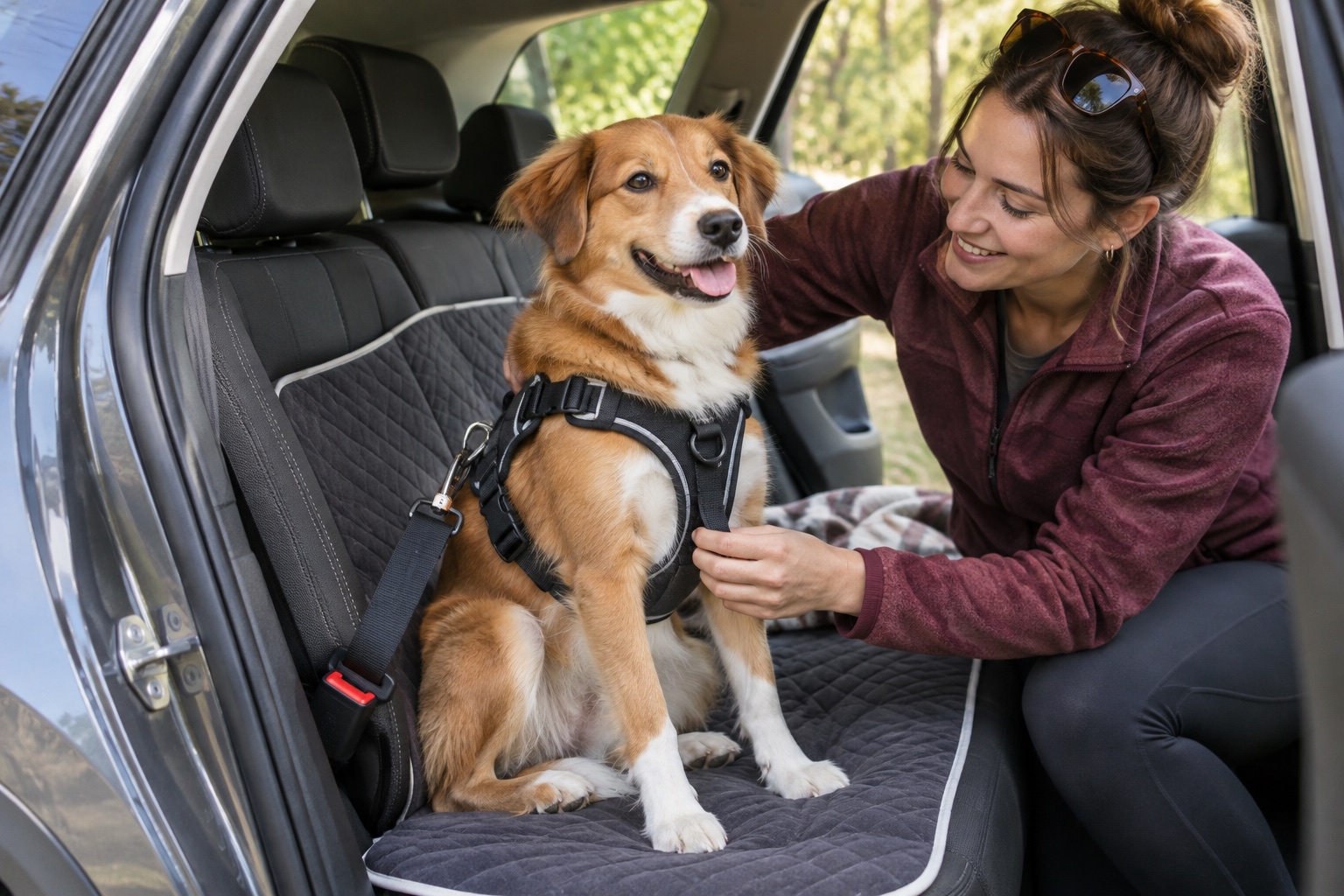
Address possible sickness and practice in small stages before a demanding journey.
Cover illustration generated with AI. About our images.
A dog may dislike the car because of motion sickness, unfamiliar movement, previous experiences or several factors together. Drooling, restlessness and refusal to approach can provide clues, but a veterinarian can help assess the medical side before training begins.
Start while parked
Introduce the vehicle in a quiet, safe place. Reward approaching, then entering voluntarily when practical. Use the carrier or restraint intended for travel and keep the engine off during the earliest practice. Let the dog leave before worry builds.
Add movement gradually
Progress to a brief engine-on session and then a very short journey only when the earlier step is comfortable. End at a pleasant, familiar place when possible. Do not make every ride predict an unpleasant appointment.
Plan the practical details
Secure the dog appropriately, maintain comfortable temperature and allow suitable rest and toilet stops. Follow veterinary advice about meals before travel. Never give human travel medication without specific instructions for your dog.
Watch the response
If your dog continues drooling, vomiting, trembling or trying to escape, reduce the challenge and seek advice. Repeated long rides while distressed can strengthen the problem. Medication may be useful in some cases but should support an individual plan.
A carrier or restraint manages physical safety; it does not prove the dog feels calm. Build both safety and familiarity before asking the animal to cope with a full holiday itinerary.
General educational information. For individual health concerns, consult your veterinarian. Suggest a correction.