10 Changes in Your Pet That Deserve Attention
Know the everyday observations worth recording and the urgent signs that should not wait.
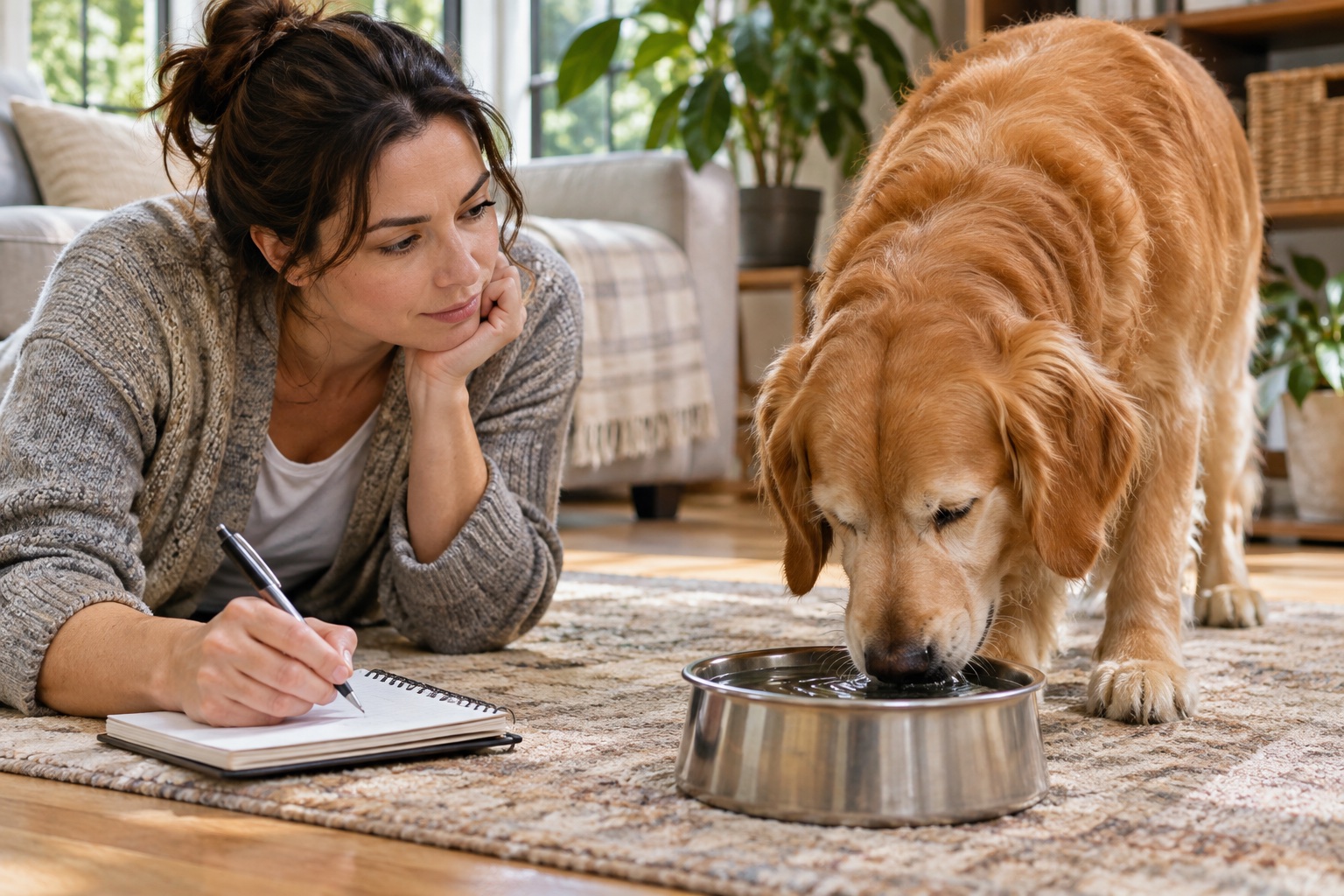
Notice changes early and seek urgent care for breathing difficulty, collapse or inability to urinate.
Cover illustration generated with AI. About our images.
Knowing your pet's usual habits makes small changes easier to recognize. A warning sign does not identify a diagnosis, but it can tell you when to ask for help. Consider the severity, combination and speed of change rather than relying on one fixed waiting period.
Signs to notice
- Breathing that is labored, unusually rapid at rest or otherwise different.
- Gums that appear markedly pale, blue-gray or otherwise abnormal.
- Collapse, severe weakness, disorientation or reduced responsiveness.
- A clear reduction in appetite or difficulty eating.
- A marked change in thirst.
- Unexplained weight gain or loss.
- Repeated vomiting, significant diarrhea or blood in waste.
- Straining, repeated toilet attempts or a change in urine output.
- Pain, limping or reluctance to move.
- Sudden hiding, irritability or withdrawal from familiar activities.
Know what cannot wait
Breathing difficulty, collapse, severe bleeding and suspected poisoning warrant emergency veterinary contact. A cat straining without passing urine needs urgent assessment. Do not assume it is constipation or wait for the next routine appointment.
A cat that stops eating also needs prompt advice; kittens, frail animals and pets with medical conditions can deteriorate more quickly. The absence of dramatic symptoms does not guarantee that waiting is safe.
Bring a useful history
Record when the change began, food and water intake, medication and recent exposures. A short video of movement or breathing and photographs of unusual waste can help, provided recording does not delay care.
Describe what you see in plain language. Your veterinarian can use those observations to decide the next step; you do not need to identify the illness yourself.
General educational information. For individual health concerns, consult your veterinarian. Suggest a correction.