Summer Walks: Keep Your Dog Cool, Comfortable and Curious
Plan around heat, choose gentler routes and recognize the signs that mean it is time to stop.
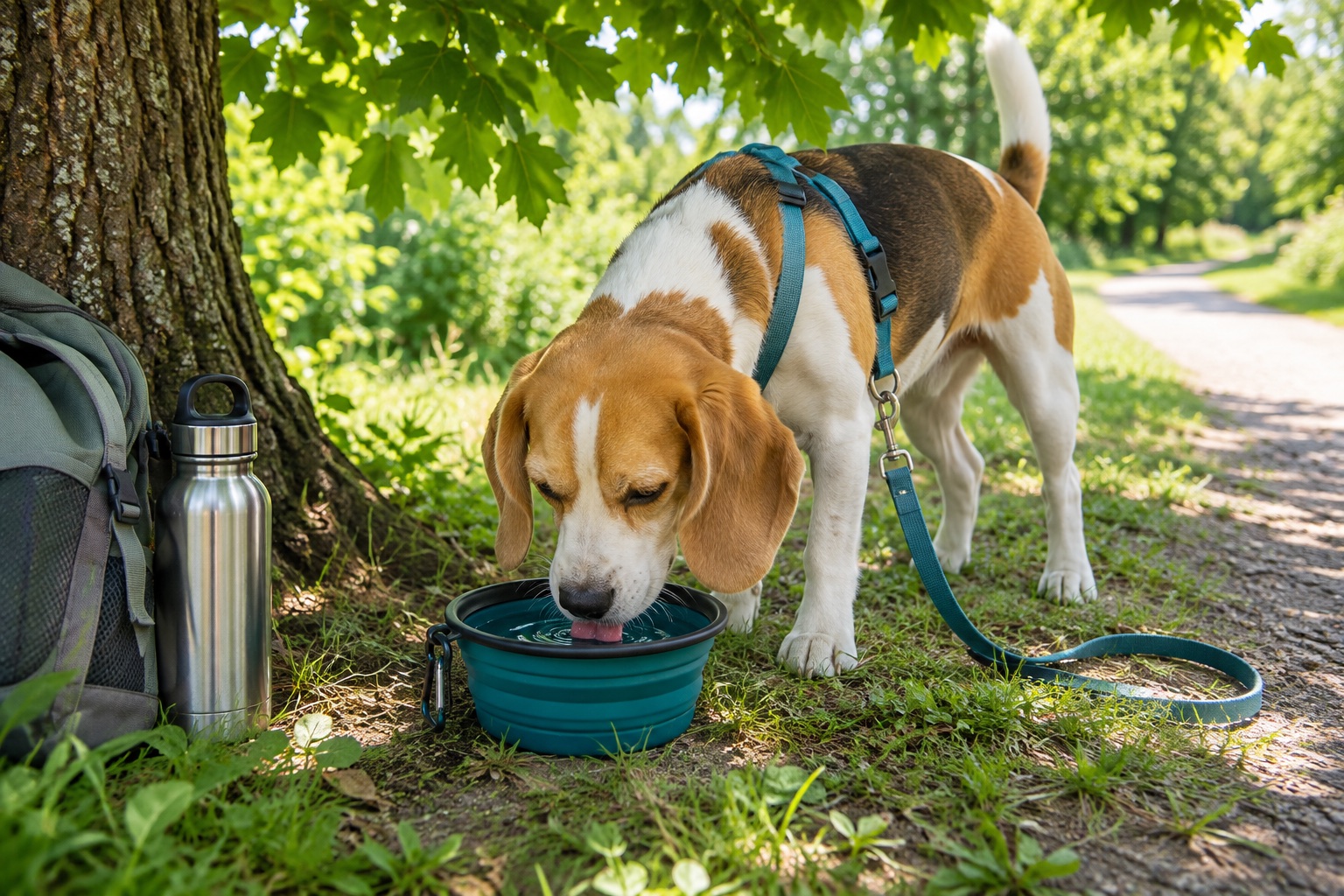
In hot weather, comfort and recovery matter more than completing the usual route.
Cover illustration generated with AI. About our images.
A familiar route can feel very different in summer. Air temperature, humidity, sunshine and hot surfaces all affect how a dog copes. The aim is a comfortable outing, with permission to shorten the walk or stay indoors when conditions are unsuitable.
Choose the conditions before the distance
Prefer cooler parts of the day and shaded routes with easy ways home. Ground surfaces may stay hot after the air begins to cool. Check them before setting out, and avoid prolonged exposure to sun-baked pavement. A quick hand check is only a warning screen, not a guarantee of safety.
Flat-faced dogs, older pets, puppies and dogs with health conditions may need particular care. Ask your veterinarian about activity limits when breathing, heart or mobility problems are present.
Pack a small, useful kit
Bring fresh water, a bowl, waste bags and a secure leash attached to comfortable equipment. Offer pauses in shade and let your dog set a gentler pace. Booties require careful fitting and acclimation; they do not make an otherwise unsafe walk safe.
Use indoor sniffing games or short training sessions when outdoor exercise is limited. Mental activity can add variety without turning the day into an endurance test.
Recognize trouble early
Heavy or unusual panting, drooling, weakness, confusion or collapse can indicate heat illness. Stop immediately, move into shade or air conditioning, begin cooling with cool water and airflow, and contact an emergency veterinarian. Do not delay transport while waiting for your dog to appear normal. Avoid wrapping the body in wet towels that can retain heat.
Never leave a dog unattended in a vehicle, even with windows partly open. After an ordinary walk, give your dog water and a cool resting place, and watch how quickly normal comfort returns.
Further reading
AVMA: Pet first aidGeneral educational information. For individual health concerns, consult your veterinarian. Suggest a correction.