Growing Older Together: A Practical Guide to Senior Pet Care
Protect comfort through earlier observation, accessible surroundings and care that responds to changing needs.
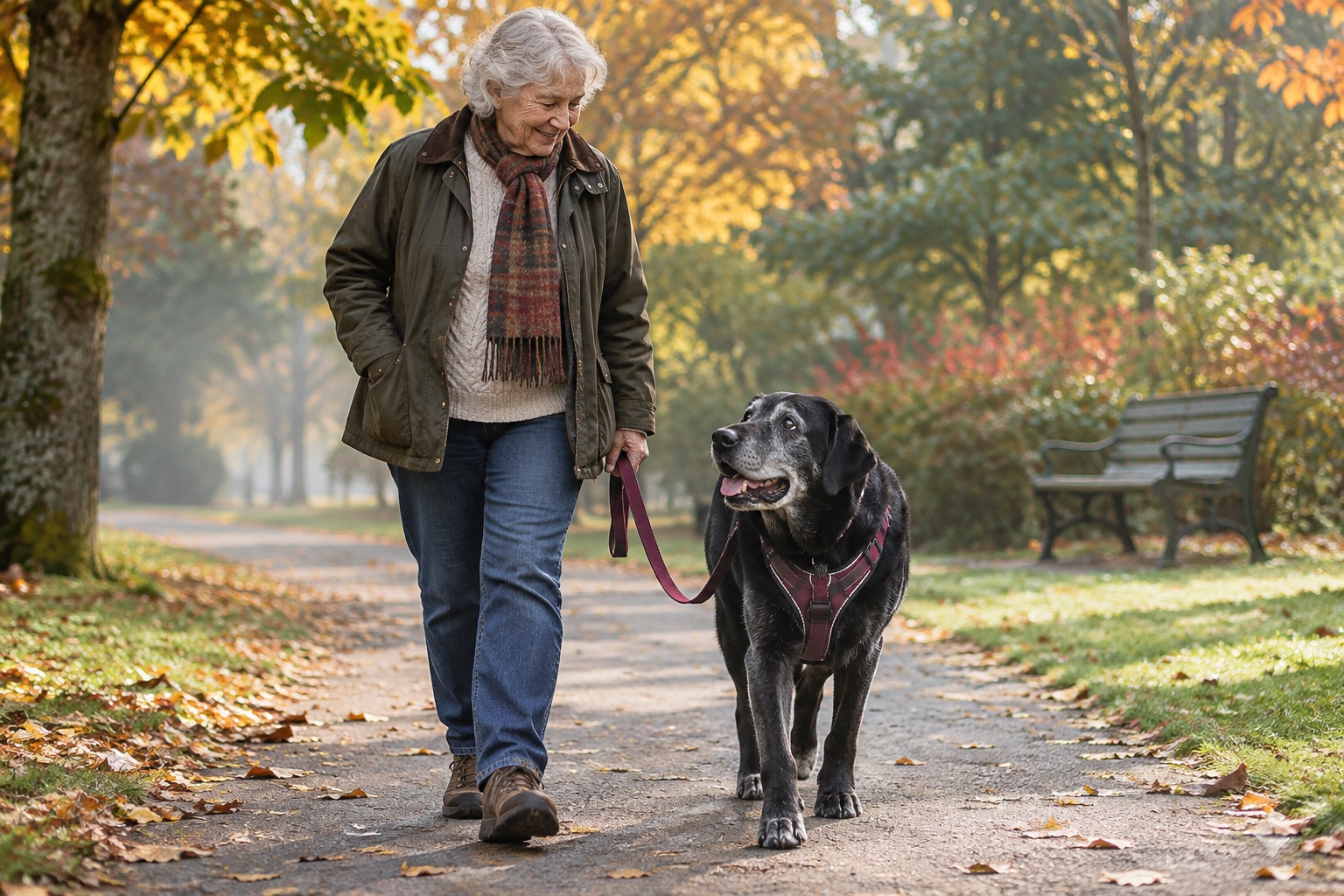
Treat changes as information, improve access and make comfort the center of senior care.
Cover illustration generated with AI. About our images.
Aging is gradual, but discomfort should not be dismissed as an inevitable part of it. Dogs and cats reach later life at different rates, and the most useful guide is the individual animal's function: how it moves, eats, rests and enjoys familiar activities.
Notice the small changes
Watch for difficulty rising, hesitation at stairs, reduced jumping, weight changes or altered grooming. Nighttime restlessness, confusion and new accidents also deserve attention. Pain, sensory changes and illness can resemble 'slowing down,' so record patterns and arrange an examination.
Make the home easier to use
Add non-slip routes, low steps where appropriate and supportive resting places. Keep food, water and toilet areas accessible. Cats may need low-entry litter boxes on more than one level; dogs may need more frequent, shorter outdoor trips.
Review food and movement
Monitor weight and muscle condition rather than simply feeding less because activity has changed. Diet should reflect the pet's health, not age alone. Gentle, regular movement can support comfort, but intensity and duration should be adjusted with veterinary advice when needed.
Keep familiar pleasures
Offer manageable sniffing, play and social contact. Let the animal rest and avoid overwhelming it with a suddenly busy routine. A favorite activity may need adapting rather than disappearing entirely.
Plan care together
Ask about suitable checkup intervals, pain assessment, medication reviews and changes to watch. A simple quality-of-life record can track comfort, appetite, mobility and engagement over time.
The goal is not to preserve a younger version of your pet. It is to make the life it has now as comfortable, interesting and connected as possible.
General educational information. For individual health concerns, consult your veterinarian. Suggest a correction.