Pet Weight-Loss Meals: Count Calories Without Losing Balance
Build a complete feeding plan with measured portions, modest treats and progress checks.
Use an individualized calorie target while preserving complete nutrition and monitoring comfort.
Cover illustration generated with AI. About our images.
Weight management is not simply a smaller bowl of whatever the pet already eats. The plan needs to reduce excess energy while preserving nutrition, muscle and comfort. Start with a veterinary assessment of body condition and a realistic target.
Set an individual allowance
Ask for a daily calorie goal and a suitable food. A universal instruction to feed 80 percent of the packet amount may be wrong for your pet. Package guidance is only a starting estimate, and therapeutic weight-management foods may help in some cases.
Measure the portions
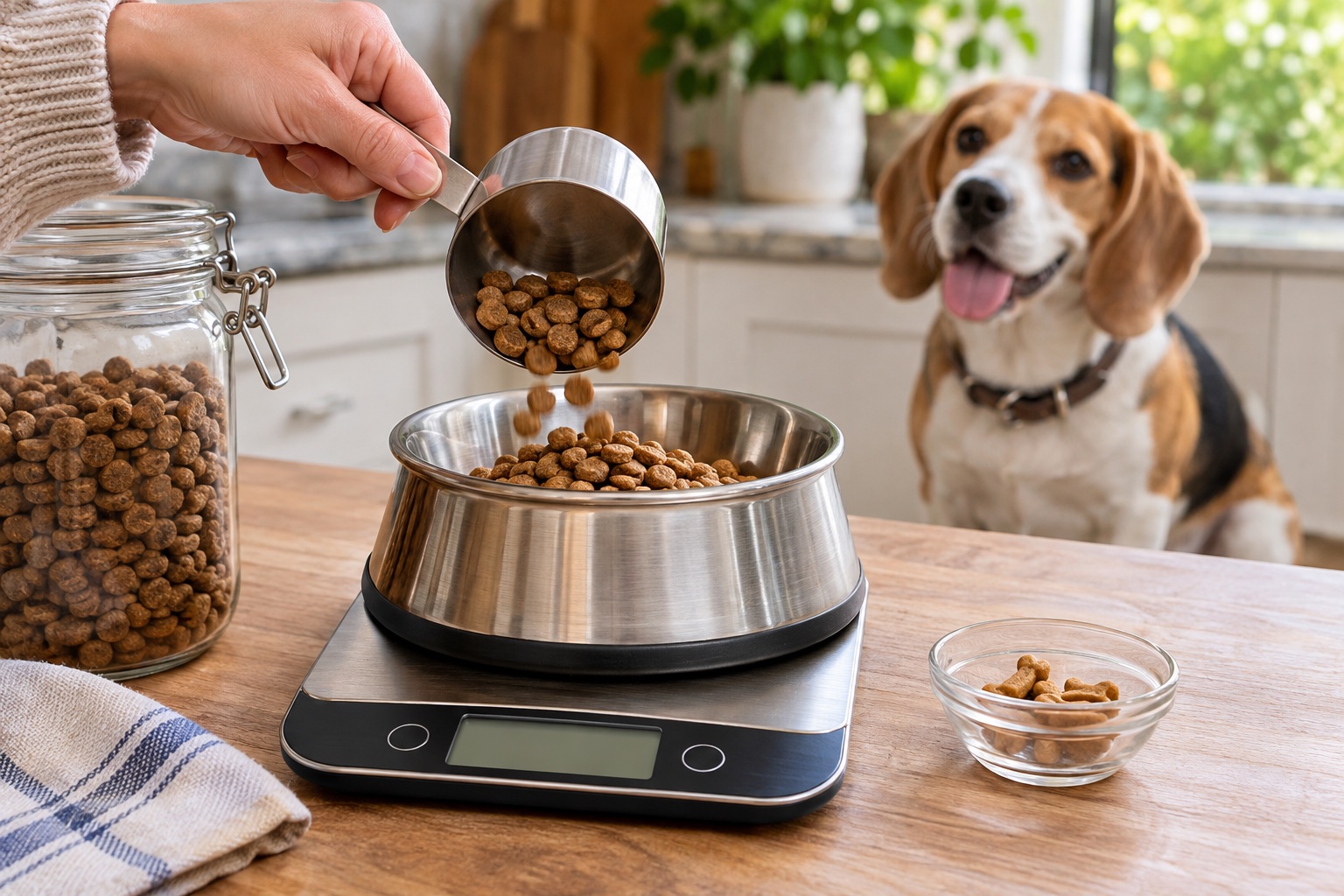
Use a kitchen scale and the food's calorie information. Divide the allowance into a practical meal schedule and include every treat, chew and table scrap. If several people feed the pet, prepare the full day's ration in one clearly identified container.
Keep meals nutritionally complete
Do not replace a complete diet with an improvised ratio of meat, vegetables and rice. Homemade diets need formulation by a qualified veterinary nutrition specialist to meet requirements while controlling energy. 'Low fat' alone does not establish that a food is appropriate.
Cats should never be crash-dieted or allowed to stop eating as part of a weight-loss plan.
Add comfortable movement
Use short walks, gentle play and simple food puzzles suited to mobility. Address painful joints or other barriers rather than expecting exercise alone to solve the problem.
Review and adjust
Track weight, body and muscle condition, appetite and activity at agreed intervals. Seek advice if progress is unexpectedly rapid, the pet seems unwell or intake falls. A sustainable plan should improve daily comfort as well as the number on the scale.
General educational information. For individual health concerns, consult your veterinarian. Suggest a correction.