Houseplants and Pets: Check the Plant Before Choosing the Pot
Use reliable plant identification and species-specific information to make safer choices for a shared home.
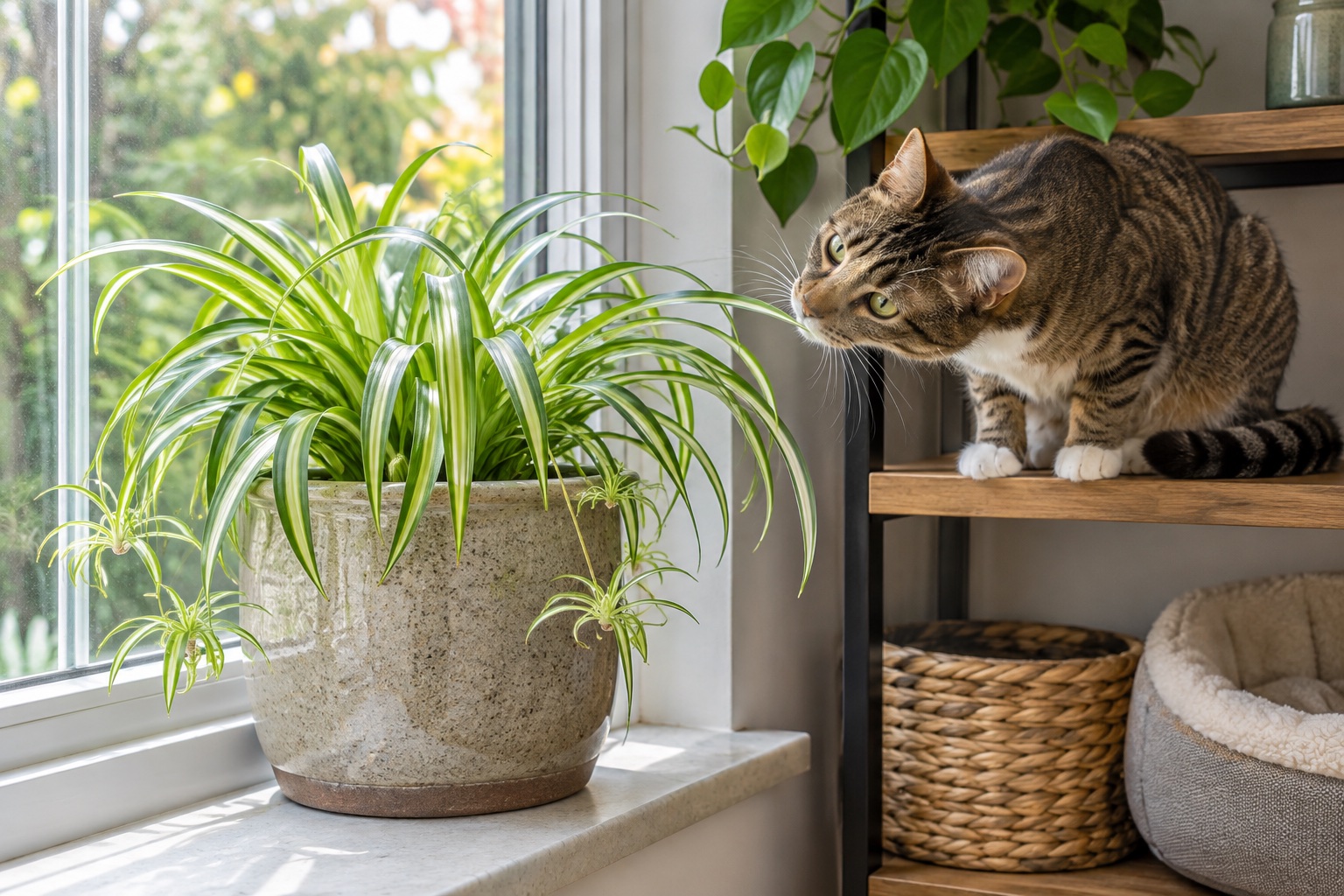
Identify plants accurately and treat suspected toxic exposure as a reason for prompt professional advice.
Cover illustration generated with AI. About our images.
A plant can look harmless and still be unsuitable for a home with curious animals. Common names may refer to several different species, so the most useful starting point is an accurate botanical identification.
Check before bringing it home
Use a reputable veterinary or animal poison resource to assess the plant for the species you keep. Keep the label or a clear photograph. If the identity is uncertain, do not assume that an attractive display or a 'natural' label means it is safe.
True lilies and daylilies are especially dangerous to cats. Exposure can involve plant material, pollen or vase water, so keeping the flowers on a high shelf is not a dependable precaution.
Consider the whole arrangement
Fertilizers, pesticides, decorative stones, ribbons and unstable pots introduce separate risks. A plant described as non-toxic can still cause digestive upset if eaten, and soil or small accessories may be swallowed.
Create safer alternatives
Choose verified suitable plants, position them securely and provide appropriate enrichment so plants are not the only interesting objects available. Supervise new arrangements and remove anything your pet persistently chews.
Act on possible exposure
If your pet may have eaten or contacted a dangerous plant, contact a veterinarian or animal poison service promptly. Save a sample or photograph and describe the timing. Do not wait for symptoms or induce vomiting unless specifically instructed.
A short identification check before purchase is easier than trying to determine the contents of a bouquet during an emergency.
Further reading
ASPCA: Toxic and non-toxic plantsGeneral educational information. For individual health concerns, consult your veterinarian. Suggest a correction.