Brushing Your Dog's Teeth: Build a Routine That Lasts
Start with comfortable mouth handling and progress toward gentle daily brushing without forcing the process.
Teach mouth handling gradually and combine daily brushing with appropriate professional care.
Cover illustration generated with AI. About our images.
The most effective brushing routine is one you can repeat comfortably. If the mouth is painful, forcing a brush inside can make the next attempt harder. Begin with a veterinary oral check when there is persistent bad breath, bleeding or a change in chewing.
Gather simple equipment
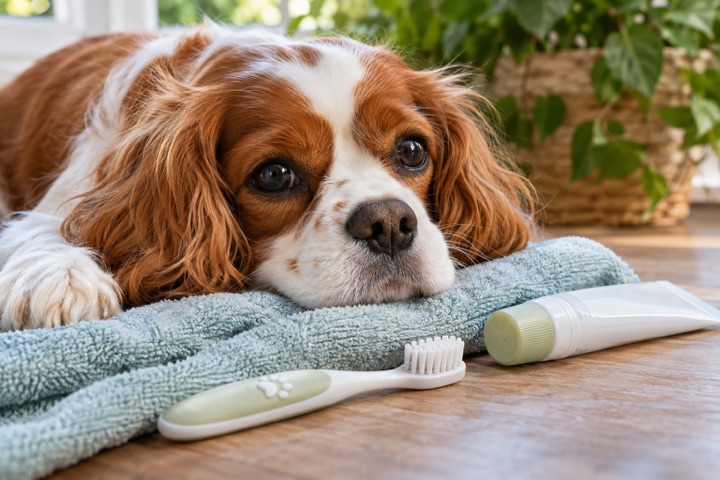
Use a soft pet toothbrush sized for your dog and toothpaste intended for pets. Human toothpaste is inappropriate. Choose a quiet time, a comfortable position and a small reward your dog can enjoy.
Teach the steps separately
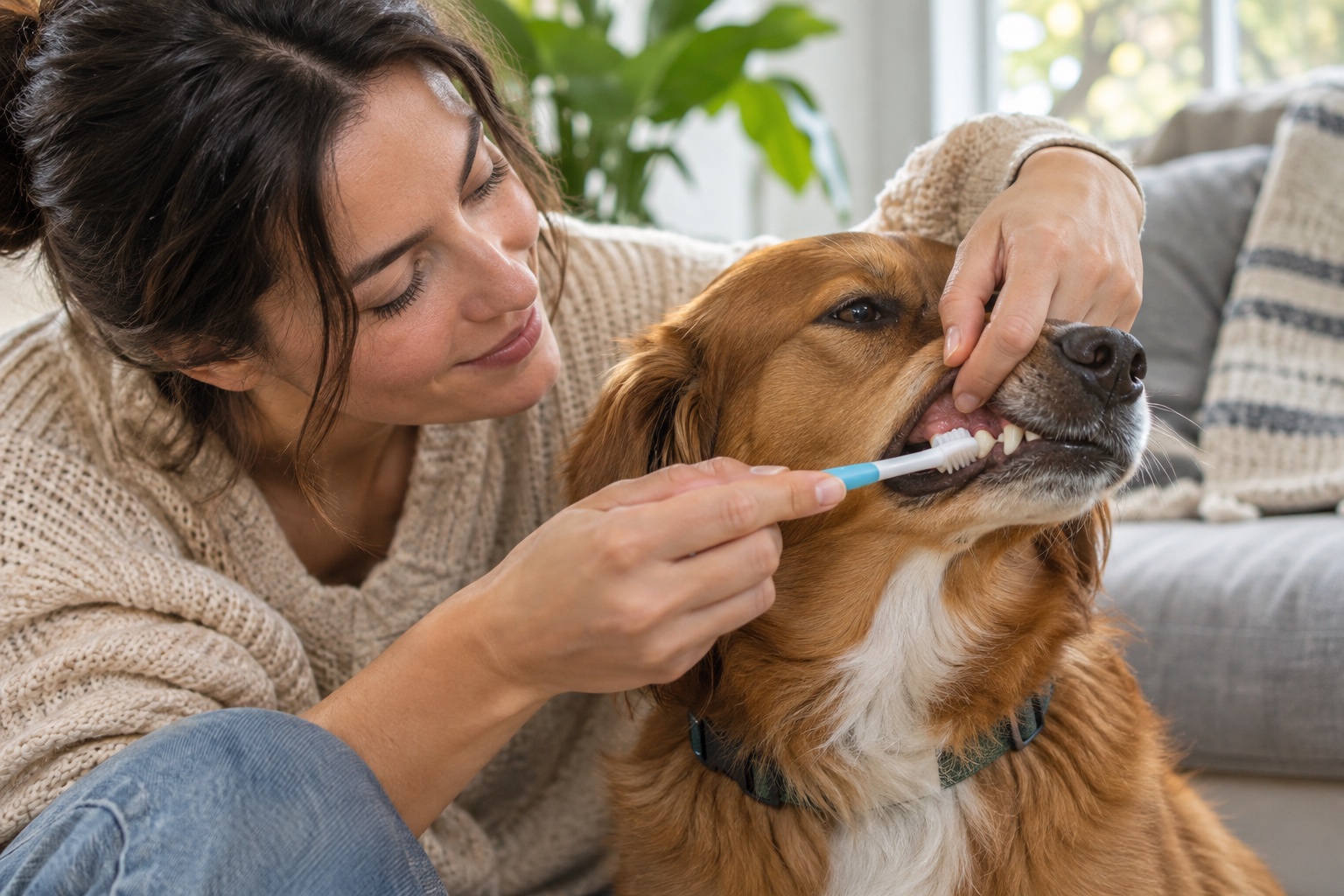
First reward a brief touch near the cheek. Progress to lifting a lip, tasting toothpaste and allowing the brush near the mouth. Keep each stage short and move on only when your dog is relaxed.
Begin with a few easy-to-reach outer tooth surfaces. Use gentle movements near the gumline without scrubbing sore tissue or forcing the jaws apart. Gradually extend the area as cooperation improves.
Aim for consistency
Daily plaque control is a useful goal, but a rushed struggle does not build that habit. If your dog becomes worried, return to an easier step. Record problems and ask the veterinary team to demonstrate technique if needed.
Keep expectations realistic
Brushing does not guarantee that dental disease will never occur. It cannot remove established calculus or diagnose problems below the gums. Professional examinations and treatment may still be needed.
Dental chews and other suitable products can support a plan, but should not be presented as universal substitutes. The outcome to aim for is a comfortable mouth, with home care and veterinary care working together.
Further reading
AVMA: Pet dental careGeneral educational information. For individual health concerns, consult your veterinarian. Suggest a correction.