How Often Should You Bathe Your Pet? Let the Animal Guide You
Base bathing on coat, skin, lifestyle and comfort instead of a fixed timetable for every dog and cat.
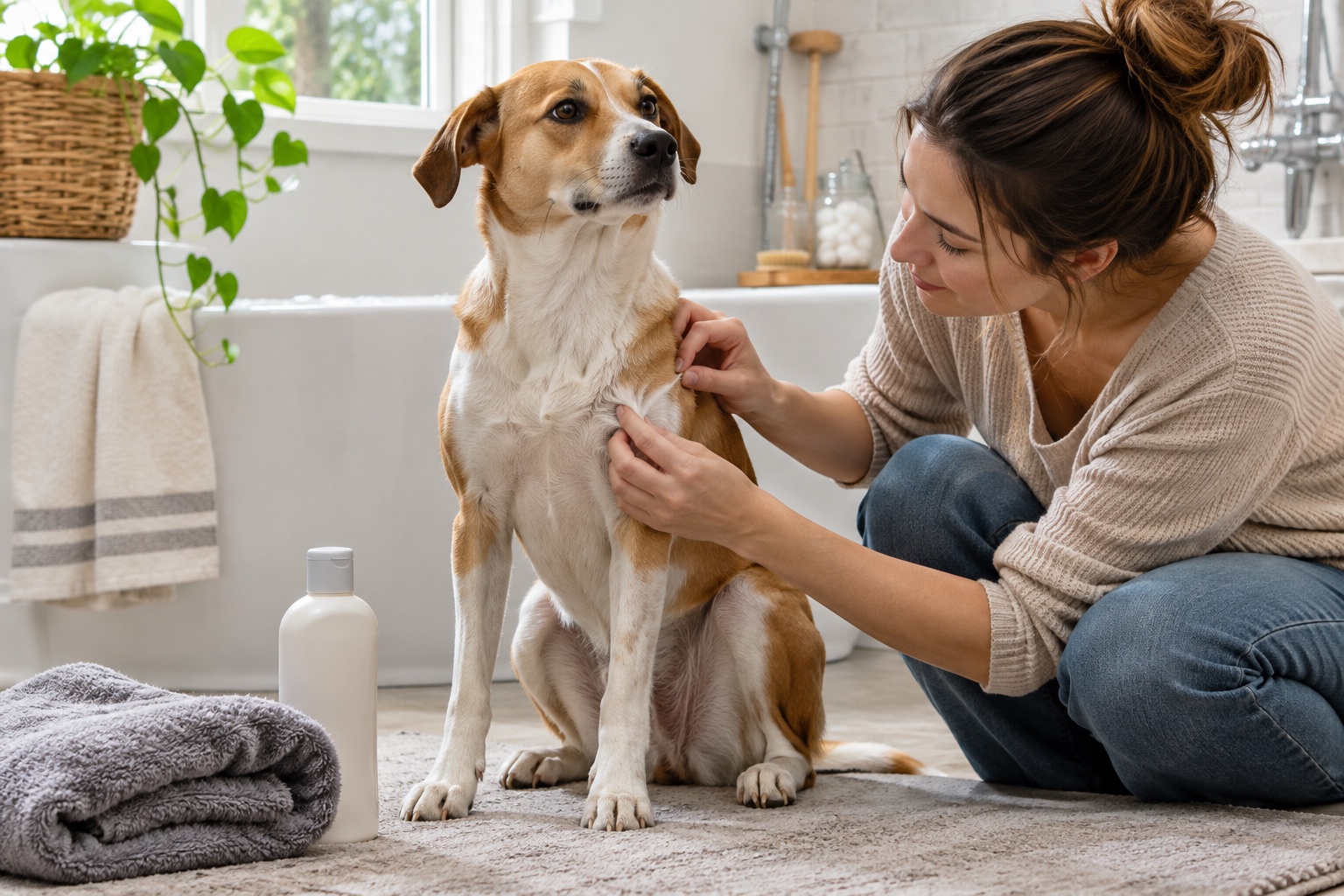
Bathe for a clear need, using a routine suited to the coat, skin and individual animal.
Cover illustration generated with AI. About our images.
Bathing is a care tool, not a calendar obligation. A muddy dog, a healthy self-grooming cat and an animal receiving skin treatment have different needs. Start with the reason for washing and choose the gentlest effective approach.
For dogs, consider the whole routine
Outdoor activity, coat type, skin condition and odor all affect frequency. Local cleaning may be enough after a small muddy patch. Repeated washing with unsuitable products can irritate skin, while a veterinary-prescribed bathing plan may call for a specific schedule.
An unusual or persistent smell should not simply be covered with perfume. Check for skin or ear problems and seek advice when needed.
Most cats need less bathing
Healthy cats generally maintain their coats through grooming. Some individuals need help because of mobility limitations, contamination or a particular skin condition. If the coat has a potentially toxic substance on it, contact a veterinarian promptly to prevent licking and arrange safe cleaning.
Prepare for comfort
Use a non-slip surface, comfortably lukewarm water and a suitable species-specific product. Keep water away from eyes, ears and nose. Rinse thoroughly and dry according to coat needs without excessive heat or frightening restraint.
Know when to pause
Painful skin, open wounds, severe itching or intense fear calls for an individual plan. A very young, frail or unwell pet may need extra support. Vaccination status alone does not determine a universal bathing date; discuss the animal's actual condition.
Brushing, nail checks and attention to paws are separate parts of care. More baths cannot replace them, and a comfortable pet matters more than a strong 'freshly washed' scent.
General educational information. For individual health concerns, consult your veterinarian. Suggest a correction.