Cat Dental Products: Choosing Support Beyond the Toothbrush
Compare treats, diets, powders and water additives by evidence, tolerance and your cat's actual needs.
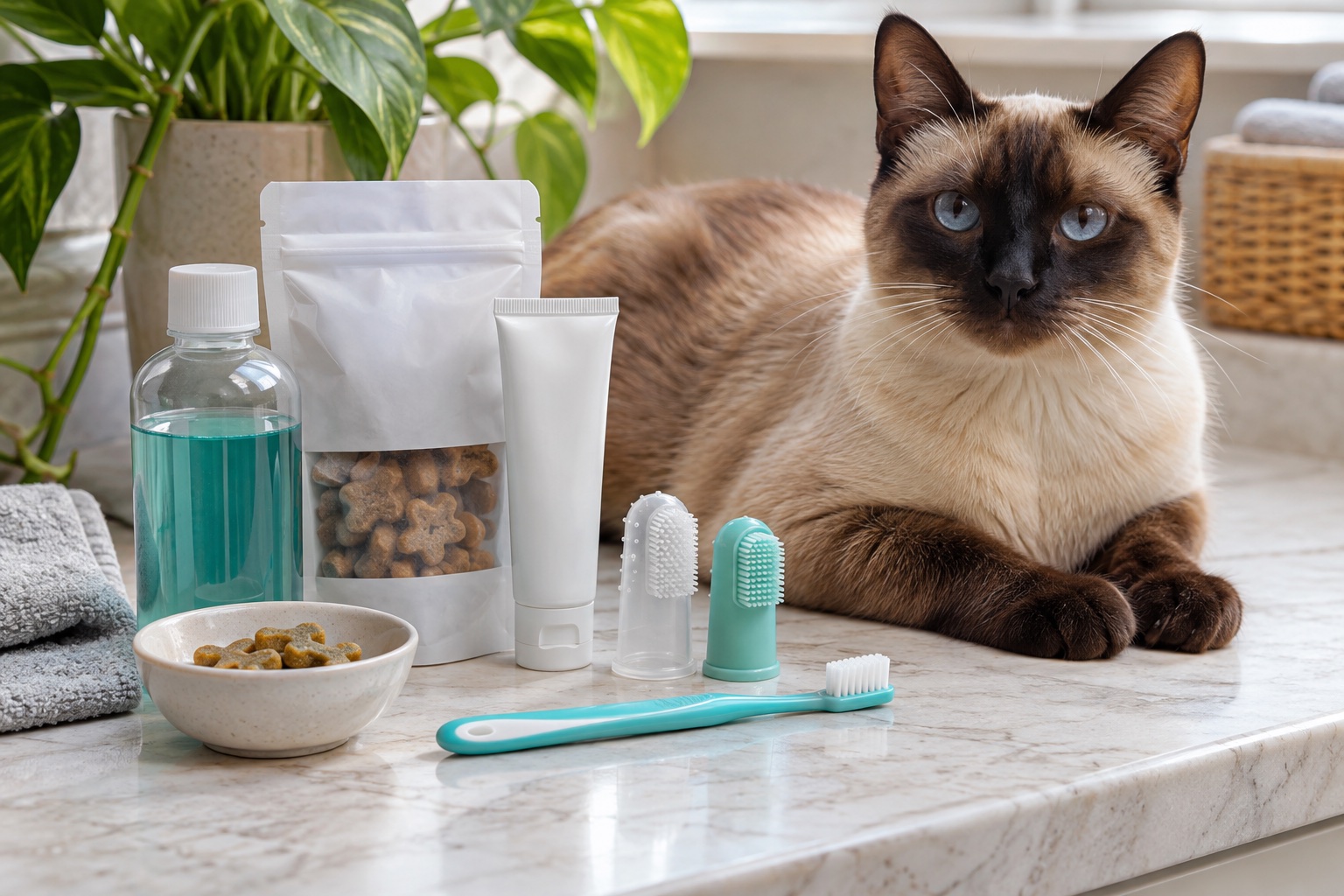
Choose cat-specific products with evidence, and never let convenience delay assessment of a painful mouth.
Cover illustration generated with AI. About our images.
When a cat resists brushing, it is tempting to buy whichever product promises effortless dental care. Treats, powders and water additives differ in evidence and purpose. Begin by checking whether resistance reflects fear, unfamiliar handling or a painful mouth.
Start with an examination when needed
Persistent bad breath, drooling, bleeding or altered chewing calls for veterinary assessment. A product added to food cannot diagnose or treat disease hidden beneath the gums. Do not delay care while trying several alternatives.
Compare the claim with the evidence
Look for products intended specifically for cats and evidence for plaque or tartar control. Veterinary Oral Health Council acceptance can be a useful reference for the listed benefit. A freeze-dried texture, herbal ingredient or strong flavor alone does not establish effectiveness.
Dental treats need to suit the cat's chewing behavior and calorie allowance. Very hard items can damage teeth, and a treat swallowed whole may not perform as intended.
Protect normal eating and drinking
Introduce any suitable additive according to its directions and monitor acceptance. Do not let a flavored water product reduce water intake. Keep plain fresh water available, and stop a product that causes an adverse response.
Medicated rinses or gels should be used under veterinary guidance. Human mouthwash and improvised mixtures are inappropriate.
Keep working on comfortable handling
A supporting product may help while you gradually teach lip lifts and brief brushing. Some cats need an adapted plan. The aim is a manageable combination of home care and professional treatment, not a claim that one powder replaces both.
Further reading
AVMA: Pet dental careGeneral educational information. For individual health concerns, consult your veterinarian. Suggest a correction.