Pet Ear Care: Observe First, Clean Only When Needed
Recognize changes in comfort and avoid unnecessary or forceful cleaning of sensitive ears.
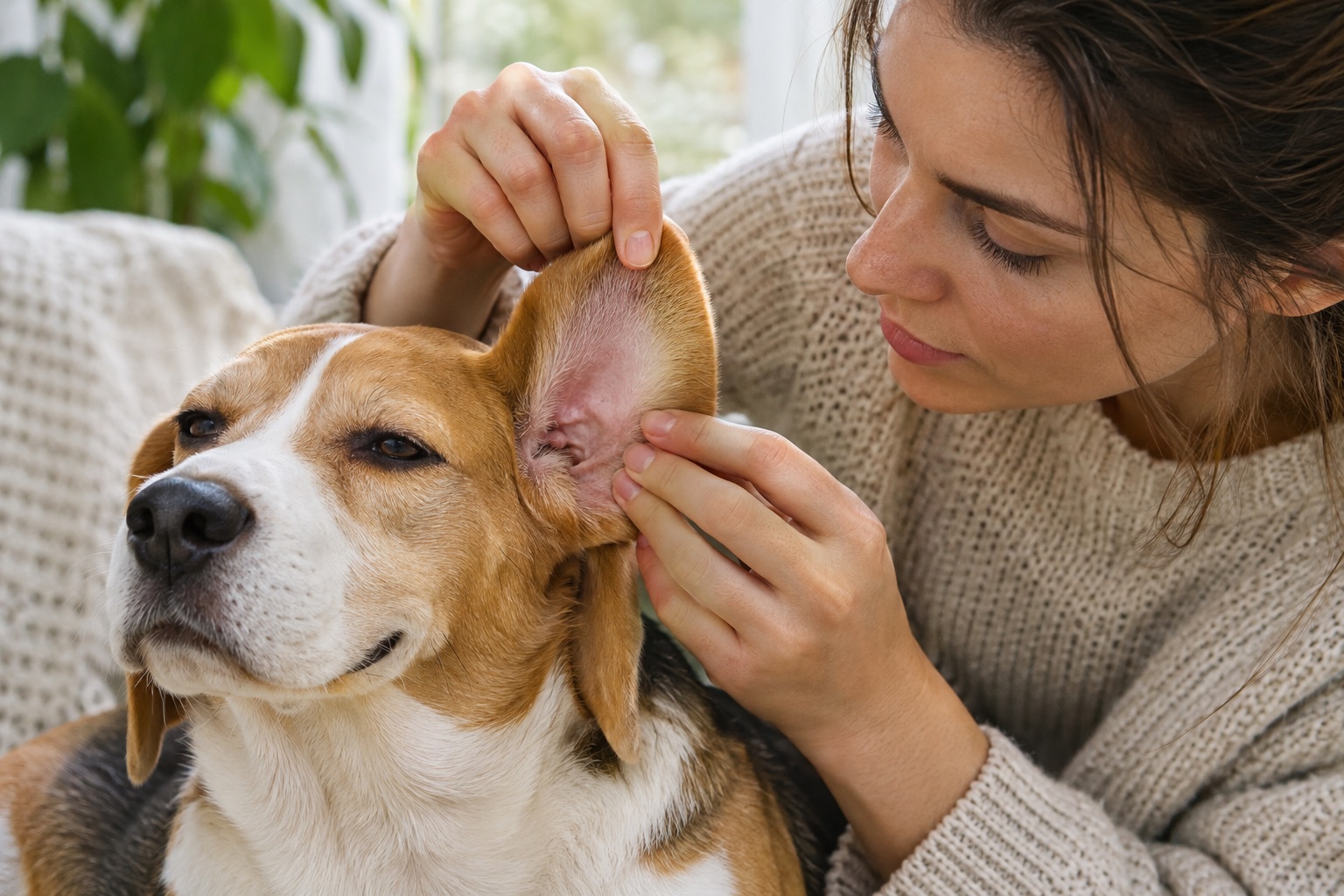
New odor, discharge or pain needs assessment; cleaning should follow the individual ear's needs.
Cover illustration generated with AI. About our images.
Healthy ears do not all need the same cleaning schedule. The useful first habit is observation: knowing how your pet's ears normally look and whether touching them is comfortable. A sudden change deserves attention before another cleaning product.
Notice discomfort
Head shaking, scratching, redness, discharge, unusual odor or sensitivity can indicate a problem. A head tilt, loss of balance or severe pain warrants prompt veterinary advice. These signs cannot be diagnosed by color or smell alone.
Ask before treating
A veterinarian can examine the canal and determine what care is appropriate. Do not reuse leftover medication from a previous episode or another animal. Similar-looking symptoms may have different causes.
Keep routine handling gentle
If cleaning is recommended, use the specified pet product and ask for a demonstration. Avoid inserting cotton swabs deep into the canal, applying essential oils or pouring in household mixtures. Stop if the animal appears painful.
Dry the external ear gently after appropriate washing or swimming without probing inside. Dogs with recurrent problems may need a specific maintenance plan rather than simply more frequent cleaning.
Make checks comfortable
Reward brief, voluntary ear handling during calm moments. This helps you notice changes without turning every inspection into restraint. Record which ear is affected and when symptoms began so the clinic has a clearer history.
General educational information. For individual health concerns, consult your veterinarian. Suggest a correction.