An Emergency Go-Bag for Your Pet
Prepare the essentials that help you leave safely and maintain care when ordinary routines are interrupted.
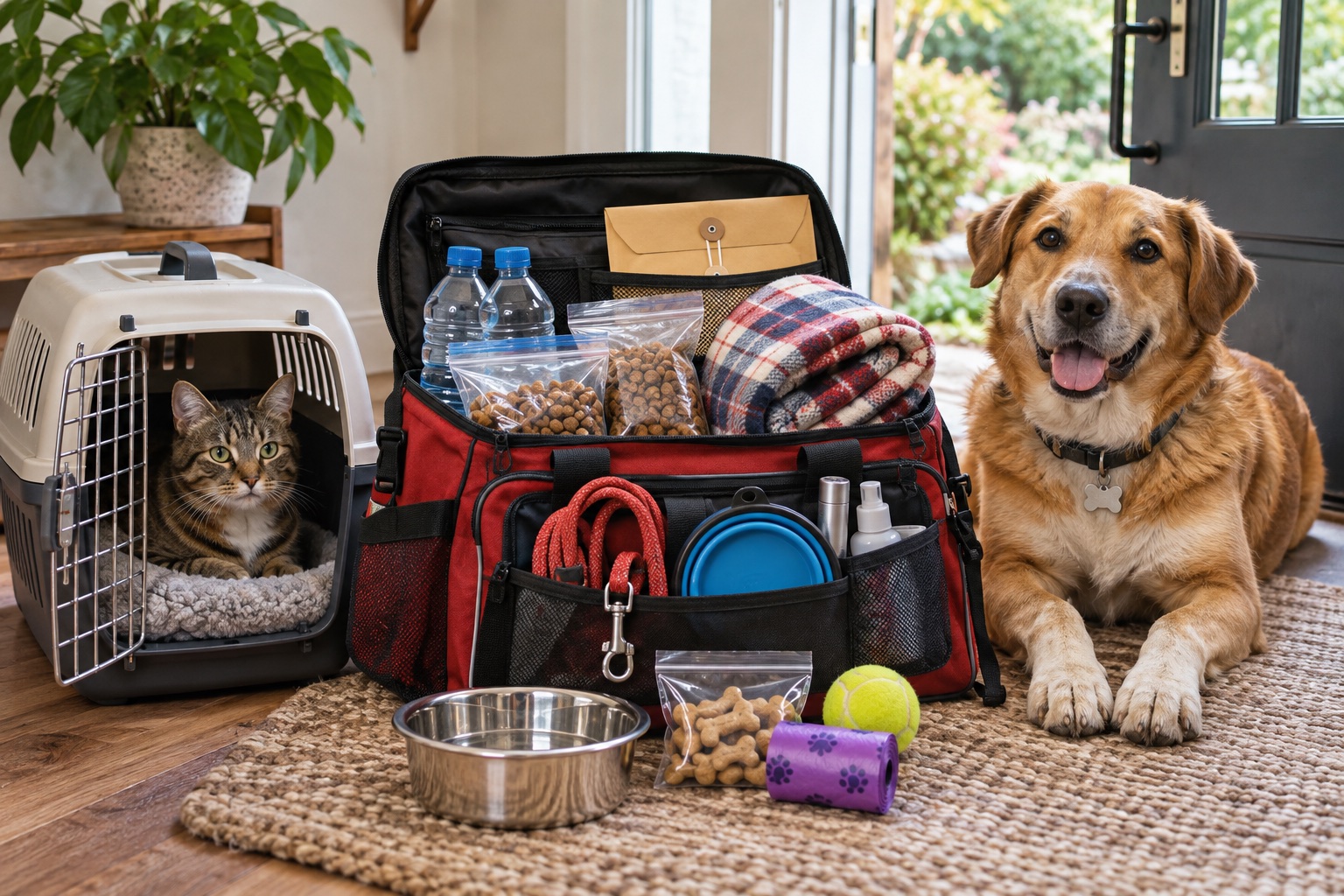
Prepare transport, identification and familiar care supplies before an emergency occurs.
Cover illustration generated with AI. About our images.
An emergency is a difficult time to search for a carrier, prescription or phone number. A compact go-bag and a clear household plan make it easier to bring your pet with you when leaving becomes necessary.
Pack for continuity
Include familiar food, water, bowls, waste supplies, bedding and suitable walking or transport equipment. Keep prescribed medication with its instructions and rotate supplies before they expire. Cats need a practical litter arrangement as well as a secure carrier.
Keep identification accessible
Store copies of relevant health records, microchip details and a recent photograph. Include your contact details and a backup person who can help. Keep digital copies accessible, but do not rely entirely on a phone that may lose power.
Decide where you can go
Identify places that can accommodate your animals and check their requirements directly. Agree who collects each pet and how doors will be managed. Practice entering carriers calmly during ordinary days rather than introducing them during an alarm.
Review the plan
Check the bag periodically and after changes in medication, diet or household animals. A first-aid kit supports transport but does not replace veterinary care. Follow local emergency instructions and avoid entering an unsafe area to retrieve equipment.
Preparation cannot remove every uncertainty. It can make the first important actions clearer when time and attention are limited.
Further reading
AVMA: Pet first aidGeneral educational information. For individual health concerns, consult your veterinarian. Suggest a correction.