Why Daily Dental Care Belongs in Your Pet's Routine
Protect comfort with regular plaque control, sensible product choices and professional oral examinations.
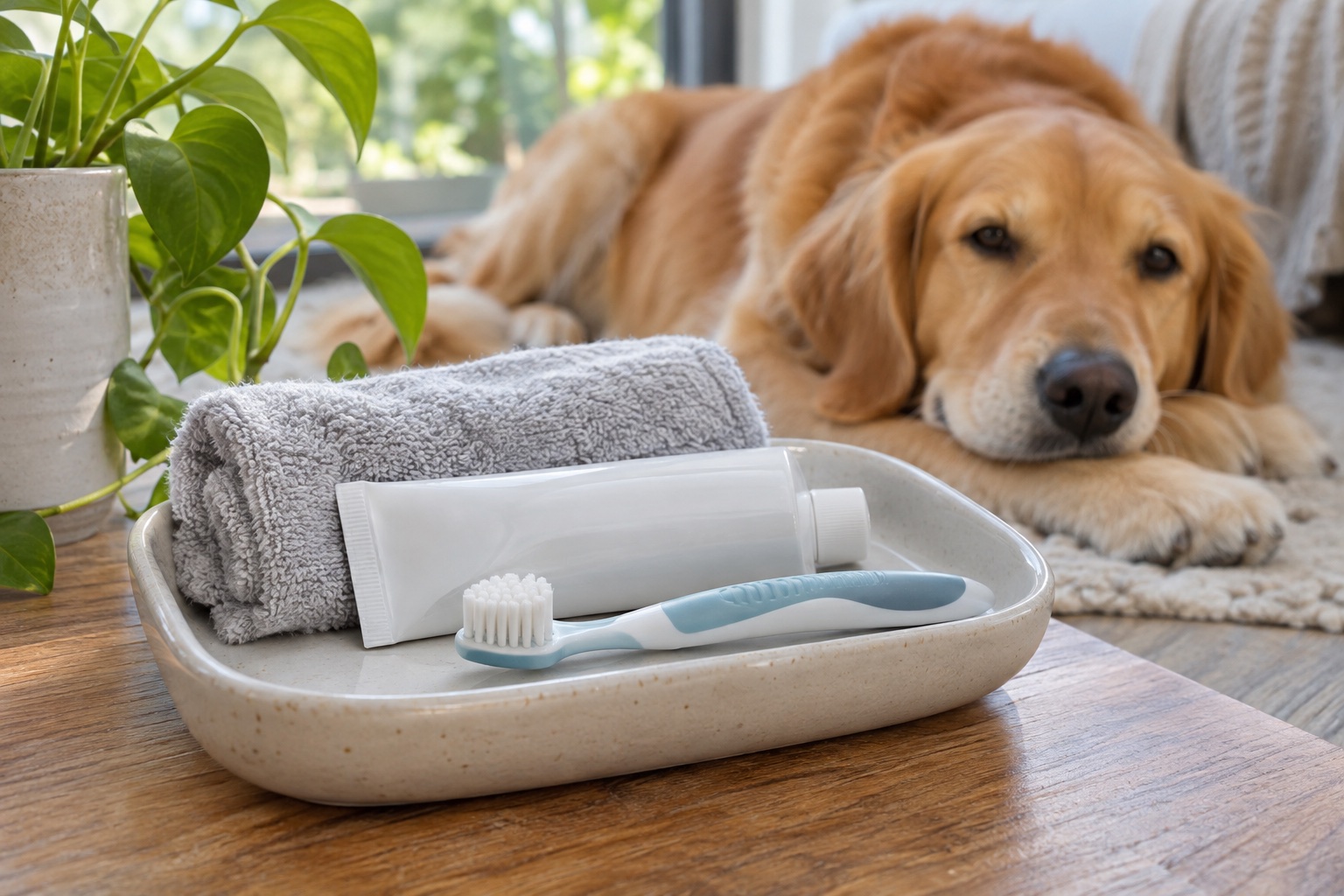
Combine comfortable plaque control at home with regular professional dental assessment.
Cover illustration generated with AI. About our images.
Dental care is easy to overlook when a pet still eats and plays. Yet a mouth can be uncomfortable before the signs become obvious. A regular home routine gives you opportunities to notice changes and supports the care your veterinary team provides.
Make brushing familiar
Begin with brief lip lifts and a taste of pet toothpaste. Progress to a soft brush on a few outer tooth surfaces, rewarding calm participation. Work toward daily brushing as your pet becomes comfortable, without forcing a painful or fearful animal.
Use a brush sized for the mouth and avoid human toothpaste. Stop and seek advice if there is bleeding, marked resistance, swelling or apparent pain.
Understand the products
A dental claim on a packet does not make every chew effective. Ask about products with evidence for the intended benefit, including Veterinary Oral Health Council accepted options where suitable. Freeze-dried food is not automatically a dental treatment.
Count edible chews in the daily calorie allowance and avoid very hard objects that can damage teeth. Choose for your pet's size and chewing style, and supervise use.
Keep professional checks in the plan
Home brushing cannot assess disease beneath the gums or remove established calculus safely. Your veterinarian may recommend a complete dental assessment and treatment under anesthesia, tailored to the pet's findings and health.
Notice everyday clues
Persistent odor, dropped food, one-sided chewing, drooling and reluctance to bite toys are worth reporting. Pets may continue eating despite pain.
The aim is not a photographically white smile. It is a comfortable mouth and a routine that you and your pet can maintain.
Further reading
AVMA: Pet dental careGeneral educational information. For individual health concerns, consult your veterinarian. Suggest a correction.