A Better Veterinary Visit Starts with a Clear History
Bring concise observations, medication details and practical questions to make the appointment more useful.
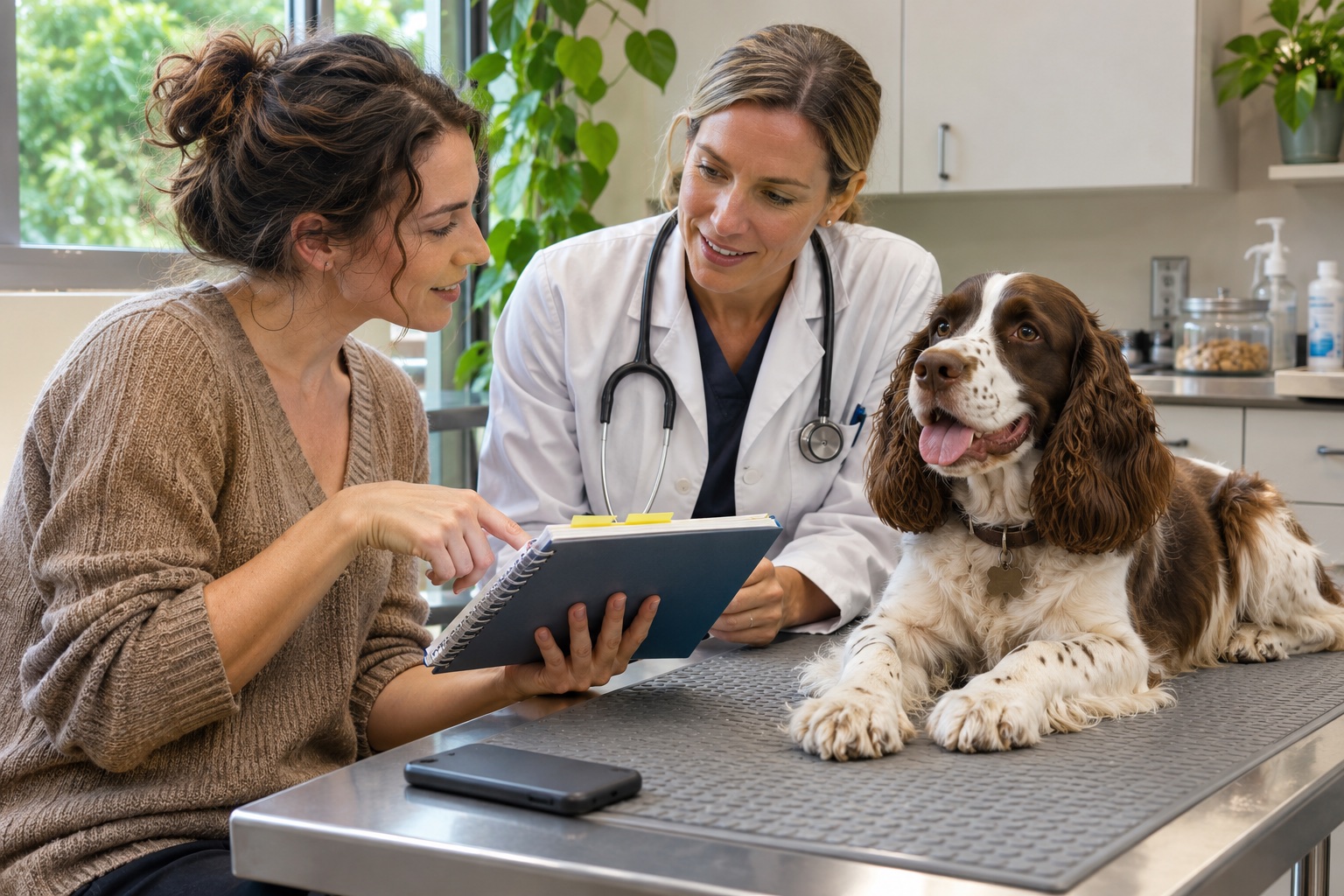
Bring a concise timeline and accurate medication information, and leave with a clear follow-up plan.
Cover illustration generated with AI. About our images.
You do not need to identify the illness before contacting a veterinarian. Clear observations are often more helpful than a list of possible diagnoses. Preparing them in advance makes it easier to explain what has changed and what matters most to you.
Write a short timeline
Record when the problem began, whether it is improving or worsening and how often it occurs. Include appetite, drinking, toileting, activity and any relevant exposure or household change. Describe what you actually see rather than relying on a label such as 'acting strange.'
Bring the practical details
List medication and supplements, including product names and doses as prescribed. Bring food information and previous records where relevant. Ask the clinic in advance whether a sample is useful and how it should be collected and stored.
Use images selectively
A brief video of an intermittent limp, cough or behavior can help if it is safe to record. Do not provoke a symptom to capture it and do not delay emergency care for a better video.
Choose a few questions
Ask what the main concerns are, what the next step is and which changes should prompt urgent contact. Clarify instructions, costs and follow-up before leaving. Written notes can help another household member continue care consistently.
Breathing difficulty, collapse, severe bleeding or inability to urinate should not wait for a routine appointment. Contact emergency care directly. Preparation supports good care, but urgency determines when to act.
General educational information. For individual health concerns, consult your veterinarian. Suggest a correction.