Pet First Aid: Safer Actions While You Arrange Veterinary Care
Prepare for urgent situations with a clear contact plan and simple steps that avoid making an injury worse.
Call for professional guidance promptly, and never improvise vomiting or medication.
Cover illustration generated with AI. About our images.
First aid supports a pet on the way to professional care; it does not replace diagnosis or treatment. Save your regular clinic and nearest emergency veterinary contact before you need them, and know how you would transport your animal safely.
Suspected poisoning or a swallowed object
Remove access to the substance if safe and contact a veterinarian or an animal poison service immediately. Keep the packaging and note what, how much and when the pet may have swallowed. Do not wait for symptoms.
Do not induce vomiting unless a veterinary professional specifically instructs you. Salt water, soap, soda and forced large drinks can cause serious harm. Do not pull string protruding from the mouth or anus.
Bleeding and injury
Apply steady pressure with a clean cloth or dressing to external bleeding while arranging care. If it soaks through, add another layer rather than repeatedly lifting it to check. Avoid tight improvised tourniquets or removing deeply embedded objects. Handle the pet gently; pain can cause defensive biting.
Heat illness
Move to a cooler place, begin cooling with cool water and airflow, and contact emergency veterinary care. Do not delay travel to see whether symptoms resolve. Avoid wrapping the body in wet towels or forcing water into an animal that cannot swallow normally.
Collapse, seizures or breathing difficulty
Treat these as urgent. Clear nearby hazards during a seizure, keep hands away from the mouth and time the event if possible. Follow the emergency clinic's instructions for transport.
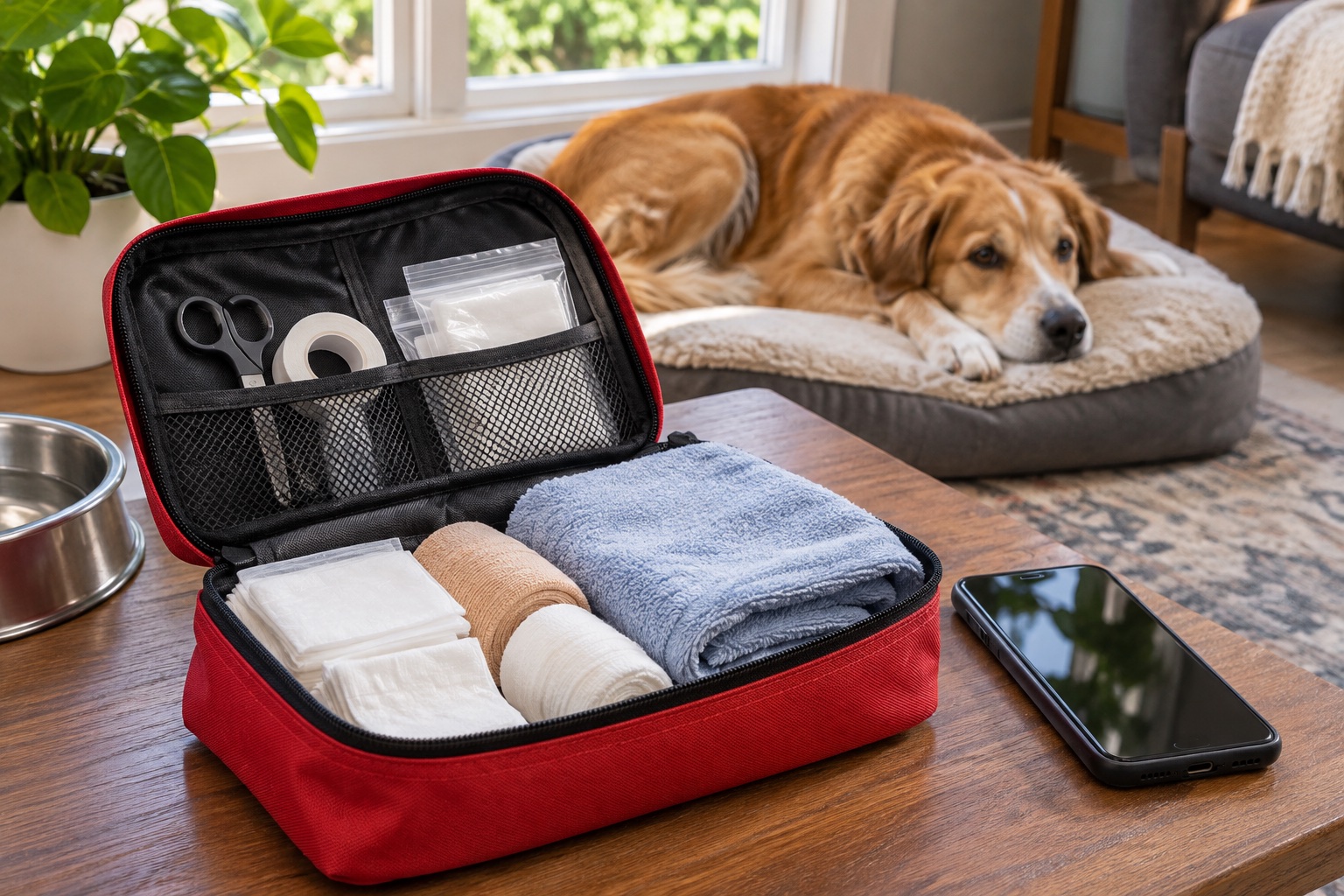
Keep a basic kit with clean dressings, gauze, saline, a towel and contact details. A recognized pet first-aid course can help you practice skills before an emergency occurs.
Further reading
AVMA: Pet first aidGeneral educational information. For individual health concerns, consult your veterinarian. Suggest a correction.