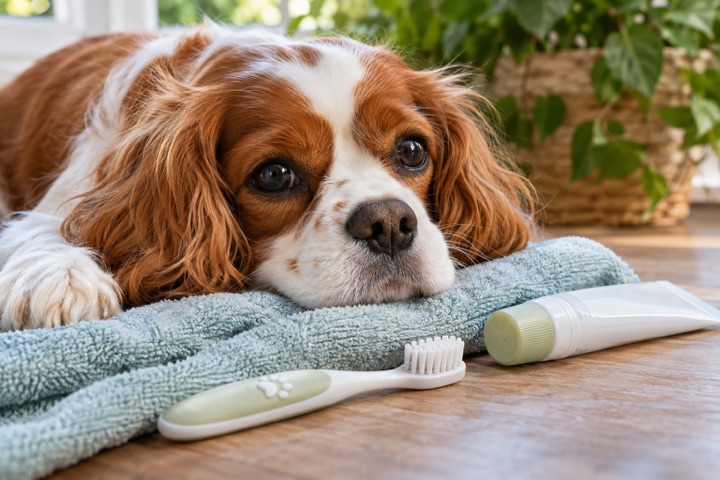
Tear Stains: Gentle Cleaning and the Signs That Need a Vet
Separate cosmetic staining from irritation, and avoid harsh products around sensitive eyes.
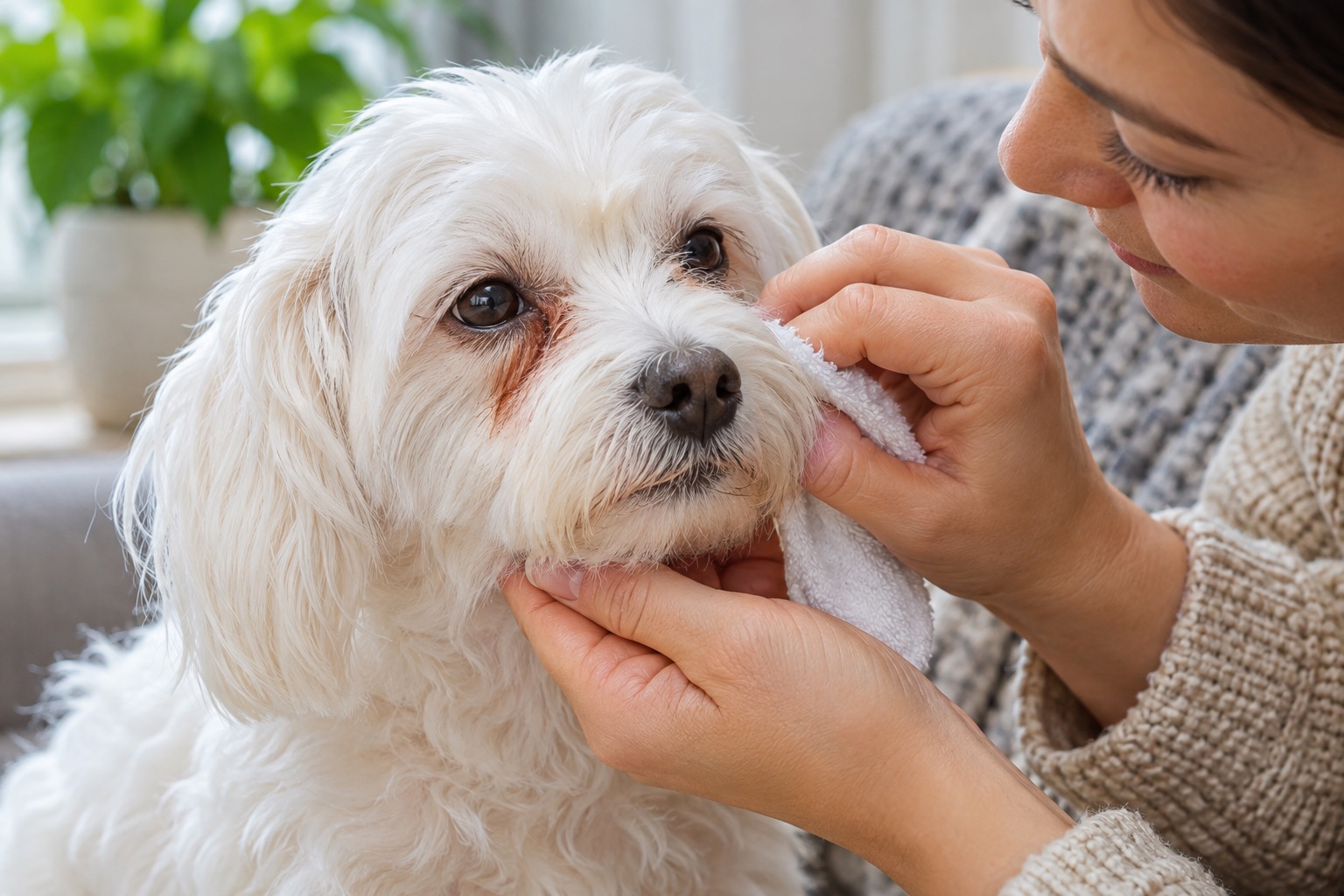
Treat the eye's comfort as the priority and avoid harsh stain-removing remedies.
Cover illustration generated with AI. About our images.
Reddish-brown staining can appear where tears repeatedly wet pale fur. The color alone does not establish a disease, and scrubbing harder will not solve excessive tearing. Start by checking the eye's comfort and whether the pattern has changed.
Notice more than the stain
Squinting, redness, swelling, discharge, pawing at the eye or a sudden increase in tears needs veterinary attention. Eye pain and injury should be assessed promptly. Anatomy, hair contact, eyelid problems and other conditions may influence tear drainage.
Diet should not be blamed automatically, and a special food or supplement cannot be assumed to cure the problem. Avoid unsupported claims that one ingredient will clear every stain.
Clean the surrounding fur gently
Use a soft pad dampened with a suitable gentle solution, such as plain water for routine external cleaning, and wipe the fur carefully. Keep products out of the eye unless specifically intended and recommended for that use. Use a fresh area of the pad for each eye and dry surrounding fur gently.
Do not apply peroxide, bleach, essential oils or human eye medication. Trimming hair close to the eye is best left to someone with appropriate skill and equipment.
Address the reason for persistent wetness
A veterinarian can examine the eye, eyelids and drainage system and decide whether treatment is needed. Keep photographs of changes if useful, but do not let documentation delay care for a painful eye.
The aim is comfortable eyes and healthy skin. Perfectly white fur is a cosmetic preference, not the measure of a successful care plan.
General educational information. For individual health concerns, consult your veterinarian. Suggest a correction.