A Calmer Home: Simple Ways to Reduce Pet Stress
Create space to rest, explore and make choices, while learning which behavior changes need closer attention.
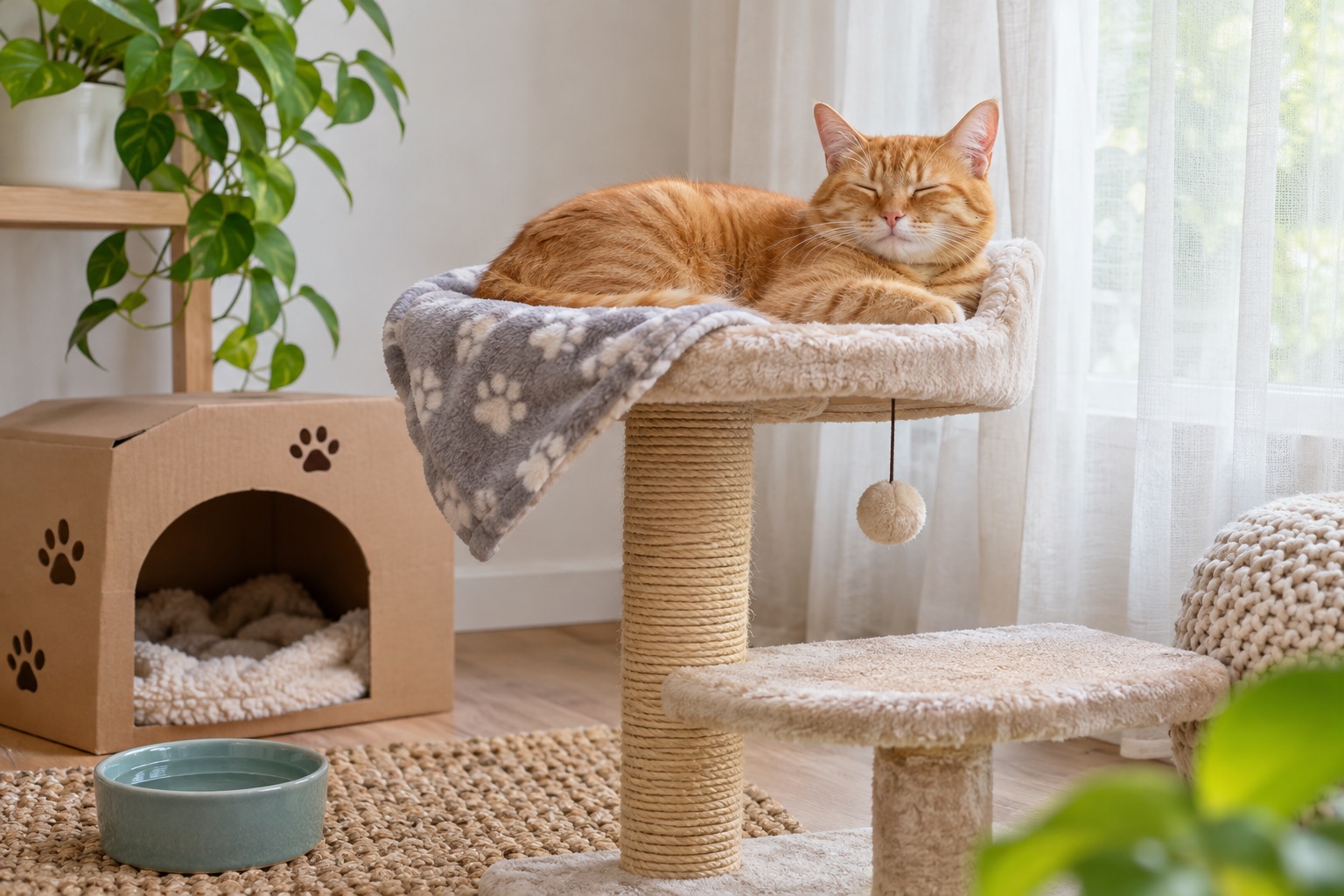
Predictability, accessible resources and the freedom to retreat are the foundations of a calm home.
Cover illustration generated with AI. About our images.
A comfortable home gives a pet more than food and a bed. It offers predictable routines, safe retreat and opportunities to behave naturally. When an animal can choose whether to approach, explore or rest, daily life often becomes easier for everyone.
Notice changes without guessing the cause
Dogs may pace, pant when not hot, scan the room or become unusually vocal. Cats may hide more, overgroom, avoid shared spaces or change their eating and toileting habits. These signs can also accompany pain or illness, so a new behavior should not automatically be labeled stress.
Record when the change happens and what surrounds it: visitors, noise, conflict over resources or a disrupted routine. Seek veterinary advice for persistent changes, self-injury or reduced eating; do not wait for a fixed number of weeks if your pet is struggling.
Give dogs somewhere to switch off
Provide a quiet resting area where nobody disturbs the dog. Offer manageable sniffing games, food puzzles and walks with time to explore. Introduce new activities at an easy level, and allow recovery after busy outings. A dog does not need constant stimulation to have a good day.
Give cats choice and access
Add stable elevated resting places, hiding spots and scratching surfaces. In homes with several cats, spread food, water, resting places and litter boxes across separate locations. A resource is not truly available if another animal can block the route to it.
Change one thing, then observe
Lower unnecessary noise, keep interactions gentle and invite contact instead of insisting on it. Make small adjustments and look for easier rest, normal eating and more relaxed exploration. Enrichment supports wellbeing, but pain, severe anxiety or ongoing household conflict may need professional help as well.
General educational information. For individual health concerns, consult your veterinarian. Suggest a correction.