Managing Pet Shedding: From Coat Checks to Cleaner Sofas
Separate normal loose fur from skin problems, then build a practical grooming and cleaning routine.
Manage normal shedding gently, but investigate bald areas, itching or a sudden change.
Cover illustration generated with AI. About our images.
Loose fur is part of life with many dogs and cats. Seasonal changes can increase it, and indoor animals may shed throughout the year. The important distinction is between ordinary hair turnover and a change accompanied by skin irritation or illness.
Check the skin as well as the fur
Look for bald patches, redness, scabs, odor, repeated licking or scratching. Notice weight, appetite and energy changes too. Hair loss patterns can provide clues, but they cannot diagnose an allergy, infection or hormonal problem at home.
Arrange veterinary advice for a sudden marked change, damaged skin or persistent itching.
Make grooming appropriate
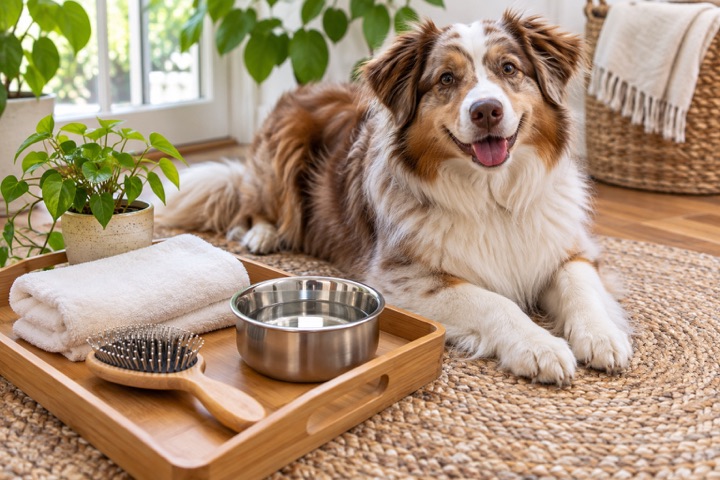
Brush with a suitable tool and light pressure. Long or easily tangled coats may need more frequent attention than smooth coats. Remove loose hair without repeatedly scraping the same area, and clean the brush after use.
Do not assume shaving or frequent bathing will solve shedding. Some coats need particular care, and irritated skin may need treatment rather than more grooming.
Support the ordinary diet
Feed an appropriate complete food. Supplements are not automatically necessary, and extra oil adds calories. Discuss a suspected deficiency or skin-support product with your veterinarian instead of adding several products at once.
Keep cleanup manageable
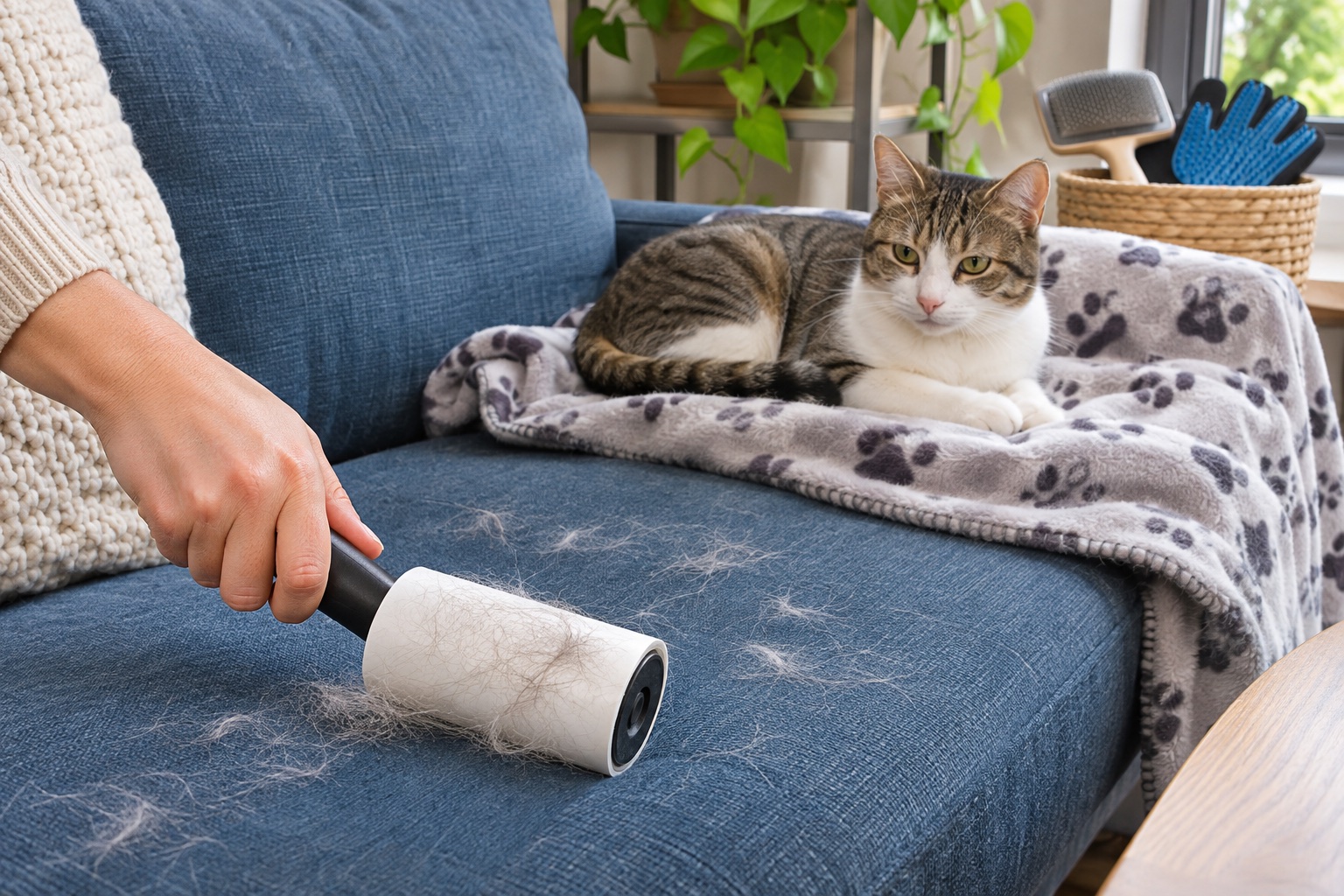
Use washable throws on favorite resting spots, vacuum regularly and remove fur from fabric with a suitable brush or lint roller. Wash bedding and dry it thoroughly before returning it.
A practical routine will not eliminate every hair. It should keep your pet comfortable and make household cleanup predictable while ensuring abnormal changes are investigated.
General educational information. For individual health concerns, consult your veterinarian. Suggest a correction.