Your Cat's First Two Weeks: A Gentle Welcome Home
Build trust with a quiet starting room, familiar routines and exploration at your new cat's pace.
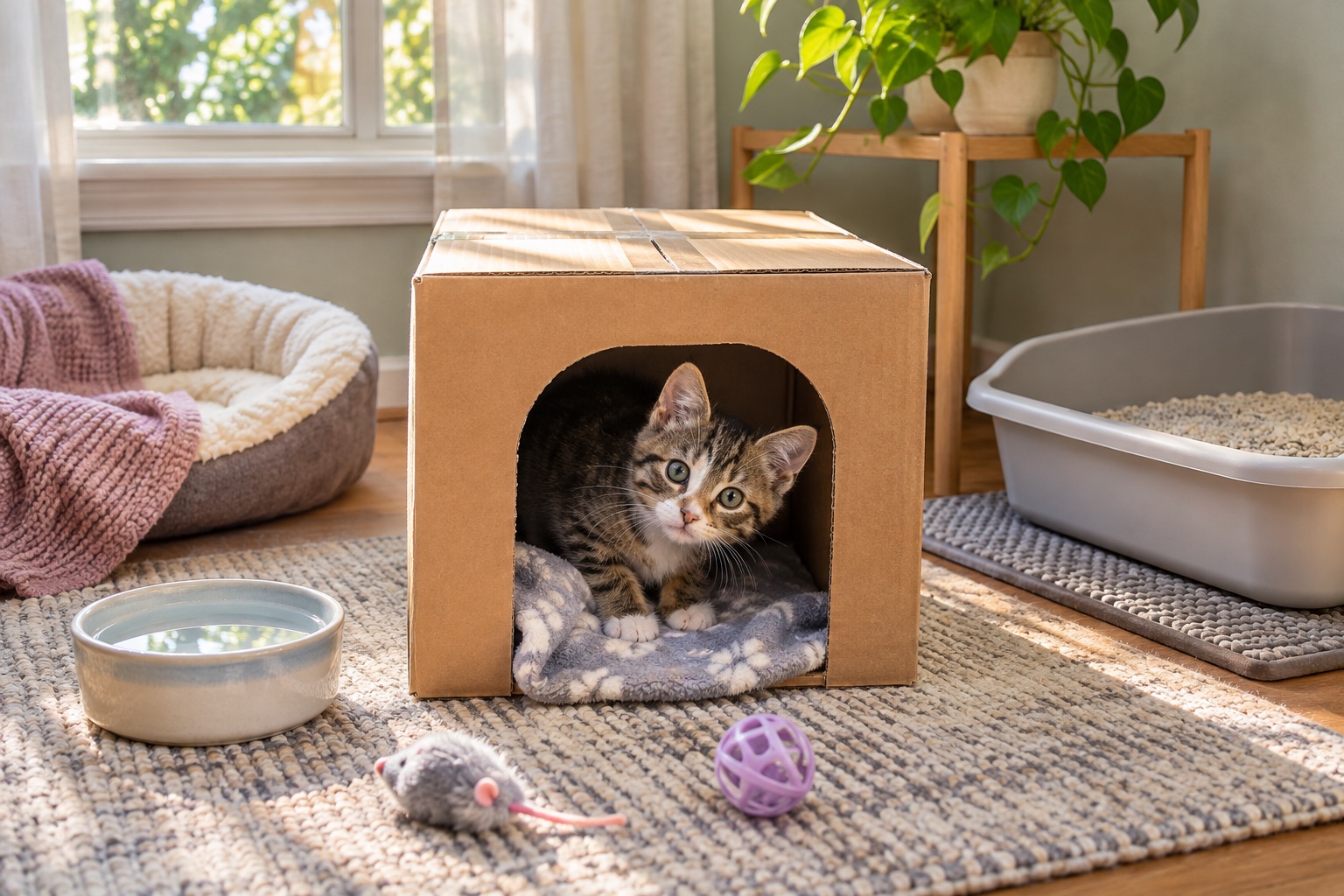
Let normal eating, toileting and relaxed exploration guide the pace of settling in.
Cover illustration generated with AI. About our images.
The first days in a new home are full of unfamiliar sounds and smells. A cat does not need to meet every room or person immediately. A small, predictable world is often the best place to begin. Treat the first two weeks as a flexible guide, not a deadline for confidence.
Before arrival
Prepare a quiet room with a secure hiding place, comfortable bedding, a scratching surface and separate areas for food, water and litter. Check windows, balconies, cords, small objects and plants. Keep the cat's familiar food and litter initially, and arrange a veterinary appointment based on its history and health.
Days one and two: allow space
Place the carrier in the room, open its door and let your cat emerge voluntarily. Sit nearby without staring, reaching into hiding spots or repeatedly picking it up. Keep visits brief and household noise low.
Track food intake and toileting discreetly. Hiding can be part of adjustment, but not eating or appearing unwell should not be dismissed as nerves. Contact your veterinarian promptly, especially for a kitten or a cat with an existing condition.
Days three to seven: invite interaction
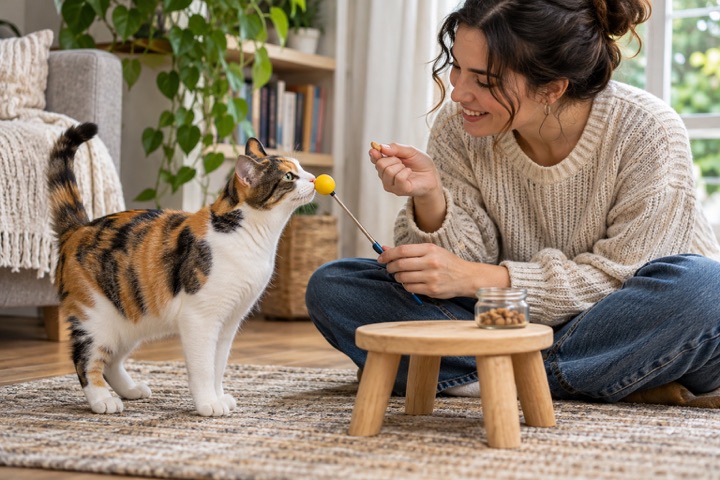
Offer gentle wand play or a small food reward when your cat approaches. Let it choose whether to continue. Maintain consistent meals and cleaning, and make introductions to other pets separately and gradually.
Week two: expand the map
When your cat is eating, using the litter box and exploring comfortably, open access to another safe area. Keep the starting room available as a retreat. Some cats progress quickly; others need much longer.
Repeated vomiting, marked lethargy or difficulty urinating needs veterinary attention. Avoid adding unnecessary bathing, loud visitors or sudden food changes while your cat is still finding its footing.
General educational information. For individual health concerns, consult your veterinarian. Suggest a correction.