Cat Training for Beginners: Build Trust, One Reward at a Time
Teach useful everyday skills through brief, voluntary practice that respects your cat's boundaries.
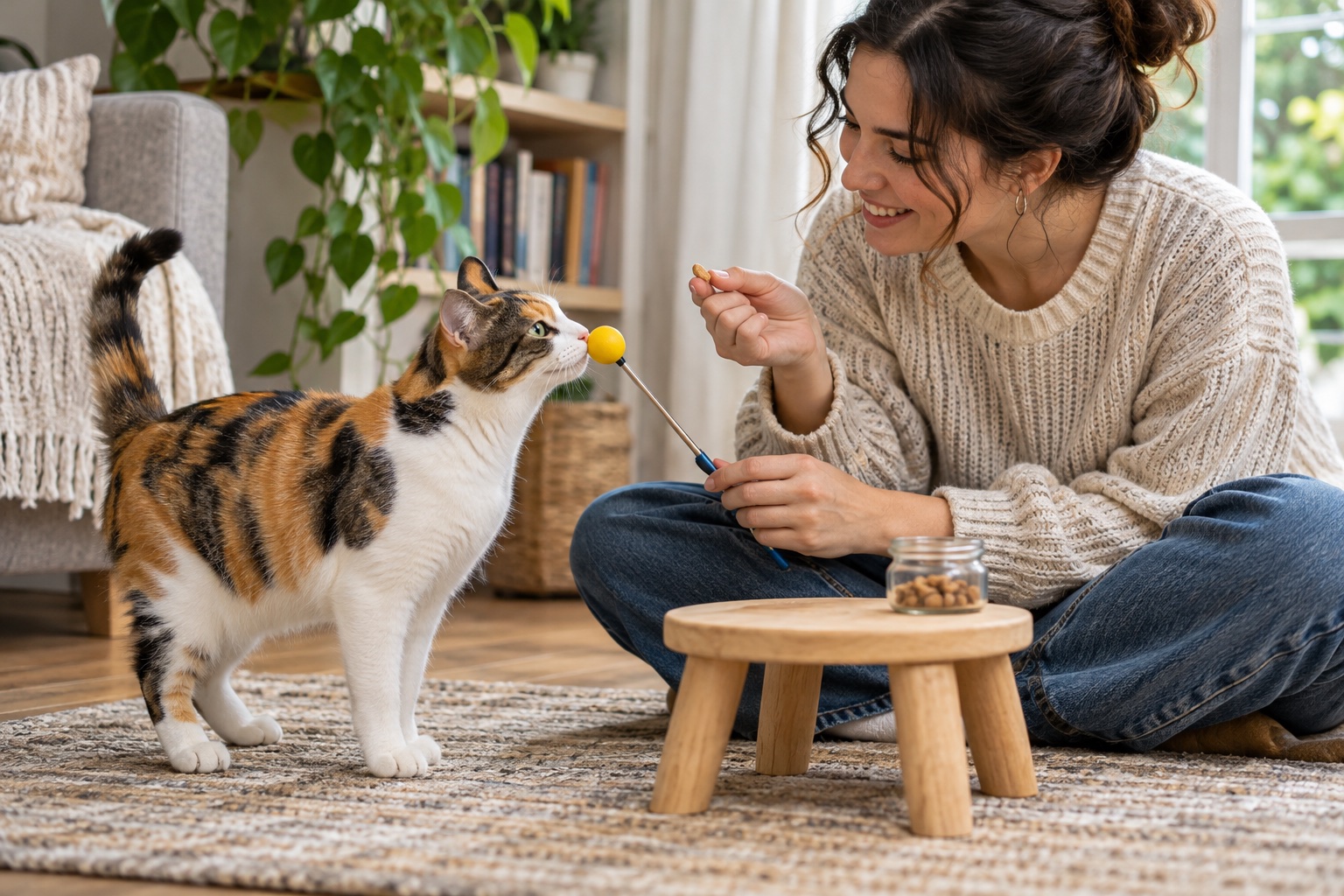
Training works best when the cat can choose to participate and the reward arrives promptly.
Cover illustration generated with AI. About our images.
Cats can learn useful cues and routines when the reward is meaningful and the task is clear. Training is also a way to make handling and household life more predictable. Start with a quiet setting, a tiny food reward or favorite toy, and a cat that is free to walk away.
Teach a name and a simple target
Say your cat's name once, then reward looking toward you. Later, invite one or two steps in your direction. A target can be as simple as an offered finger: reward an interested nose touch and gradually use it to guide movement onto a mat or into a carrier.
Make handling cooperative
Briefly touch a comfortable area, reward and release. Progress slowly toward paws, brushing or a lip lift only when your cat remains relaxed. Hissing, freezing or retreat means the session has become too difficult. Blowing in the face, flicking the nose or restraining harder can increase fear.
Practice with visitors and routines
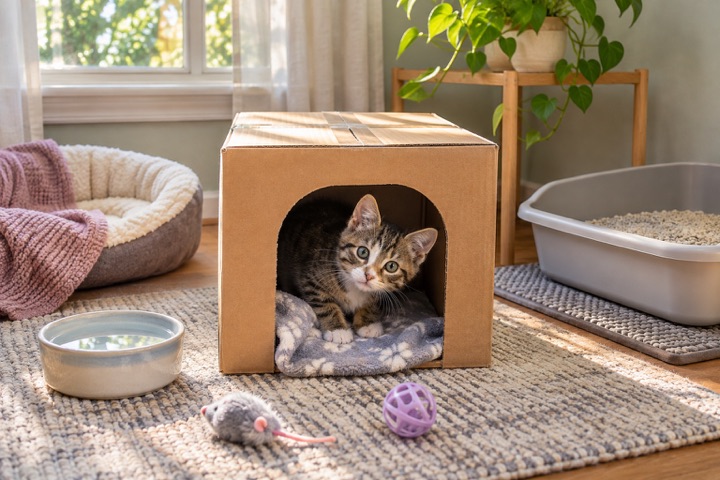
Let visitors sit quietly and allow the cat to approach. Keep a hiding place available. Predictable meals and play sessions help establish the rhythm of the day without requiring the cat to tolerate constant attention.
If teeth or claws meet skin during play, pause and redirect to a suitable toy. Avoid using hands as prey, and do not apply strong fragrances or medicated oils as deterrents.
Keep optional skills optional
A paw trick, mat cue or harness introduction can be enjoyable for a willing cat. Outdoor walks are not necessary for every cat; secure indoor enrichment may suit yours better. Practice for a minute or two and finish with an easy success. Confidence matters more than collecting tricks.
General educational information. For individual health concerns, consult your veterinarian. Suggest a correction.