Raising a Confident Cat Without Forcing Affection
Use predictable routines and rewarding experiences to help your cat feel safe with people and daily care.

Build confidence through choice and rewarding experiences; affection should remain voluntary.
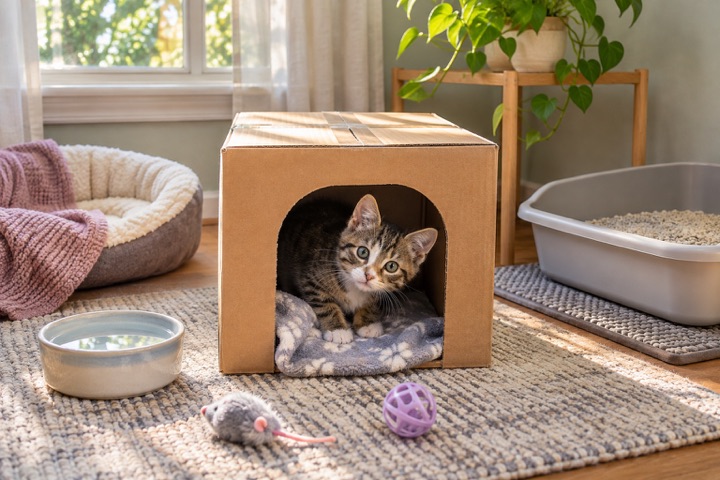
Cover illustration generated with AI. About our images.
A cat's personality is not a project to control. Genetics, early experiences, health and individual preferences all contribute to how it behaves. What you can shape is the environment: a place where contact feels safe and good choices are easy.
Reward the approach
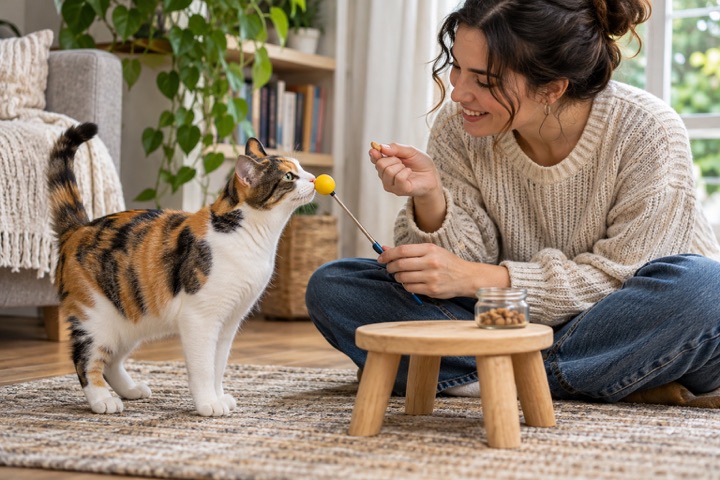
Sit at your cat's level, avoid staring and let it close the distance. Offer a small reward or a brief cheek scratch if it enjoys touch. Pause after a few seconds. Remaining nearby is an invitation to continue; turning away is information to respect.
A cat that rests beside you rather than on your lap can still have a secure bond. Measure comfort by relaxed behavior, not by how much handling it tolerates.
Introduce ordinary experiences gently
Let carriers remain available as resting places. Pair brief brushing, a visitor at a distance or a quiet household sound with something pleasant. Increase exposure only when your cat stays comfortable. Early social experiences matter, but adults can learn too.
Teach an alternative to unwanted behavior
Place a suitable scratching surface beside the furniture your cat targets. Use toys for play instead of hands, and reward a perch or mat when you need space at a desk. Manage the environment before the behavior becomes a repeated conflict.
Shouting, hitting or pushing a cat into position can teach avoidance. A startled or defensive cat needs a calmer setup, not a contest of authority.
Notice a change in temperament
A previously sociable cat that suddenly hides, swats or avoids touch may be uncomfortable or ill. Arrange a veterinary assessment before treating the change as a training issue.
General educational information. For individual health concerns, consult your veterinarian. Suggest a correction.