Kitten Socialization: Eight Gentle Foundations for Everyday Life
Help a young cat become comfortable with names, handling, visitors and routines through small positive experiences.

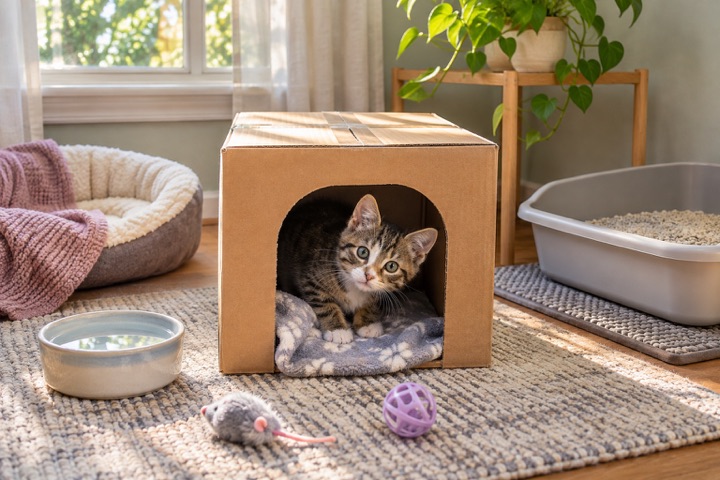
Give a kitten many small successes, with room to retreat and plenty of rest.
Cover illustration generated with AI. About our images.
Socialization is the process of learning that ordinary experiences can be safe. It is not a race to expose a kitten to everything, and it cannot guarantee a particular adult temperament. Keep each new experience brief, manageable and paired with something the kitten enjoys.
Build eight useful foundations
- Name recognition: say the name once and reward attention, then gradually invite a short approach.
- A simple sit or target: reward a natural sit or nose touch without pushing the body into position.
- Paw handling: briefly touch a paw, reward and release; a voluntary paw trick can come later.
- Carrier comfort: leave the carrier open with familiar bedding and reward exploring it.
- Gentle grooming: introduce a brush for one or two comfortable strokes at a time.
- Friendly visitors: let one quiet person sit at a distance and allow the kitten to approach.
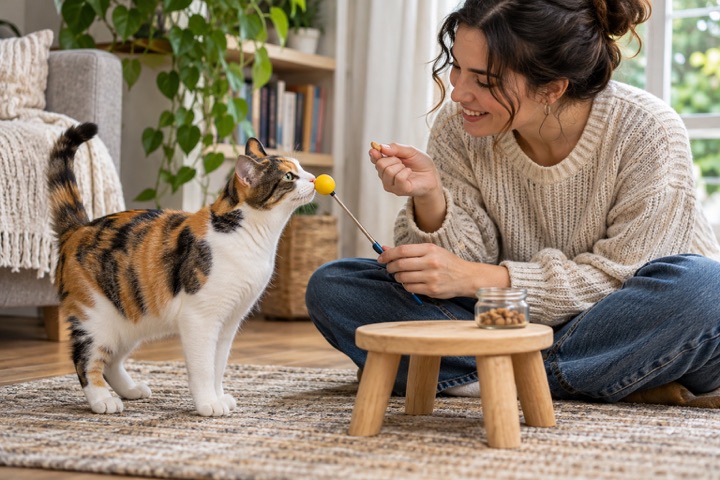
- Appropriate play: use a wand or soft toy rather than fingers and feet.
- Predictable routines: provide regular meals, rest and opportunities for play without keeping the kitten constantly busy.
Watch the kitten's response
Loose movement, curiosity and willingness to eat are encouraging. Flattened ears, freezing, escape attempts or defensive behavior mean you should reduce the challenge. A kitten that stops reacting is not necessarily comfortable.
Protect health while exploring
Ask your veterinarian about safe social exposure, vaccination and parasite prevention for the kitten's history and local risks. Introductions to resident animals should be staged and supervised, with separate resources and a retreat.
End sessions with an easy success, then allow sleep. Repeated calm experiences are more useful than an exhausting afternoon of visitors, sounds and handling.
General educational information. For individual health concerns, consult your veterinarian. Suggest a correction.