A Dog Who Gulps Meals: Help Dinner Slow Down
Reduce competition and choose simple feeding changes that make mealtimes calmer and easier to monitor.
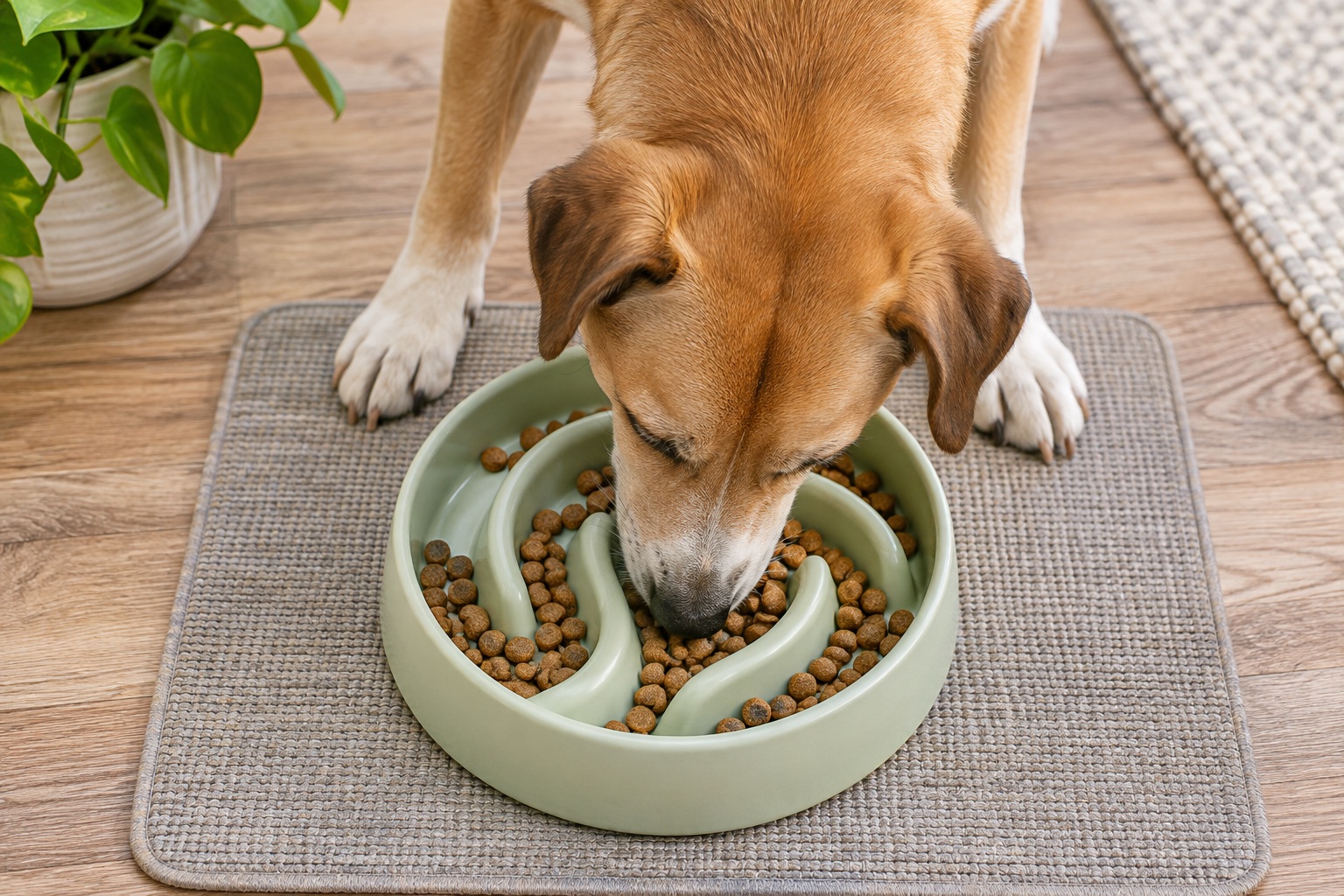
Reduce competition, measure the ration and introduce an easy slow-feeding option.
Cover illustration generated with AI. About our images.
An empty bowl in seconds does not necessarily mean your dog needs more food. Fast eating can be a learned habit, a response to competition or part of a broader change in appetite. Start by looking at the setting and the dog's recent history.
Make meals feel secure
Feed household animals separately, with enough distance or a closed door to prevent pressure. Avoid reaching into the bowl or repeatedly taking it away. These interruptions can make food feel less secure and encourage rushing.
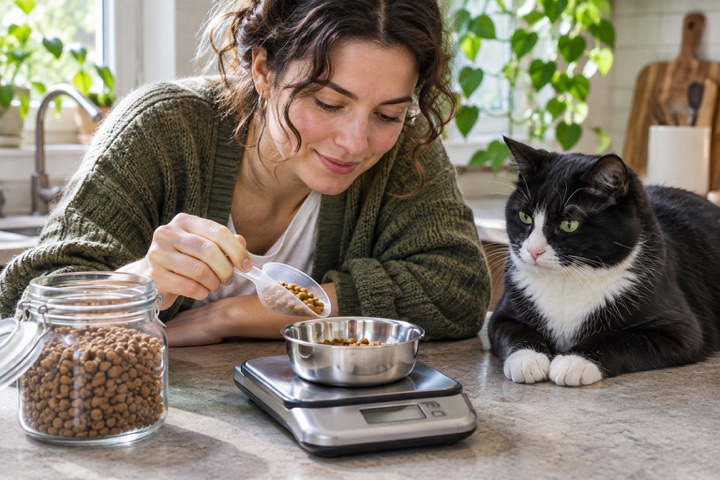
Keep portions appropriate and serve meals on a predictable schedule suited to your dog's age and health. Measure rather than estimating from how eagerly the dog eats.
Add gentle difficulty
Try a suitable slow feeder or divide the allowance into several smaller servings. Begin with an easy design that the dog can use without frustration. Check that edges are smooth, the size suits the muzzle and the dog cannot chew off pieces.
Supervised scatter feeding or a simple puzzle can also help in a clean, safe area. Count every portion toward the daily total and avoid puzzles that require excessive effort from an unwell dog.
Notice more than speed
A sudden increase in hunger, weight loss, vomiting or repeated regurgitation needs veterinary advice. Eating speed alone does not explain these changes.
An enlarged abdomen, unsuccessful retching, restlessness or collapse can be an emergency and should not be managed by changing bowls.
The aim is a relaxed, workable meal routine. A dog that takes a little longer and stays comfortable is making useful progress, even if it never becomes a leisurely diner.
Further reading
WSAVA: Nutrition resourcesGeneral educational information. For individual health concerns, consult your veterinarian. Suggest a correction.