Feeding a Senior Cat for Comfort, Strength and Mobility
Support an older cat with complete nutrition, accessible meals and a plan tailored to its health.
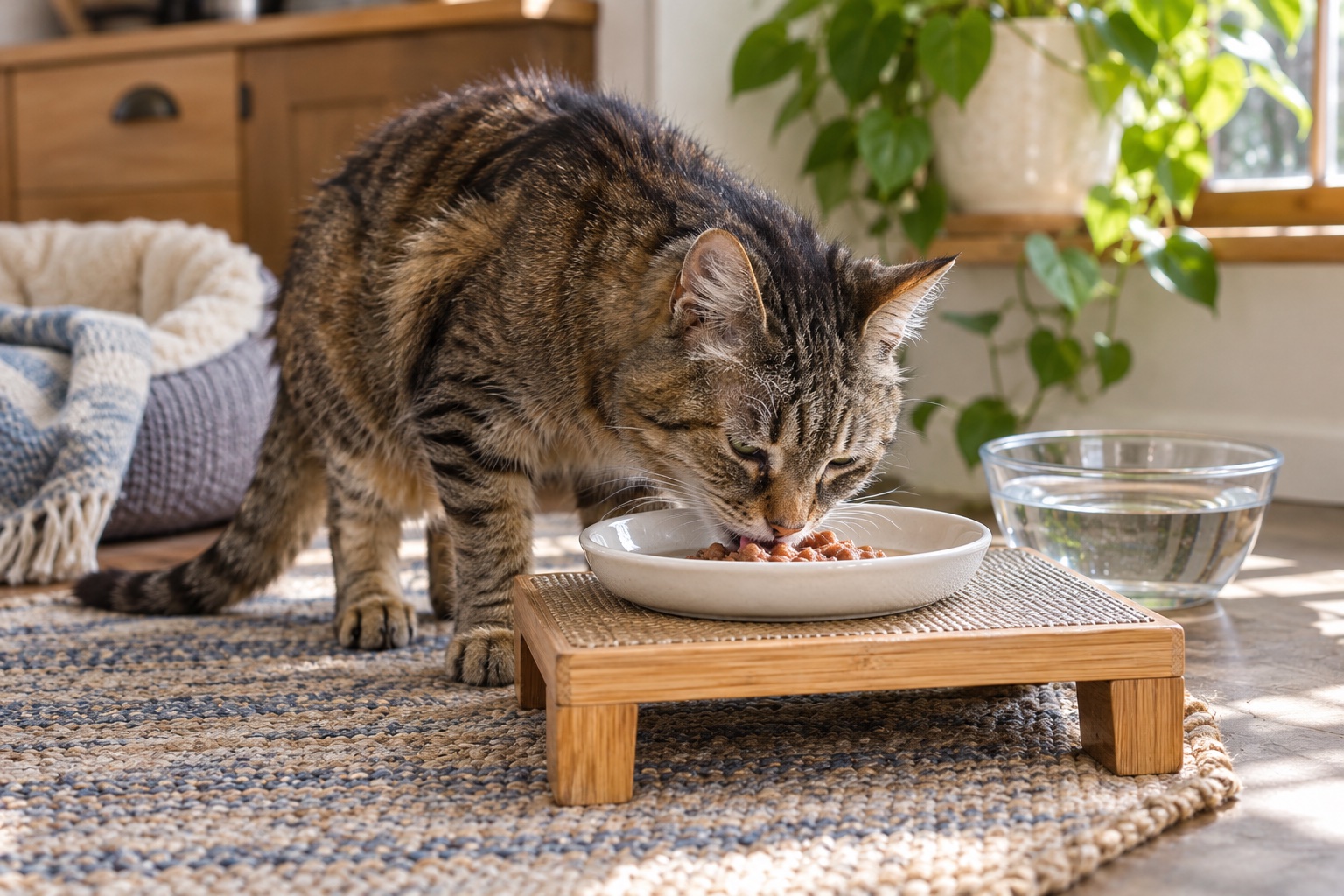
Tailor nutrition to the cat's condition and combine it with accessible surroundings and pain care.
Cover illustration generated with AI. About our images.
Older cats do not all need the same diet. One may struggle with excess weight, another with muscle loss, dental discomfort or kidney disease. A useful feeding plan starts with an examination and a picture of what the cat actually eats.
Look beyond appetite alone
Record weight trends, body condition and muscle changes. A cat may approach food eagerly but struggle to chew, or eat regularly while losing weight. New thirst, vomiting or reduced activity deserves assessment rather than being accepted as ordinary aging.
Keep the diet complete and accessible
Choose a complete food suited to the cat's medical needs and preferences. Offer meals where the cat can reach them without difficult jumps, competition or slippery footing. A comfortable bowl height and smaller, fresh portions may make eating easier for some individuals.
Wet food can add moisture, while texture and gentle warming may improve appeal. Check temperature carefully and preserve safe food handling. Avoid replacing balanced meals with a collection of meat, broth and supplements.
Support joints as part of a wider plan
Maintaining an appropriate weight can reduce unnecessary load, while adequate nutrition helps preserve muscle. Some therapeutic diets or supplements may have a role, but their suitability and dose depend on the cat. Discuss them with your veterinarian, especially when other diseases or medications are involved.
Make comfort practical
Add low steps, warm resting places and non-slip routes to food, water and litter. Dietary changes do not replace assessment and treatment of pain.
Introduce a new food gradually when appropriate and monitor intake closely. An older cat that is not eating needs prompt advice, not a prolonged contest over a supposedly better menu.
Further reading
WSAVA: Nutrition resourcesGeneral educational information. For individual health concerns, consult your veterinarian. Suggest a correction.