Opened Cat Food: A Fresher, Safer Storage Routine
Protect dry and wet food from heat, moisture and contamination while keeping the packaging details you may need.
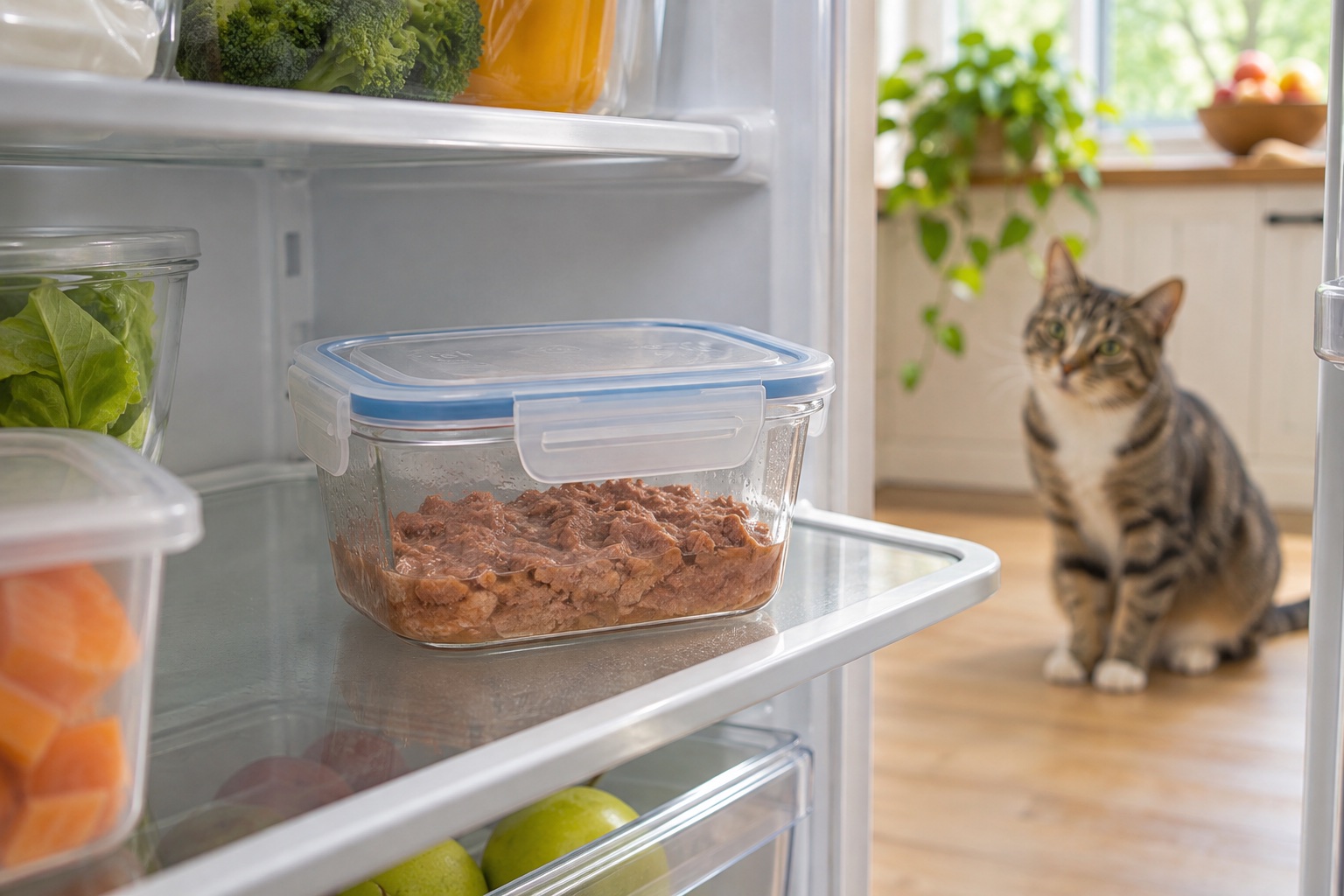
Keep packaging details, use clean dry tools and follow the product's after-opening directions.
Cover illustration generated with AI. About our images.
Opening a bag or can changes how food needs to be handled. The printed date is useful, but storage conditions and the manufacturer's after-opening instructions matter too. A tidy routine is more reliable than guessing freshness by smell alone.
Keep the dry-food bag
Reseal the original bag and, if desired, place the whole bag inside a clean, airtight container. The packaging helps protect the food and preserves the product name, lot code and best-before date. Store it in a cool, dry indoor location away from direct sunlight.
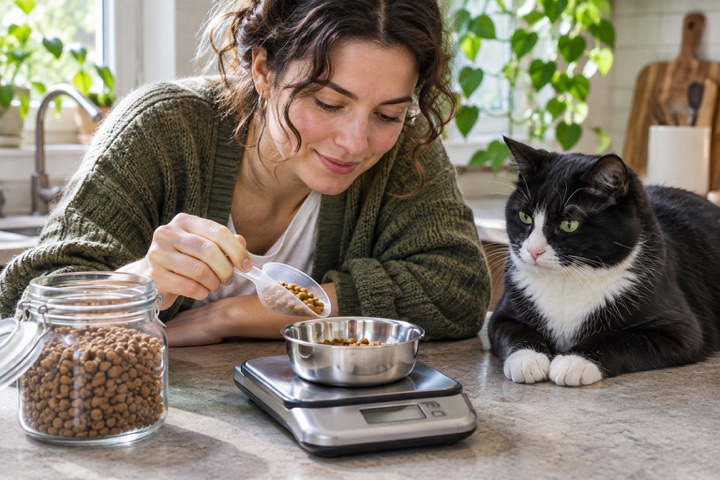
Use a clean, dry scoop. Do not pour a new bag onto old crumbs, and wash and thoroughly dry the outer container between batches. Buy a pack size your household can use within the manufacturer's recommended period.
Refrigerate wet leftovers promptly
Cover opened wet food and refrigerate it according to the label. Mark the opening date and use it within the stated interval. Serve manageable portions and remove uneaten food promptly, particularly in warm conditions. Wash the dish before the next meal.
Know when to discard
Mold, unusual discoloration, pests, damp clumps or a rancid odor mean the food should not be served. Damaged packaging and a relevant recall are also reasons to stop using it. Food can be unsafe without obvious changes, so appearance is not a substitute for sound handling.
If your cat refuses a normally accepted food, check the product and storage conditions, but also consider health. Repeated refusal or other symptoms calls for veterinary advice rather than repeatedly opening new flavors.
Further reading
FDA: Proper storage of pet foodGeneral educational information. For individual health concerns, consult your veterinarian. Suggest a correction.