Why Your Cat Ignores the Water Fountain—and What to Try
Look at location, cleanliness, food moisture and daily habits before buying another drinking device.
Offer clean, accessible choices and assess hydration through the whole daily picture.
Cover illustration generated with AI. About our images.
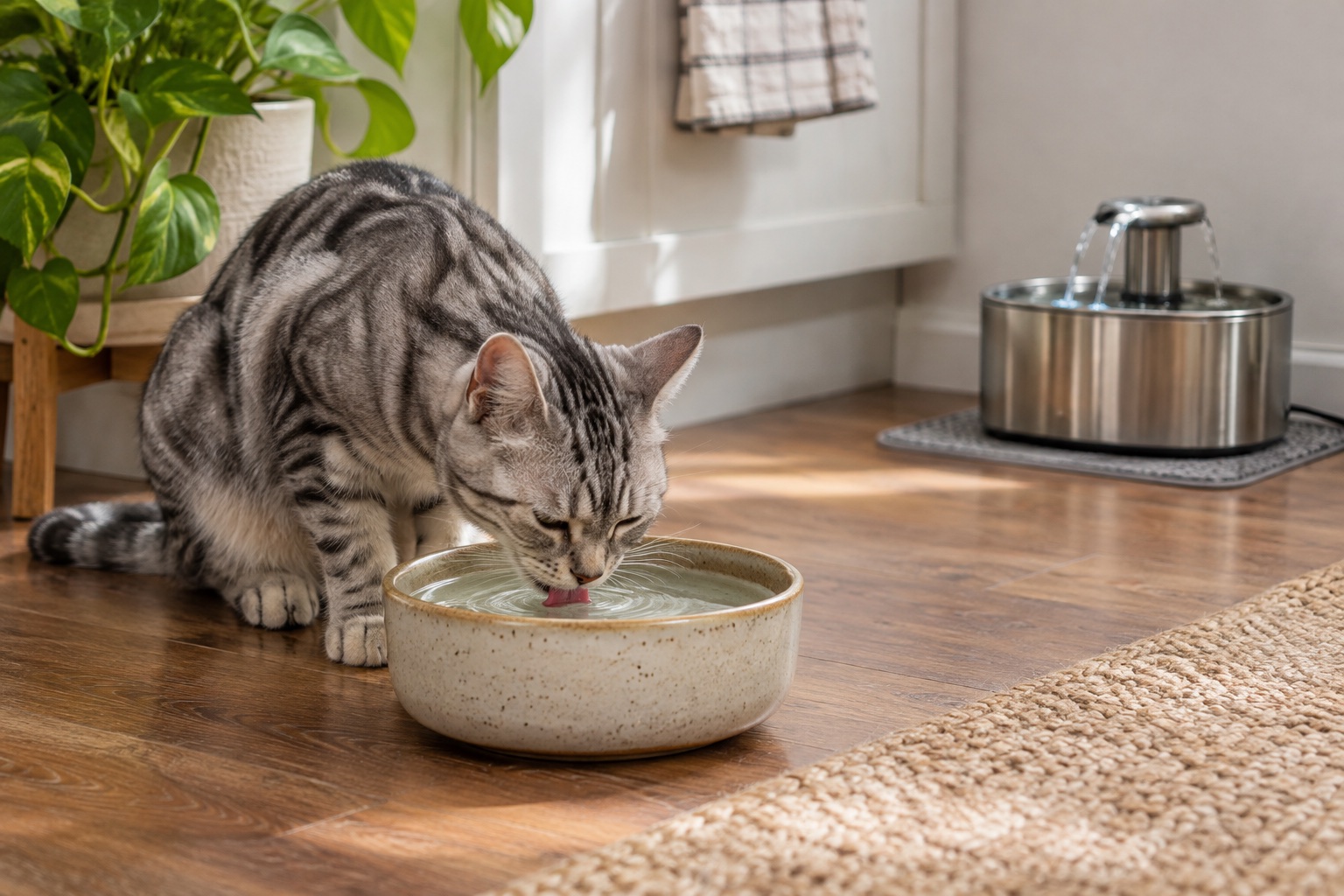
A new fountain does not automatically change a cat's drinking habits. Some cats prefer still water, others dislike the pump, and cats eating wet food may drink less visibly from a bowl. Start with the whole routine rather than judging hydration from one container.
Improve access and choice
Offer fresh water in quiet, accessible places. Keep options away from litter boxes and provide separate stations in multi-cat homes. A shy cat may avoid a source that another animal guards, even when the bowl is technically available.
Try a wide, easy-to-clean bowl alongside the fountain. Do not remove the familiar source to force use of the new one. Watch where the cat naturally chooses to drink.
Check the device itself
Clean the basin, pump and other parts according to the manufacturer's directions. Filters need maintenance and do not replace washing. Check for noise, vibration, a difficult drinking height or an unexpectedly strong flow.
Consider the food
Wet food contributes water, while dry food contains much less. Any dietary change should preserve complete nutrition and suit your cat's health needs. Do not add salty liquids or force water by syringe without veterinary instruction.
Observe useful changes
Track appetite, litter-box output, energy and a marked change in thirst. Bowl-level measurements can be distorted by evaporation, splashing and other pets. They are clues, not a diagnosis.
Reduced urine, repeated straining, vomiting or lethargy needs veterinary advice. Inability to pass urine is an emergency. A better fountain is not the answer to an underlying illness.
General educational information. For individual health concerns, consult your veterinarian. Suggest a correction.