Nail Care Without the Struggle: Teach the Small Steps
Build comfort with paw handling and tools before asking your pet to tolerate a full trim.
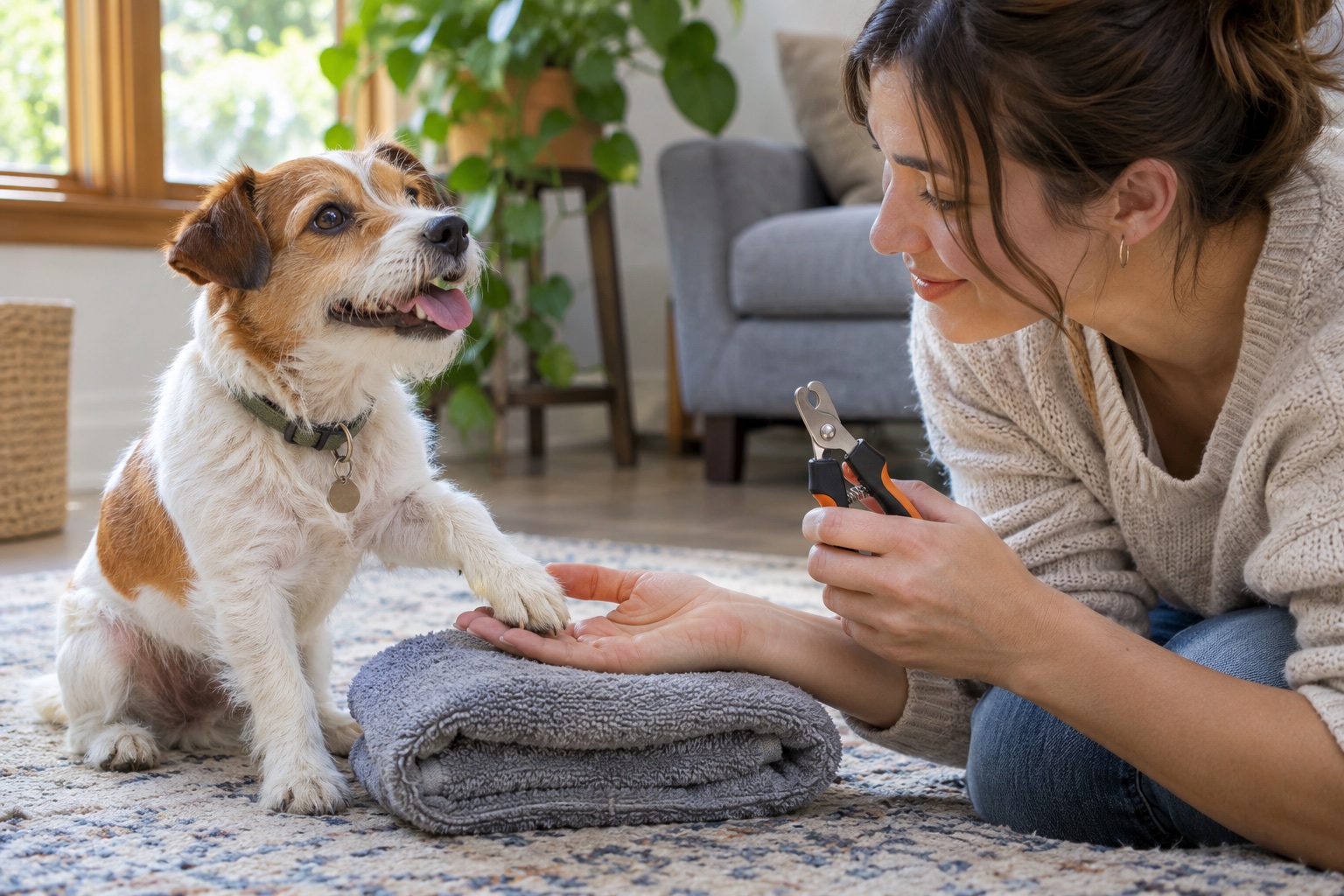
Teach handling and tool comfort separately, trim small amounts and stop before fear escalates.
Cover illustration generated with AI. About our images.
Nail trimming combines several sensations: a held paw, pressure on a toe, a tool and sometimes noise. Teaching these pieces separately can make the routine more manageable. If a nail is injured or the animal appears painful, seek veterinary help first.
Begin with consent and position
Choose a stable, non-slip surface and a comfortable posture. Reward a brief touch to the leg, then the paw, and release. Increase contact only while the pet stays relaxed. Do not force the body into an awkward position to reach a nail.
Introduce the tool
Let your pet see the clipper or hear a grinder from a comfortable distance. Pair the experience with rewards. Progress to a light touch of the tool without cutting before attempting a small trim.
Trim conservatively
Learn to recognize nail anatomy and the sensitive quick with help from a veterinary professional or groomer. Dark nails can be harder to assess. Remove only a small amount when confident, and keep suitable first-aid supplies available.
One nail may be enough for an early session. End on a comfortable success rather than insisting on completing every foot.
Choose help when needed
Some pets need professional handling, a different tool or a veterinarian-guided plan. Severe fear is not solved by stronger restraint.
Check nails regularly, including dewclaws, and adjust care to wear and growth. The long-term goal is safe maintenance with less worry each time.
Further reading
AVSAB: Humane training guidanceGeneral educational information. For individual health concerns, consult your veterinarian. Suggest a correction.