Five Ways to Make Coming When Called More Rewarding
Strengthen recall through better rewards, clearer cues and practice that does not always end the fun.
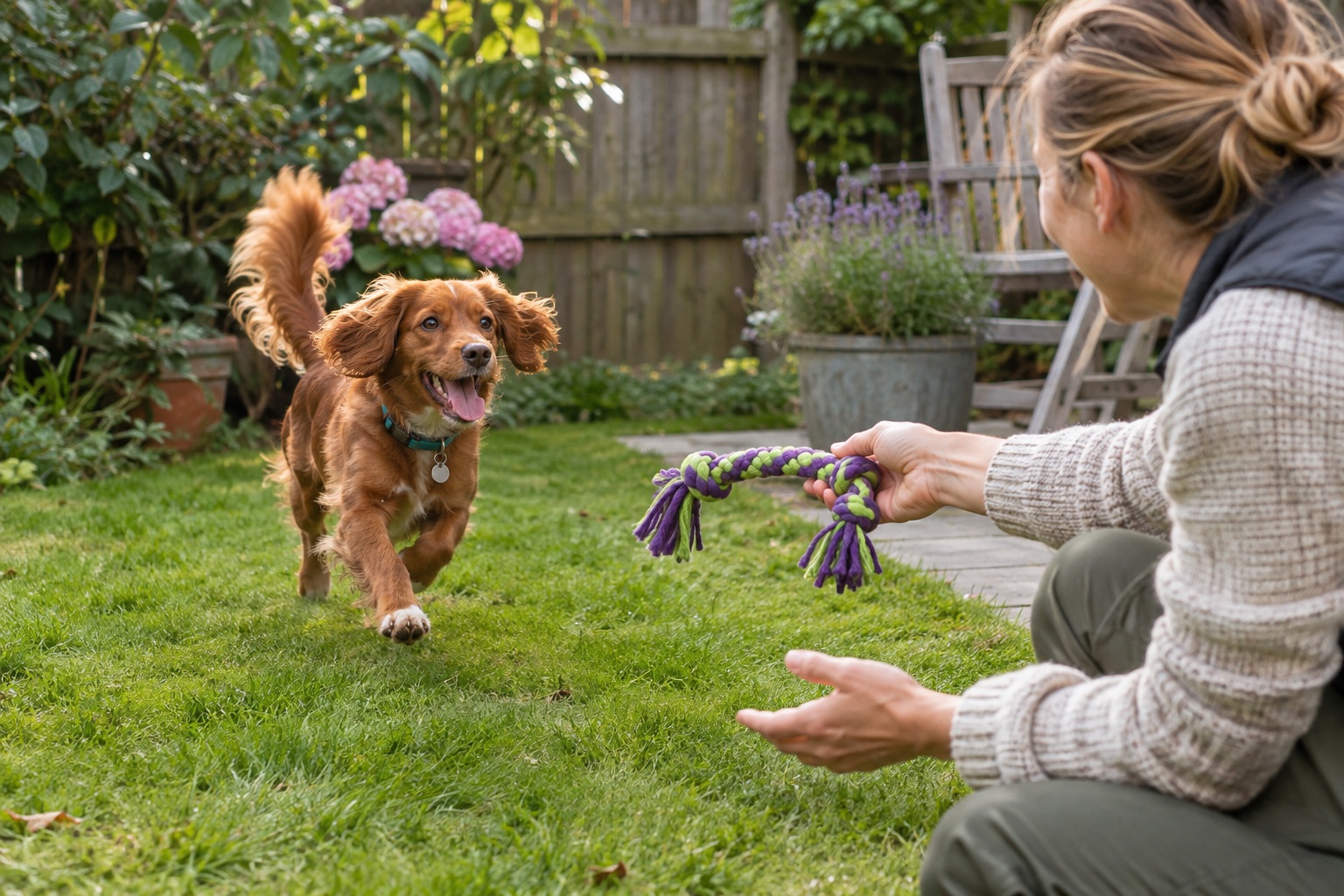
Reward a complete return and preserve the cue as a promise of something worthwhile.
Cover illustration generated with AI. About our images.
A recall cue competes with smells, play and movement. Your job is to make returning worthwhile and to practice where success is likely. These five habits help turn an occasional response into a stronger everyday skill.
Choose a reward your dog values
Use small portions of a favorite food when the setting is difficult. Some dogs also enjoy a toy, a brief chase with you or permission to return to sniffing. Match the reward to the moment rather than insisting on one type.
Make arrival the destination
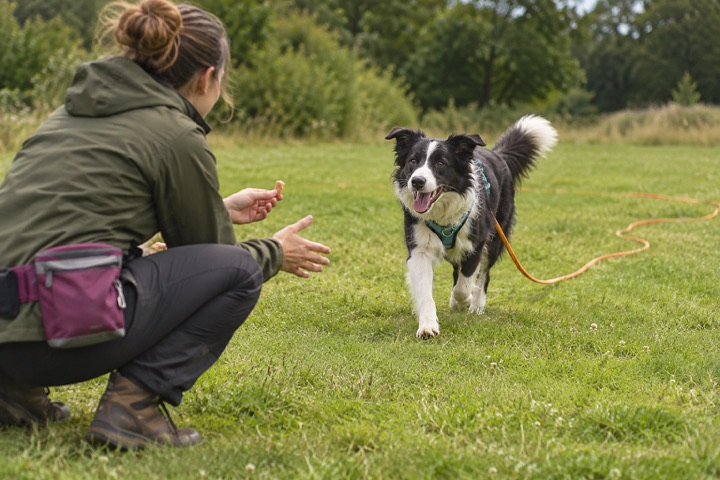
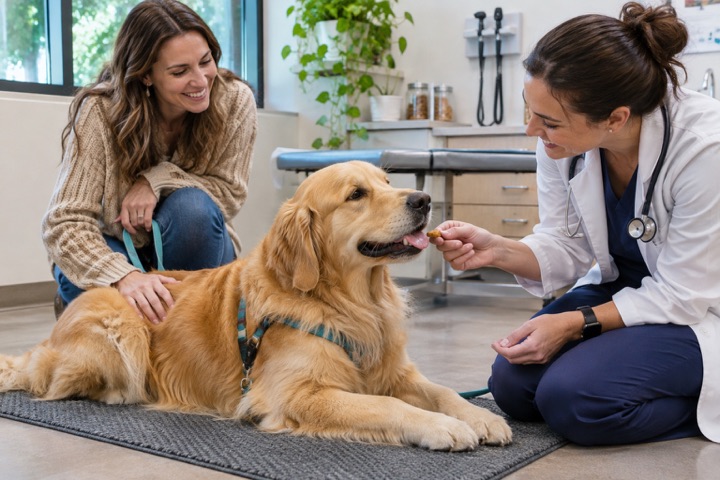
Reward close to your body so the dog learns to come all the way in. Practice a gentle collar or harness touch as part of the routine, then release. This prevents 'come' from becoming a game of stopping just out of reach.
Make the next step achievable
Begin indoors, then use a secure outdoor space and a long line attached to a harness. Increase distance and distractions separately. If your dog cannot respond, reduce the challenge instead of repeating the cue until it fades into background noise.
Protect the meaning of the cue
Never punish your dog for returning, even after a delay. Avoid using recall mainly to interrupt fun or begin an unpleasant task. Sometimes call, reward and send your dog back to exploring.
Practice little and often
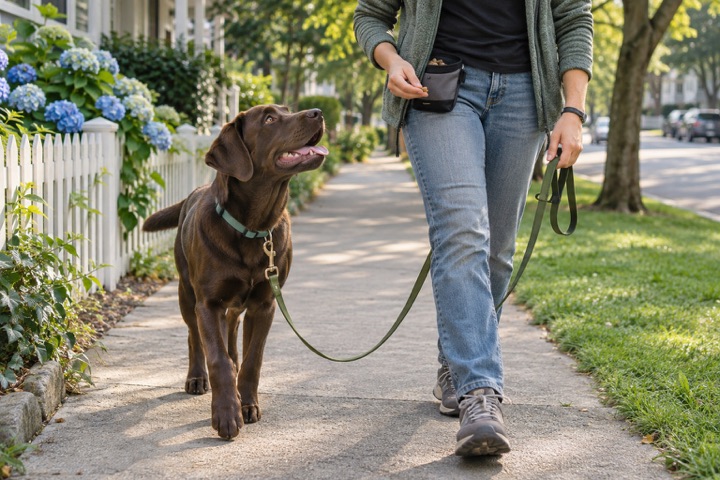
A few successful repetitions are more valuable than a long session after attention has gone. Keep physical safety independent of the cue: use a lead near traffic and respect local rules. No training exercise makes an unsafe environment suitable for off-leash testing.
Further reading
AVSAB: Humane training guidanceGeneral educational information. For individual health concerns, consult your veterinarian. Suggest a correction.