Help Your Dog Feel Safer at the Vet and Groomer
Prepare for handling with cooperative practice, familiar equipment and a plan shared with the people caring for your dog.
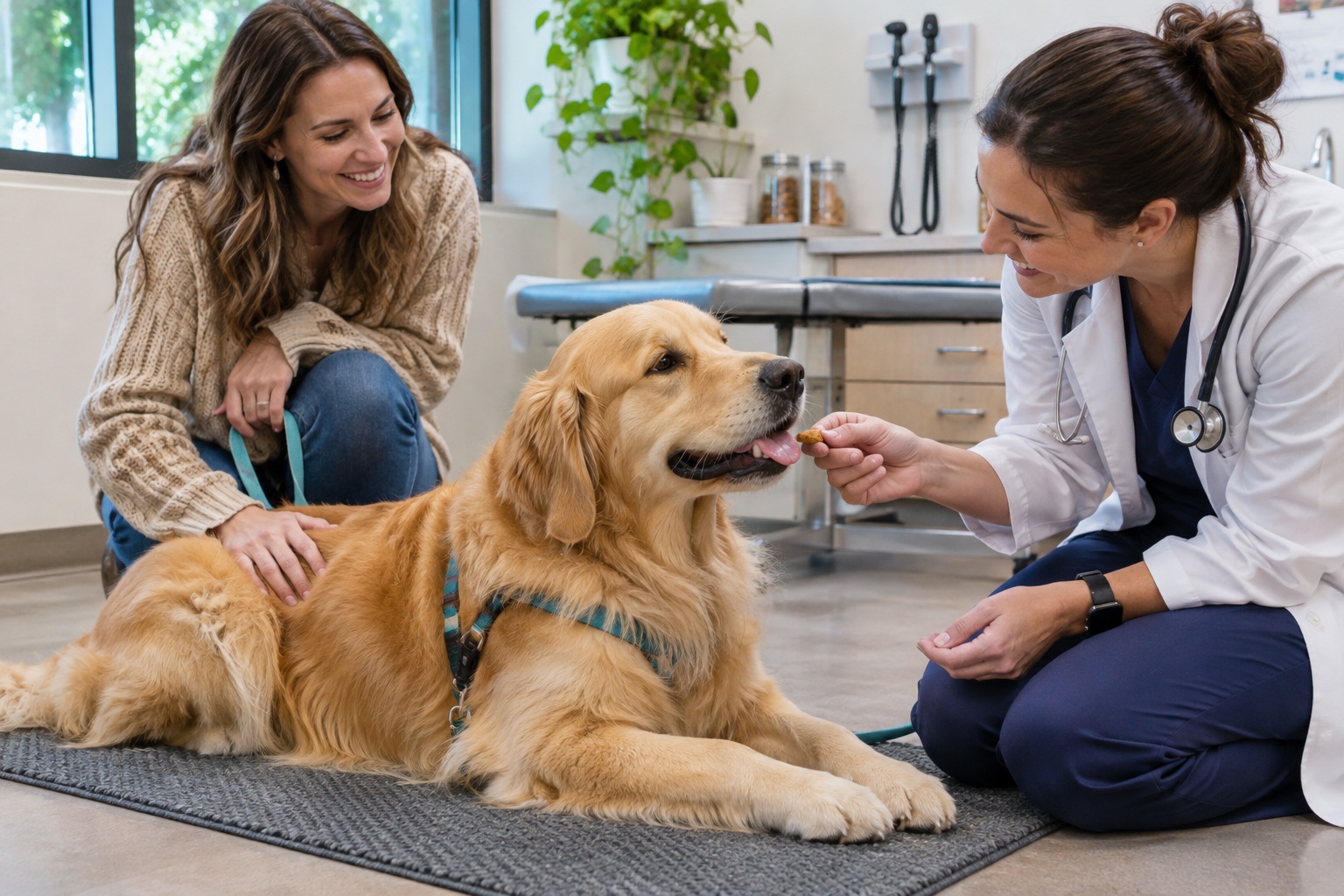
Practice small handling steps voluntarily and share your dog's needs before the appointment.
Cover illustration generated with AI. About our images.
An unfamiliar room, slippery surface and hands reaching toward the body can make an appointment difficult. Preparation begins at home, where your dog can learn that small handling steps predict something pleasant.
Start on the floor
Use a comfortable, non-slip mat rather than placing your dog on a high table. Reward standing or resting on it. Briefly touch a shoulder, then stop and offer a treat. Build toward paws, ears and the muzzle only while your dog remains relaxed.
Teach a simple chin rest or stationing behavior if helpful. When your dog withdraws, pause the practice. This gives you a useful signal that the next step may be too much.
Introduce the tools separately
Let your dog investigate a brush or hear clippers from a comfortable distance before the tool touches the body. Pair small exposures with rewards and keep sessions brief. Do not surround the dog with several helpers or hold it still until it gives up.
Plan the real visit
Tell the clinic or groomer which situations worry your dog and what has helped. Ask whether quiet appointment times, waiting outside or brief positive visits are possible. Bring the familiar mat and suitable rewards unless fasting instructions apply.
Recognize when training is not enough
Pain, previous frightening experiences and severe fear may require a different handling plan or veterinary-prescribed medication. Necessary care should not be postponed indefinitely while you try to solve everything alone.
Progress can look modest: entering the building comfortably, accepting a short check or recovering more quickly afterward. Those steps are worth building on.
Further reading
AVSAB: Humane training guidanceGeneral educational information. For individual health concerns, consult your veterinarian. Suggest a correction.