Outdoor Recall: Five Steps Toward a Reliable Return
Help your dog choose you amid outdoor distractions with rewarding practice and a secure long line.
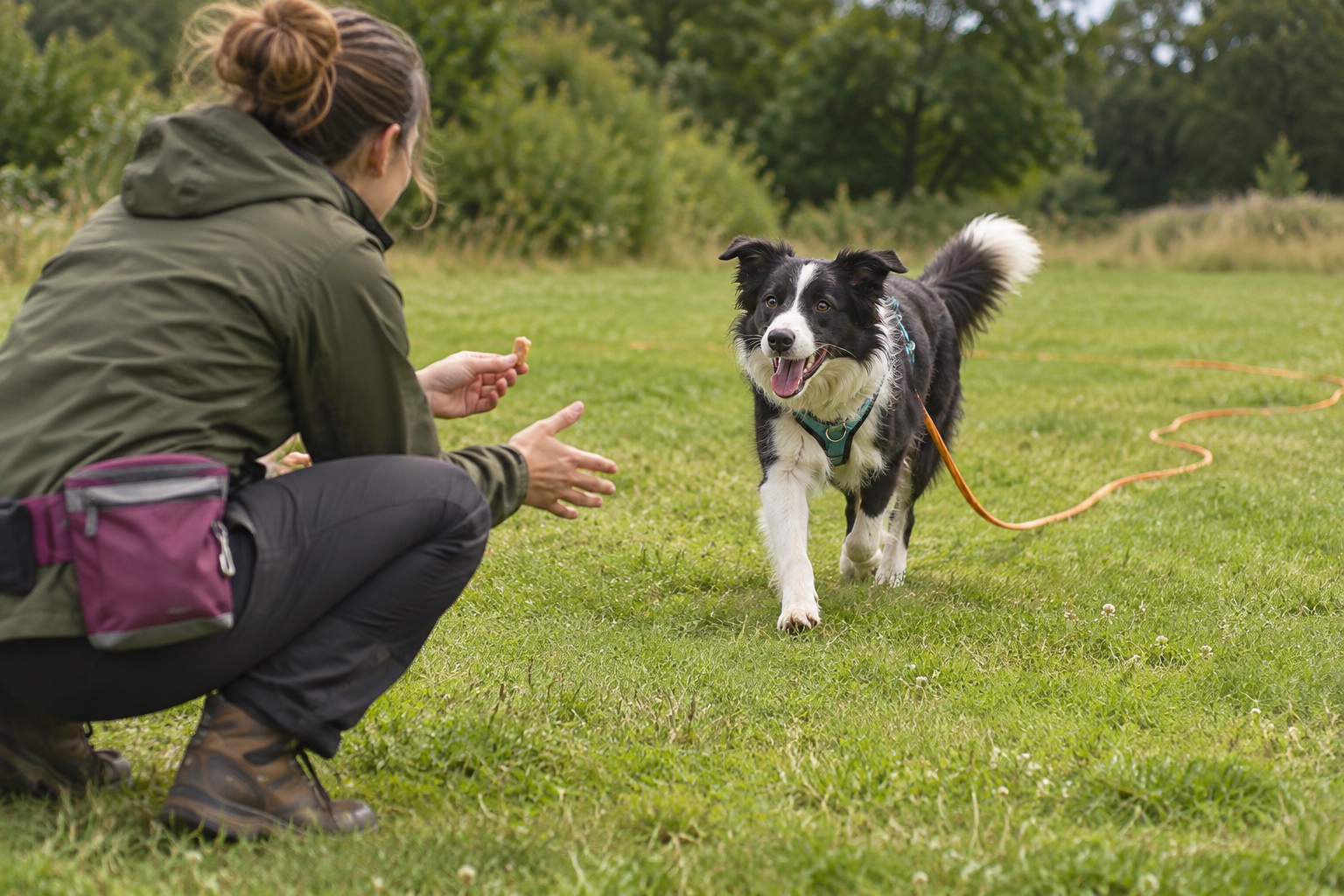
Protect the practice with a long line and make every return a good decision.
Cover illustration generated with AI. About our images.
A dog that returns instantly in the kitchen may struggle in a park full of smells and movement. The cue has not become meaningless; the setting has become harder. Build outdoor recall as a new skill, with safety managed throughout.
1. Make the cue worth hearing
Choose one clear recall word. In a quiet room, say it once from nearby, move invitingly away and reward your dog at your feet. Use tiny rewards your dog values, and finish while it still wants to play.
2. Move to a secure outdoor space
Practice at a short distance in a fenced area. Reward arrival and gentle collar or harness contact, then often release your dog back to exploring. Coming to you should not always predict the end of fun.
3. Add a long line
In suitable open areas, attach a long line to a well-fitted harness. Keep clear of roads, bikes, people and tangling hazards. Manage the line calmly rather than jerking or allowing a full-speed stop at its end.
4. Introduce one distraction
Increase distance, duration or distraction separately. Begin far enough from interesting activity that your dog can still respond. If the cue is being missed, move closer and make the next attempt easier instead of repeating it louder.
5. Practice across ordinary life
Use different safe locations and reward generously for difficult returns. Off-leash freedom is appropriate only where permitted and genuinely safe; some dogs and settings call for a long line indefinitely.
Never scold a dog that finally comes back. If it is loose and not responding, avoid turning the situation into a chase; use an inviting voice and movement away when safe, and secure the environment. Reliable recall grows from hundreds of worthwhile returns, not from testing the dog in the hardest place first.
Further reading
AVSAB: Humane training guidanceGeneral educational information. For individual health concerns, consult your veterinarian. Suggest a correction.