A Place to Switch Off: Designing Restful Spaces for Cats
Offer quiet, accessible resting choices that let your cat control temperature, contact and distance.
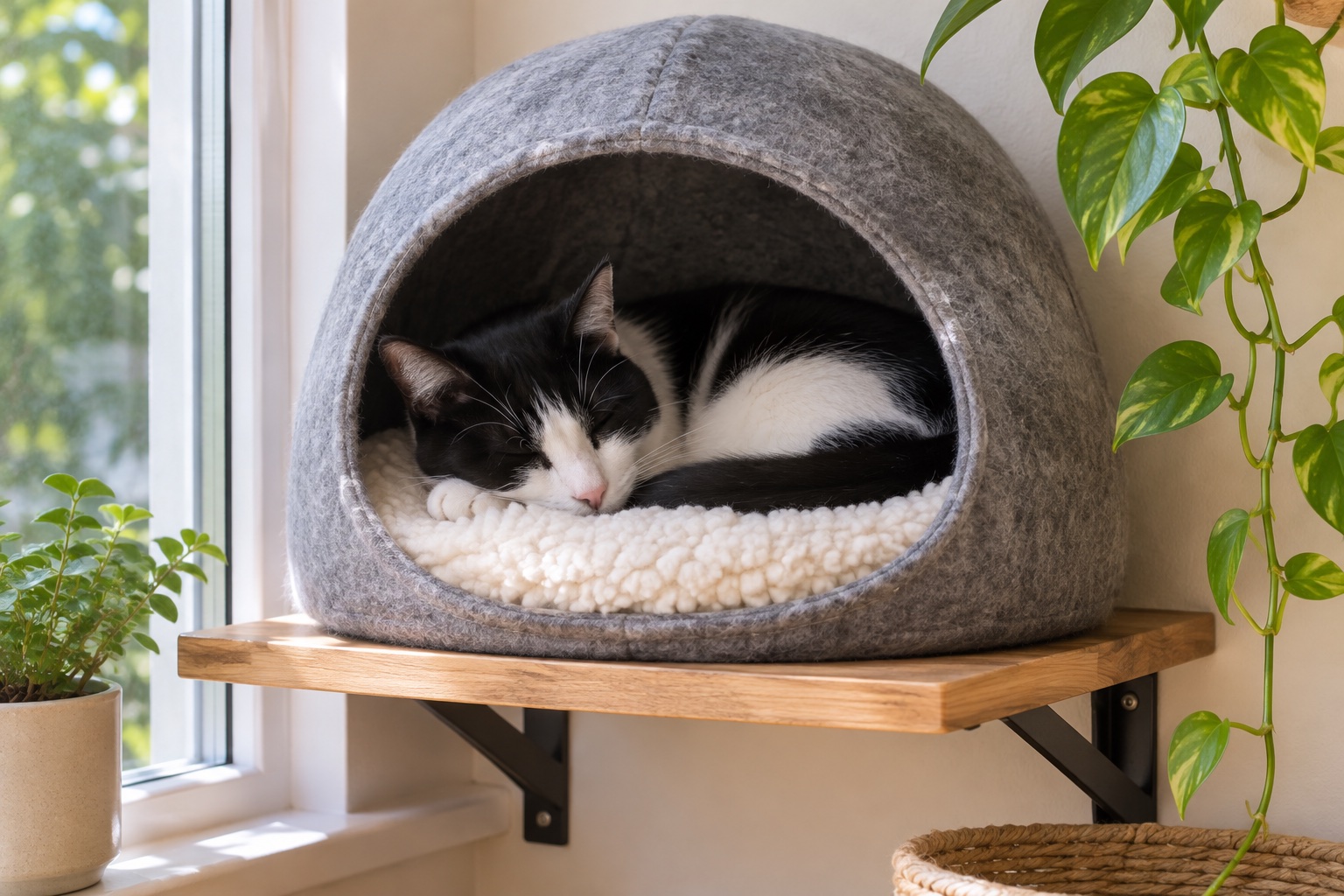
Offer several secure resting choices and protect the cat's ability to rest without interruption.
Cover illustration generated with AI. About our images.
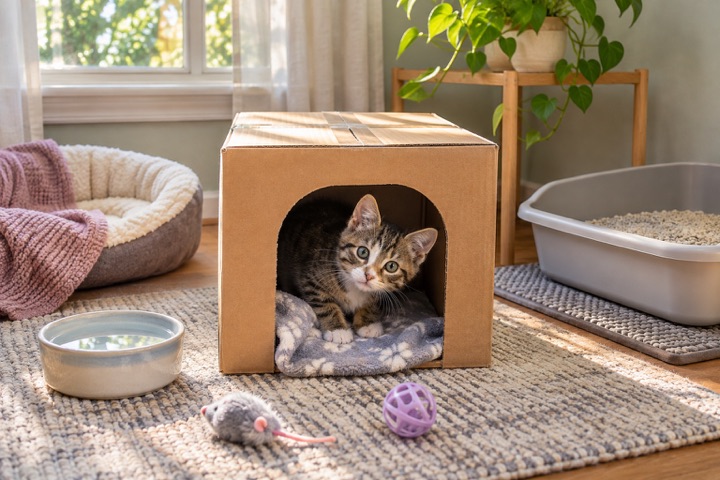
A good resting place is one a cat chooses freely. It may be a simple box, a sunny bench or a cushion near you. Instead of finding a single perfect bed, offer a few safe options that meet different needs across the day.
Provide both visibility and shelter
Some cats like watching the room from above; others prefer a covered retreat. Use stable furniture and secure platforms, with an easy route up and down. Older or less mobile cats may need low steps or a comfortable floor-level option.
Protect quiet time
Place at least one resting area away from busy doors, loud appliances and persistent attention. Teach household members to leave a sleeping or hiding cat undisturbed. In multi-pet homes, ensure another animal cannot block the only exit.
Offer temperature choices
Let your cat move between warmer and cooler areas. Use only appropriate pet heating products according to their instructions, with supervision and an unheated alternative. Avoid exposed hot surfaces and unsecured window access.
Keep the space familiar
Wash bedding as needed with a mild approach and dry it fully. Avoid replacing every familiar scent at once during a stressful change.
A new preference for hiding, unusual restlessness or difficulty settling can reflect illness or discomfort. Watch appetite and movement alongside sleep habits, and seek veterinary advice for persistent changes. A restful environment supports wellbeing but does not replace treatment of pain.
General educational information. For individual health concerns, consult your veterinarian. Suggest a correction.