Is Your Pet Overweight? A Kinder Way to Assess and Act
Use body condition, measured meals and a gradual plan instead of breed averages or crash diets.
Assess body condition and use a gradual, nutritionally complete plan with regular checks.
Cover illustration generated with AI. About our images.
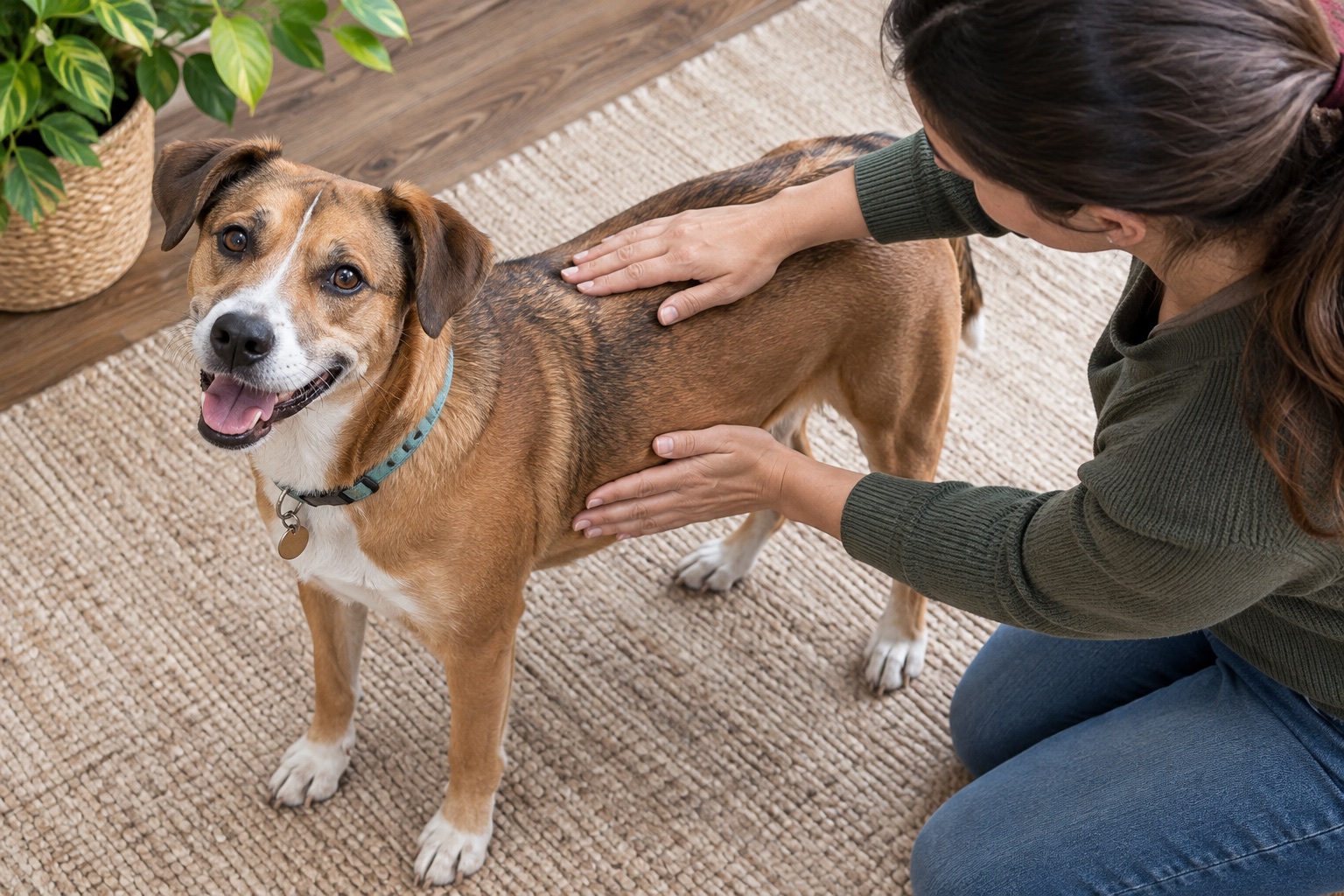
A number on the scale only tells part of the story. Two pets of the same weight may have different frames and muscle mass. Assessing body condition helps distinguish a healthy build from excess fat, especially beneath a thick coat.
Look and feel together
Ask your veterinary team to demonstrate a body-condition assessment. Generally, ribs should be felt without heavy pressure, with a visible waist appropriate to the animal's shape. Consider muscle as well as fat, particularly in older pets. A cat's normal abdominal pouch is not by itself a diagnosis of obesity.
Record the starting point
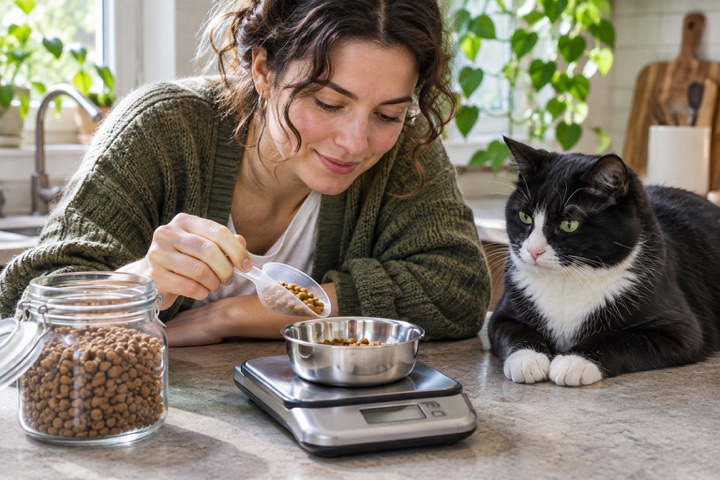
Weigh consistently and keep a simple food diary. Include all meals, chews, training rewards and snacks from other people. In multi-pet homes, check whether one animal is eating another's portion.
Create a measured plan
A veterinarian can help set an appropriate target and daily calorie allowance. Weigh portions, choose a complete diet suited to the goal and arrange follow-up. Large reductions in ordinary food may also reduce essential nutrients, so a weight-management diet may be preferable in some cases.
Never crash-diet a cat or let it stop eating as part of a weight-loss strategy.
Make movement achievable
Add short, enjoyable activities suited to mobility: sniffing walks for dogs, gentle play and accessible climbing for cats. Increase gradually and address pain that makes activity difficult.
Judge progress by more than appearance
Track comfort, energy, muscle and the agreed weight trend. The goal is sustainable health, not the fastest possible reduction. Adjust the plan with your veterinary team when progress is too slow, too rapid or accompanied by illness.
Further reading
WSAVA: Nutrition resourcesGeneral educational information. For individual health concerns, consult your veterinarian. Suggest a correction.