Wet Food, Dry Food or Both? Choosing Your Cat's Menu
Compare moisture, convenience and portion control while keeping complete nutrition at the center.
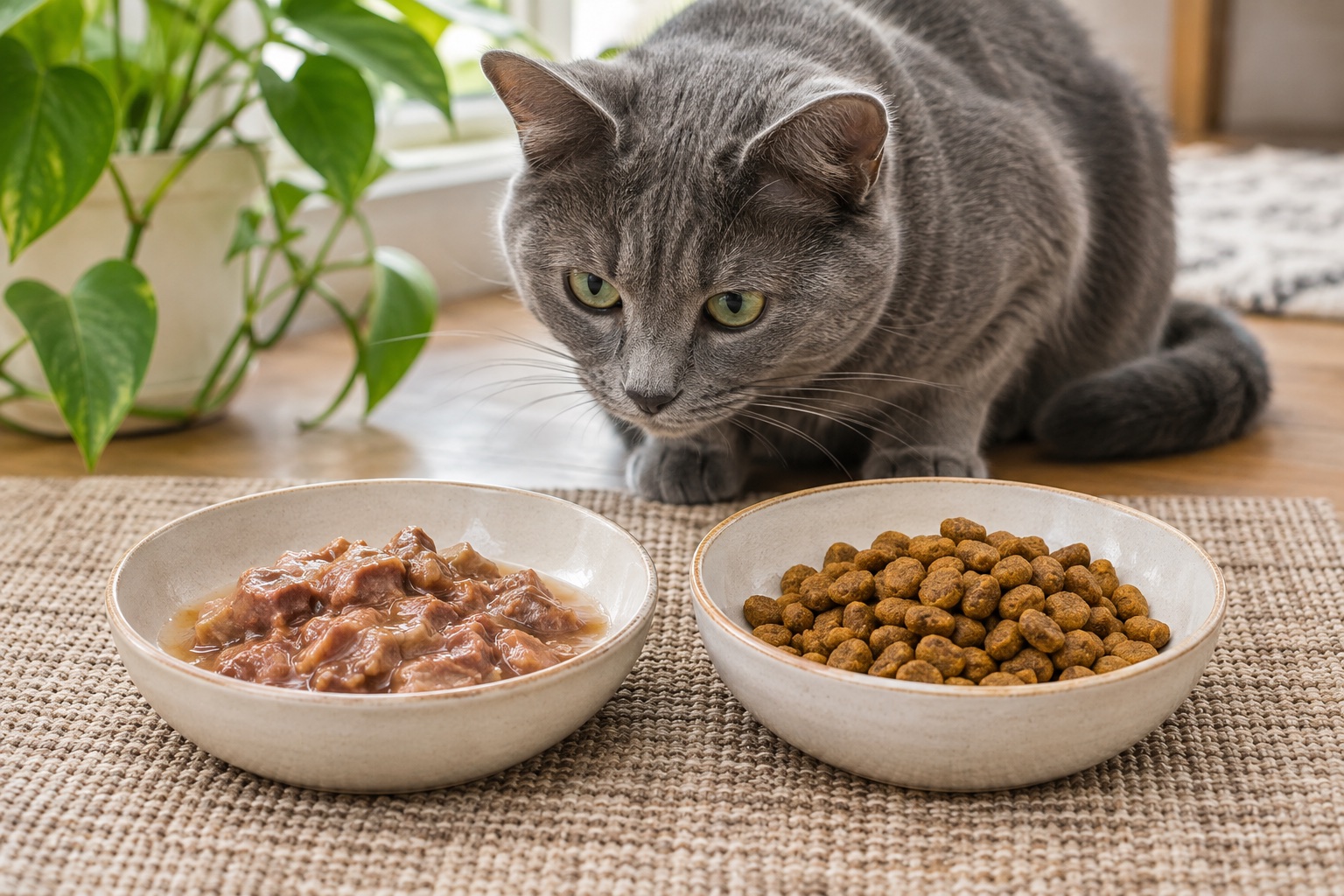
Choose complete foods, count the combined calories and adapt the format to your cat's health and preferences.
Cover illustration generated with AI. About our images.
There is no single feeding format that suits every cat. Complete wet food, complete dry food or a planned combination can all have a role, depending on health, preferences and daily routine. The useful comparison is what each option contributes to the overall diet.
What wet food offers
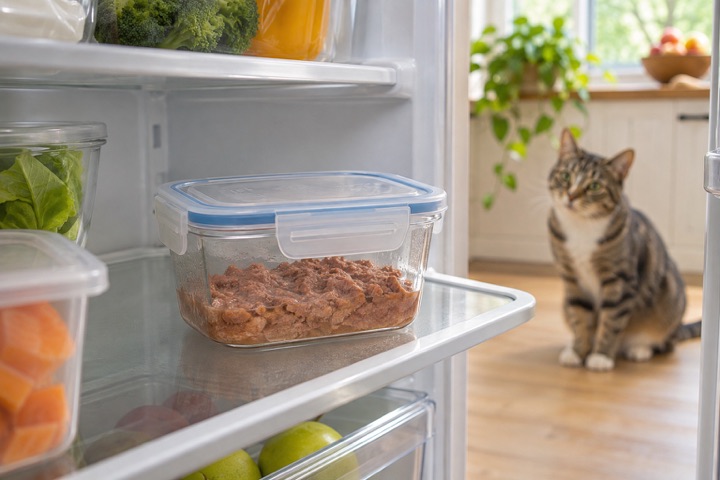
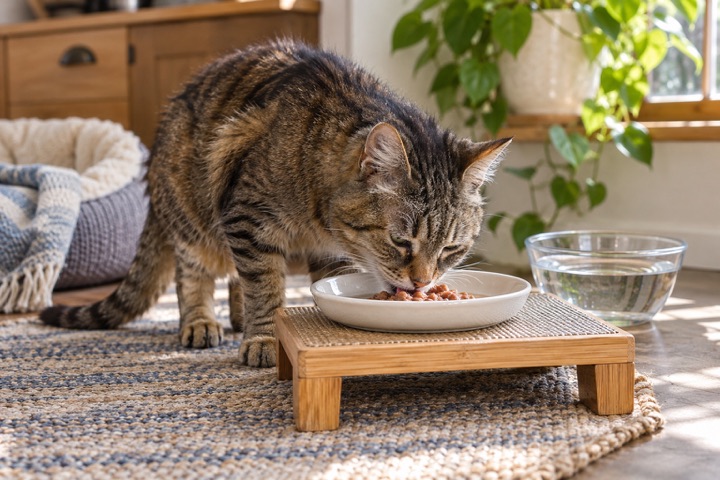
Wet food supplies more moisture and can be appealing to cats that prefer soft textures. It needs appropriate refrigeration after opening and should not sit out indefinitely. Check that the product is a complete food rather than a complementary pouch or topper.
What dry food offers
Dry food can be convenient for measured meals and some feeding puzzles. It is often calorie-dense, so small portion errors can add up. Fresh drinking water remains essential. Ordinary kibble should not be assumed to clean teeth like brushing or a specifically evaluated dental diet.
How to combine them thoughtfully
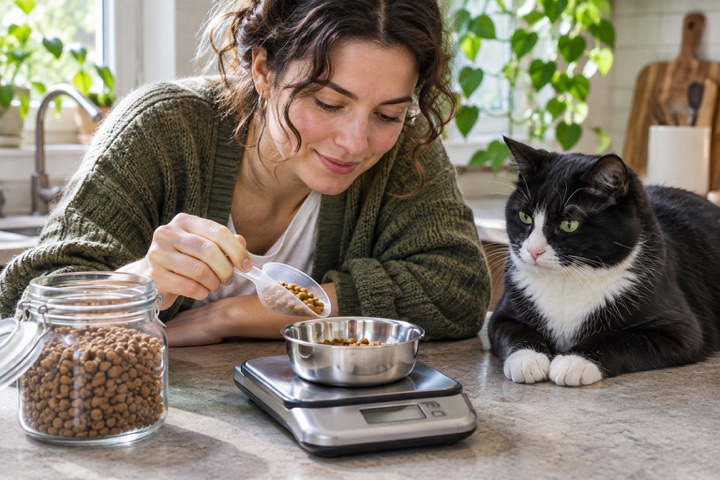
Calculate the combined calorie allowance rather than adding a full wet-food portion to an unchanged dry-food ration. Use the package energy information and ask your veterinarian for an appropriate target. Introduce changes gradually and monitor intake, stool and weight.
Let health guide exceptions
Cats with urinary, kidney, digestive or other medical conditions may need a particular nutritional plan. More water alone does not prevent every urinary problem, and a food change should not replace treatment.
If your cat rejects a new texture, preserve adequate intake and take a gradual approach. Do not force a prolonged hunger strike. A successful menu is complete, well tolerated and practical enough to maintain consistently.
Further reading
WSAVA: Nutrition resourcesGeneral educational information. For individual health concerns, consult your veterinarian. Suggest a correction.