Choosing a Dog Trainer: Questions Worth Asking First
Look for transparent methods, realistic goals and a professional who takes your dog's comfort seriously.
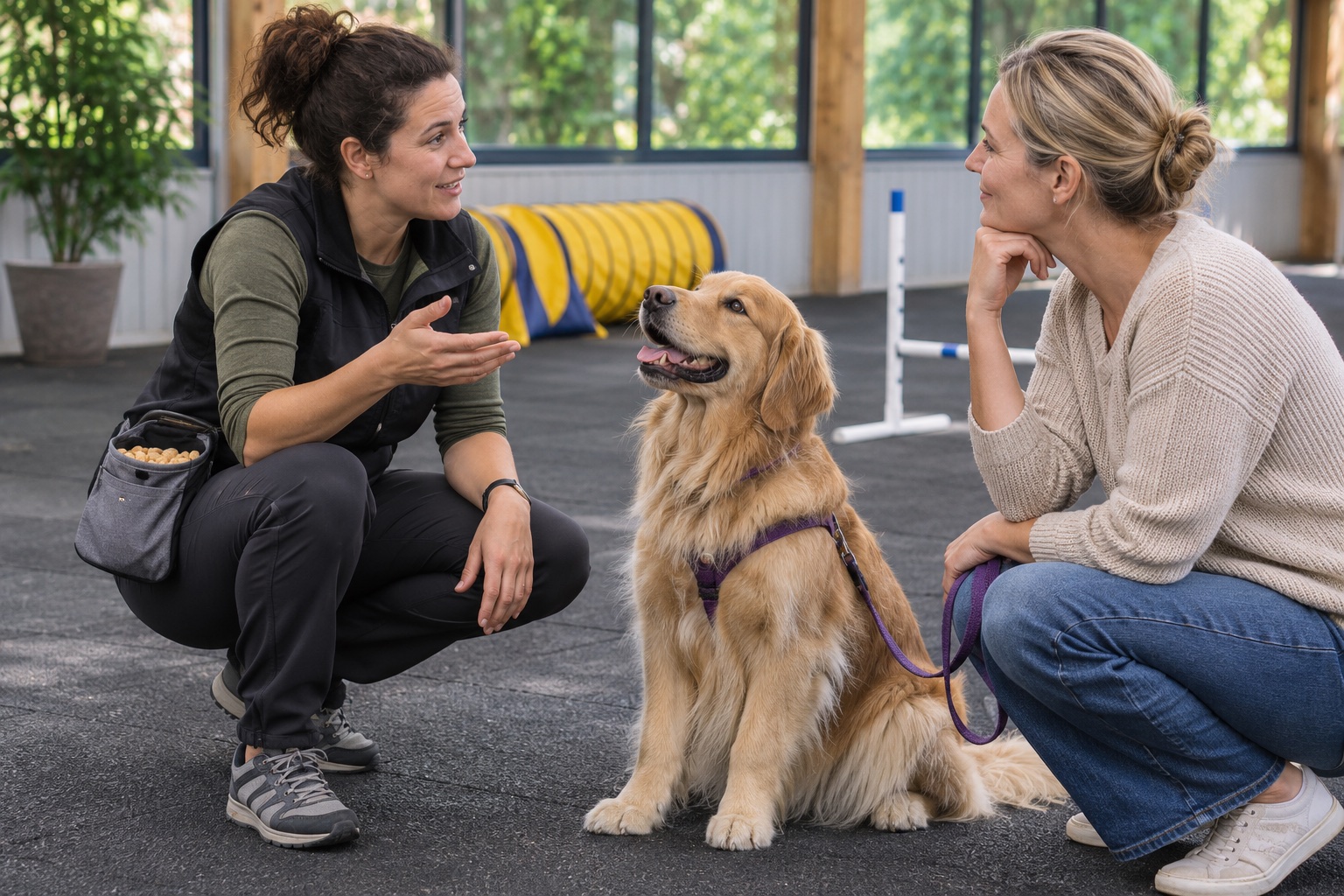
Ask about specific methods, realistic expectations and how the trainer responds to fear or difficulty.
Cover illustration generated with AI. About our images.
A trainer influences both what a dog learns and how it feels while learning. Before booking, ask about methods in specific situations rather than relying on a reassuring label or dramatic before-and-after video.
Ask what happens when the dog struggles
A useful answer should describe adjusting distance, distractions, timing or the task itself. Reward-based practice teaches alternatives and manages safety without relying on fear or pain. Ask directly about equipment and whether physical or intimidating corrections are used.
Check experience and scope
Ask about education, credentials and relevant case experience. A credential can be useful, but it does not replace a conversation about actual methods. Significant fear, aggression or separation distress may need coordination with a veterinarian or veterinary behavior specialist.
Look for a clear process
The professional should ask about health, history, household routines and your goals. You should understand what will be practiced, how progress will be assessed and what support is available between sessions.
Avoid promises of guaranteed results within a fixed number of days. Behavior depends on the individual animal and the environment.
Observe the learning atmosphere
Dogs should have appropriate space, breaks and tasks they can manage. Ask whether you can observe a suitable class or receive a clear explanation of a private-session plan.
Choose someone who explains decisions in plain language and welcomes questions. A good training relationship helps you understand your dog and continue the work confidently at home.
Further reading
AVSAB: Humane training guidanceGeneral educational information. For individual health concerns, consult your veterinarian. Suggest a correction.